
Back in 1989, ichthyologist Malcolm Francis wrote in his research proposal to undertake a fish census on Norfolk Island that the known fish fauna could probably be increased considerably by more intensive study. He had good reason to think that. Even from limited work, new species were still turning up, and he noted that there were already other fishes known from Lord Howe Island to the west and the Kermadecs to the east that had not yet been recorded here.
His observation has aged rather well.
Norfolk sits in the same broad subtropical belt as Lord Howe and the Kermadecs. Francis also pointed out that currents flow eastwards across the Tasman Sea. That does not mean fish move neatly from one island to the next in a tidy line. It means that many reef fish have tiny larval stages that can drift long distances in ocean currents, helping to explain why Norfolk shares some elements of its fish fauna with islands on either side of it.
But that is only part of the story.
Just because larvae can arrive here does not mean every species forms a lasting local population. Some fish may turn up from time to time, especially if conditions suit them. Others may be here year after year because the local population is maintaining itself without further outside input. And some species may well be here already, but have not yet been recorded.
That last point is not speculation for the sake of it. Malcolm Francis’s current checklist (2025), which he has kept updated since that first 1989 census, records 302 fish species for Norfolk Island. More have been added to this list since its publication. When I compared Norfolk Island’s list with Lord Howe and the Kermadecs, there were 31 species recorded from both of those places but not yet from Norfolk. That does not prove they are here. Some absences will be real. But it does suggest that ‘not recorded’ should not always be read as ‘definitely absent’.
A few examples of these absentees are the broad or brown stingray, Bathytoshia lata; the South Pacific snake eel, Apterichtus australis; the Lord Howe conger, Ariosoma howense; the pinecone or crimson soldierfish, Myripristis murdjan; and the Lord Howe pipefish Cosmocampus howensis. When a species is known from islands on both sides of Norfolk, it is hardly unreasonable to think that some may eventually turn up here too.
At the same time, there is good evidence that not all of Norfolk’s fish populations depend on fresh arrivals from elsewhere.
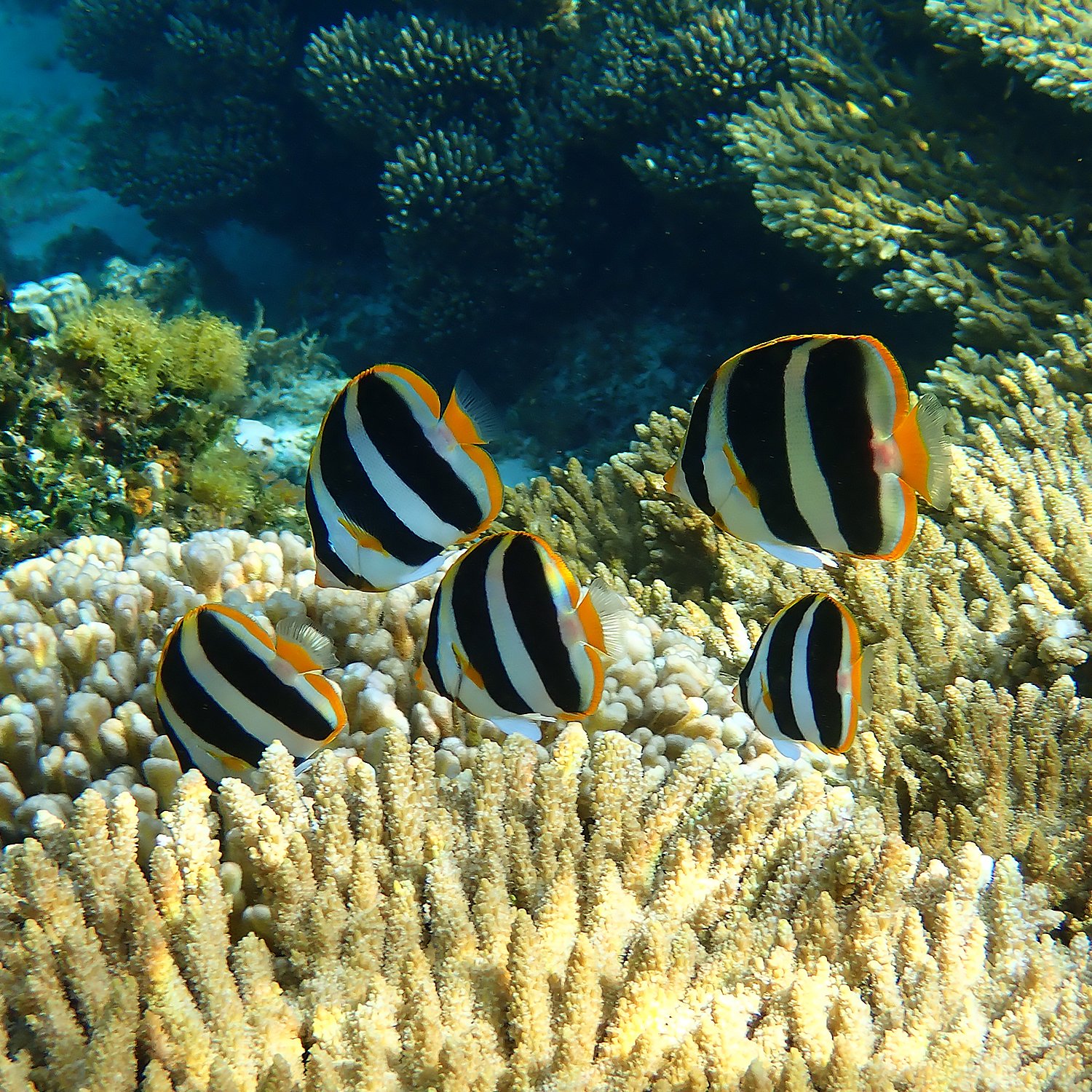
Three-striped butterflyfish, Chaetodon tricinctus, Norfolk Island
One of the clearest examples is the three-striped butterflyfish, Chaetodon tricinctus. This species was recorded here by James Stuart, an Irish surgeon who moonlighted as an artist. He spent some time on Norfolk Island in the early 1840s. He called the species Chaetodon Stuartii. This butterflyfish is endemic to the Lord Howe region and was the subject of a genetic study that sampled Norfolk Island as well as Lord Howe Island, Elizabeth Reef and Middleton Reef. The results, published in 2013, showed that although there has been exchange of genetic material among these places over long timescales, contemporary gene flow is much more limited. In Norfolk’s case, the study inferred about 95% self-replenishment. In other words, most of the local replacement seems to come from within the Norfolk population itself, so it is largely self-sustaining, and not from a regular supply of new recruits arriving from elsewhere. The Norfolk population was also described as being relatively isolated and low in abundance, which makes it more vulnerable.
That is quite important, because it tells us that some fish populations here may not be getting their genetic mix renewed all that often from outside sources. Over the long haul, yes, islands in this region are connected. But on present-day timescales, at least some populations appear to be much more locally dependent than people might assume. The same paper notes ‘complicated ocean currents around the LHI and Norfolk Island Rise regions’ and suggests that Norfolk is a peripheral, more isolated location.
McCulloch’s anemonefish, Amphiprion mccullochi, points in a similar direction, though with an important limitation. The species was historically recorded at Norfolk Island, but the last confirmed record before van der Meer et al.’s study was in the 1970s. That led to suggestions that it may have been only a vagrant here, or else had become locally extinct. Dedicated surveys, including one in March 2012, failed to find any individuals at Norfolk Island, and Hobbs later noted that surveys up to 2022 had again failed to detect the species here. More recently, I have been told anecdotally that this species does, indeed, still occur in Norfolk waters, although not inside the inshore lagoon, but that has yet to be confirmed. For that reason, the genetic study by van der Meer and colleagues did not include Norfolk Island. It sampled Lord Howe Island, Elizabeth Reef and Middleton Reef, so it cannot be used as direct evidence for Norfolk. What it does show, though, is that another restricted-range subtropical fish in this wider region also had low contemporary gene flow and high self-replenishment – estimated at 68 to 84%. That makes it a useful regional comparison, but not proof of what is happening here.
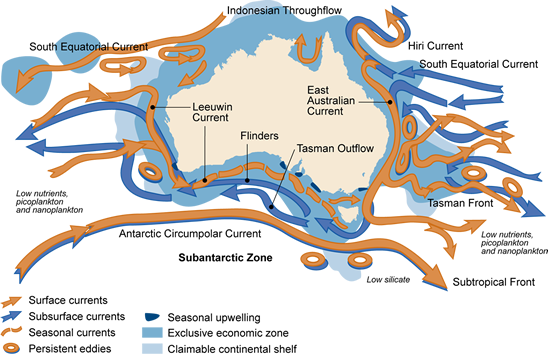
The complexity of ocean currents, including the Tasman Front that passes Lord Howe, Norfolk Island and the Kermadecs. © Commonwealth of Australia 2013, CC BY 3.0 AU, via Wikimedia Commons
Put all of that together, and Norfolk starts to look exactly as Francis suggested: a place with a fish fauna that is both connected and distinct.
Some tropical and subtropical fishes here are probably renewed from outside from time to time. Larvae do move around this region, and Norfolk is not cut off from that wider process. Some species may appear seasonally, or in pulses, depending on currents, temperature and settlement success. But some populations also seem to be largely maintaining themselves locally. And alongside that, there are likely still fish here that nobody has properly documented yet.
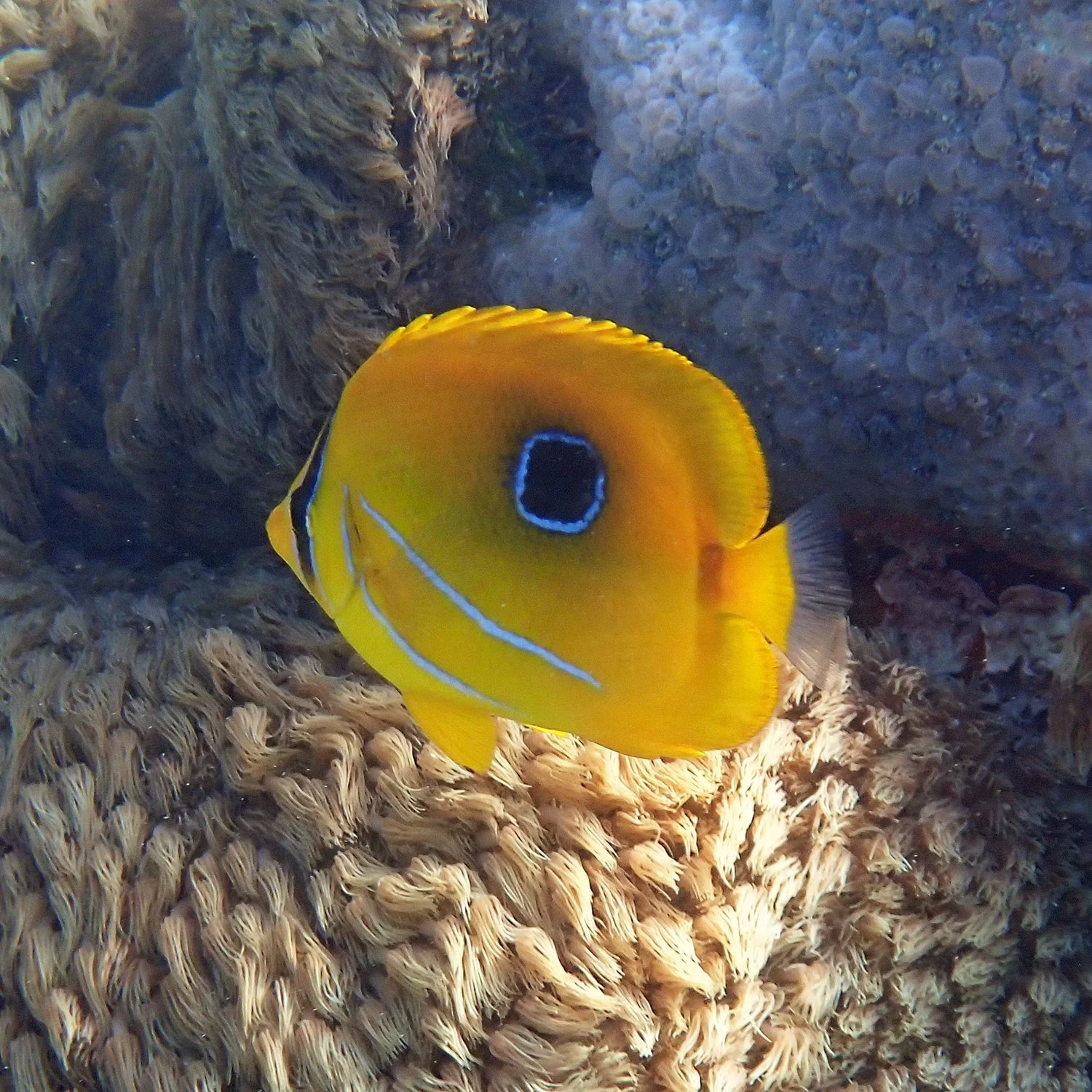
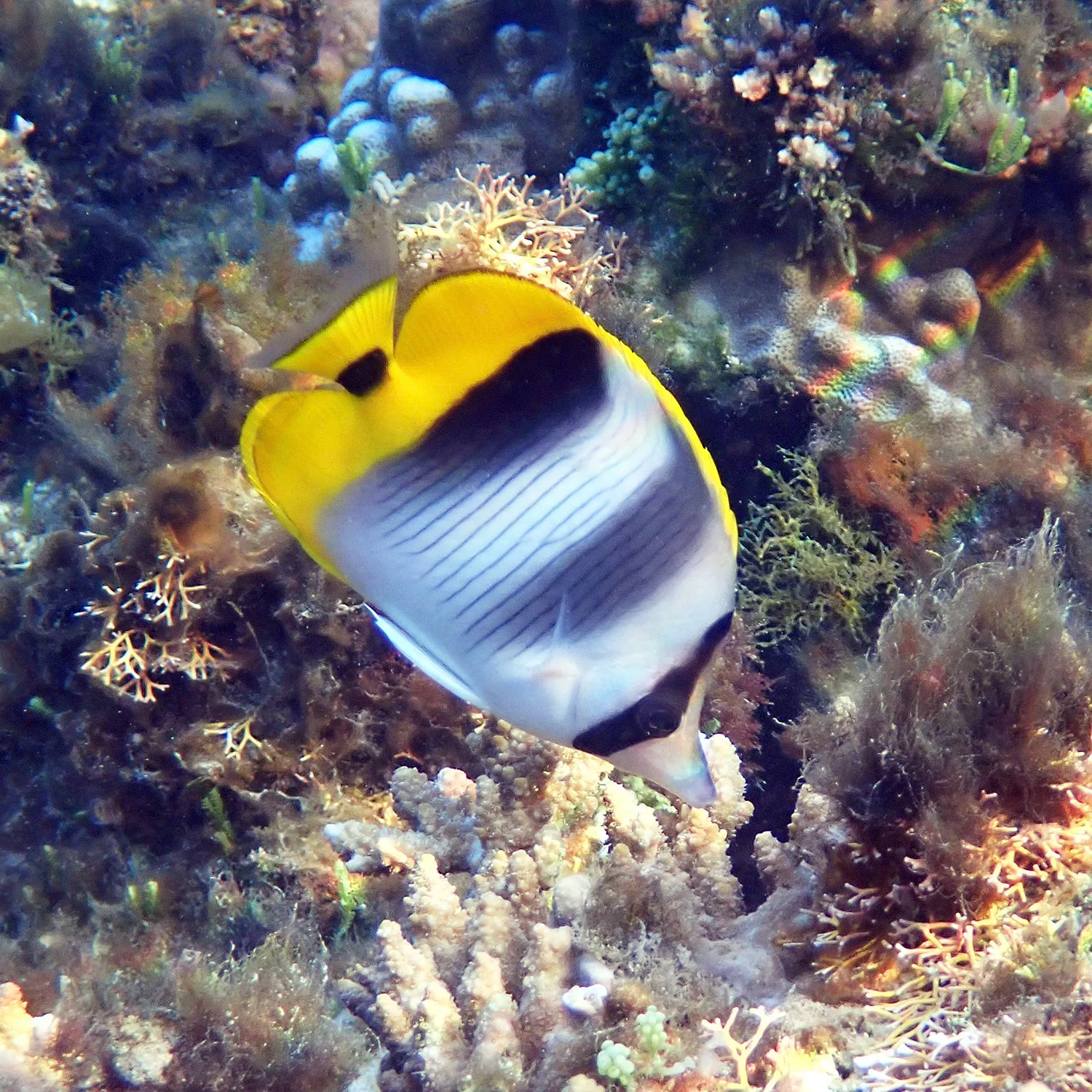
That fits with what I have been seeing myself. Over the years I have added a growing number of species to my own observations as resident here for the first time, including fishes such as eclipse butterflyfish (Chaetodon bennetti), the Pacific double-saddle butterflyfish (Chaetodon ulietensis) and the black blenny (Enchelyurus ater), along with various wrasses, parrotfishes and others. That does not mean every fish species at Norfolk is established in the same way. But it does suggest that the story is still unfolding.
To me, that is one of the most interesting things about Norfolk’s reef fish fauna. It is not just a cut-down copy of Lord Howe. It is not just a collection of wanderers either. Some fish are probably passing through. Some seem to belong very much to this place. And some may still be waiting for us to notice them.
References
Francis, M. P. (1989, April 4). Norfolk Island fish survey proposal [Correspondence to the Norfolk Island Administration].
Francis, M. P., & Hoese, D. F. (2025). Checklist of the coastal fishes of Lord Howe, Norfolk and Kermadec Islands, plus Elizabeth and Middleton Reefs, southwest Pacific Ocean (Version 2025.1) [Data set]. Figshare.
Hobbs, J. P. A. (2022). Summary report on the conservation status of McCulloch’s anemonefish: Towards consideration as a threatened species. Report for the Lord Howe Island Marine Park, Lord Howe Island.
van der Meer, M. H., Hobbs, J.-P. A., Jones, G. P., & van Herwerden, L. (2012). Genetic connectivity among and self-replenishment within island populations of a restricted range subtropical reef fish. PLOS ONE, 7(11), e49660.
van der Meer, M. H., Horne, J. B., Gardner, M. G., Hobbs, J.-P. A., Pratchett, M. S., & van Herwerden, L. (2013). Limited contemporary gene flow and high self-replenishment drives peripheral isolation in an endemic coral reef fish. Ecology and Evolution, 3(6), 1653–1666.