
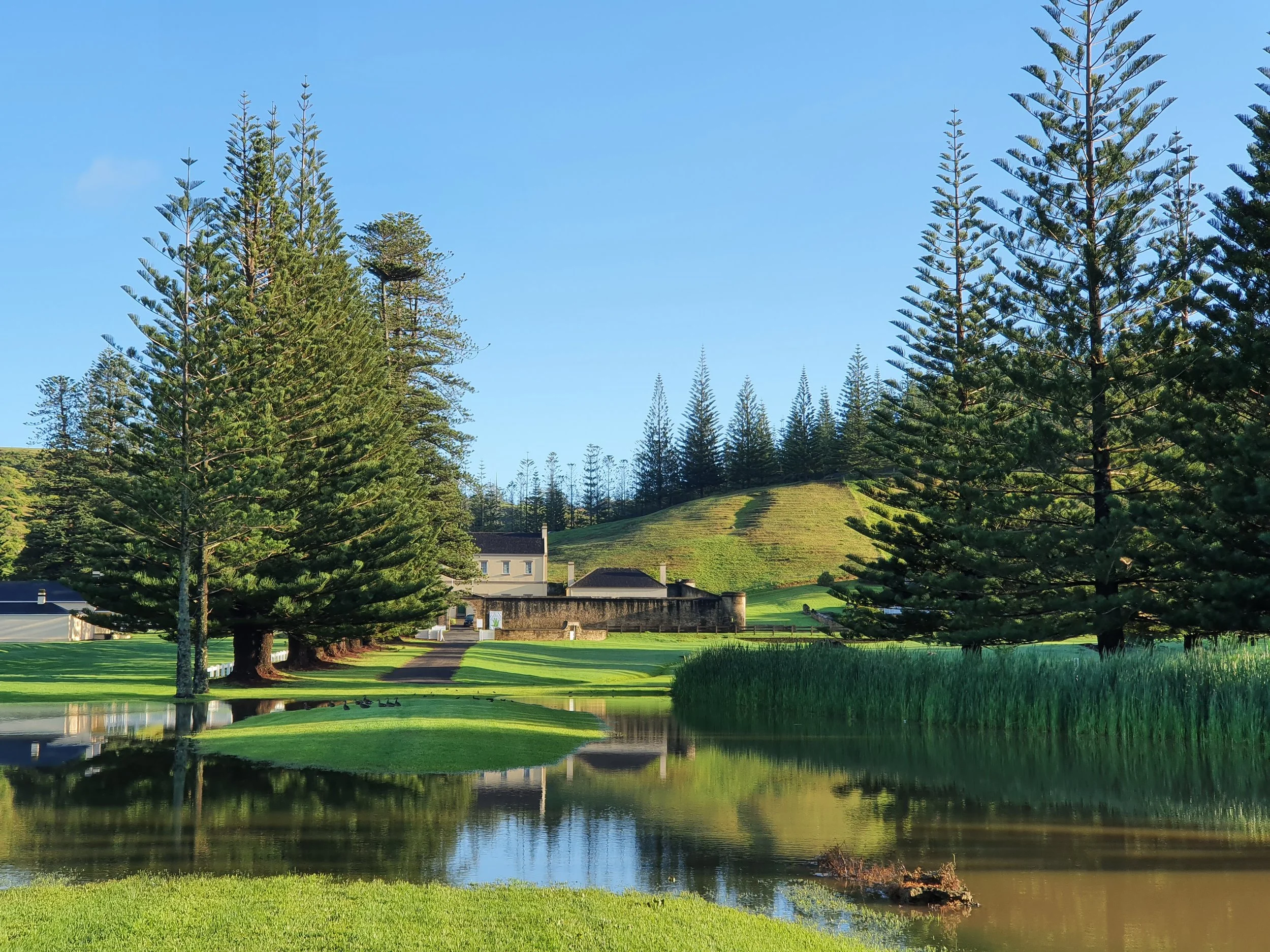
We now have the reef report from the coral health research team from 2025, funded by Australian Marine Parks, so I thought I’d take this opportunity to interpret it here on this blog. Sadly, the news is more of the same things we’re used to reading – a reef that can cope with some stress, but is being asked to cope with too much, too often.
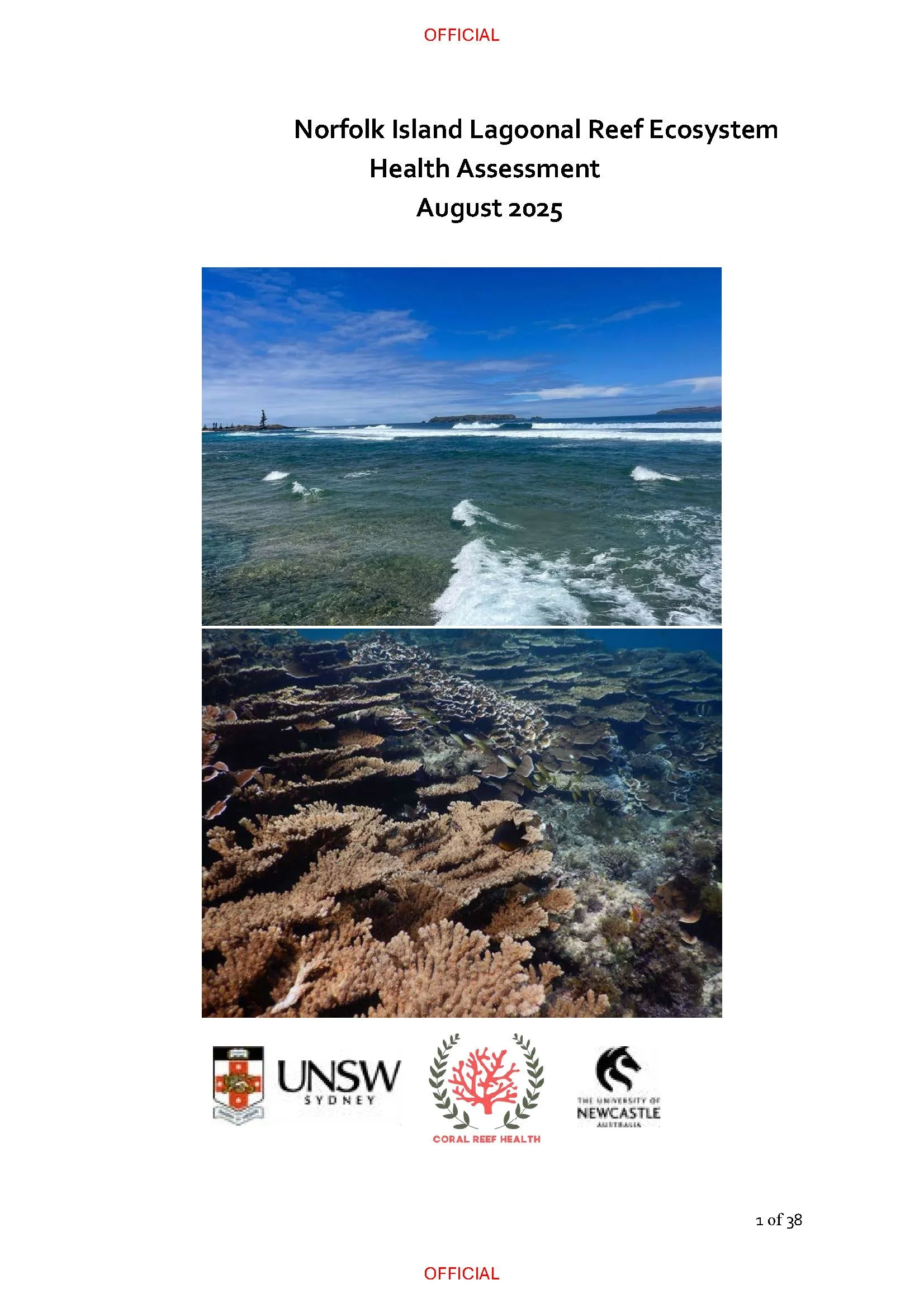
Click on the image or this link to access the Norfolk Island Lagoonal Reef Ecosystem Health Assessment, August 2025
This report is retrospective – it looks back at what was observed and recorded in 2024–25, across Norfolk Island’s inshore lagoonal reefs (Emily Bay, Slaughter Bay and Cemetery Bay), along with a few fringing reef sites for comparison. Even though it’s ‘last year’s news’, it helps explain what we’re seeing in the water now.
One of the main points is that we got a break from heat, but sadly not from everything else. The report says sea surface temperatures stayed below bleaching thresholds over the 2024–25 summer, and no bleaching responses were observed at the sites that were monitored.
That’s a positive. A cooler summer can give corals some breathing space. But as regular readers will know, reef health isn’t just about temperature. This is where the report becomes all too familiar – and frustrating.
While we may have got away with heat-induced coral bleaching, the pressure hasn’t eased. Across all the inshore bays surveyed, algal cover is rising. Algae takes up the real estate on the hard surfaces that baby corals need if they’re going to settle, survive, and eventually replace the corals we lose. (This is known as ‘coral recruitment’.) The report notes that turf algae has increased strongly – from under 10% in 2020, to close to 25% by 2025.
In other words, the available space is being gradually and increasingly taken over by algae.
From April 2025, the drought gave way to a heavy season of rainfall with the accompanying water run-off into the bays. The graph from the Bureau of Meteorology, shown below, shows how 2025 fared against the mean rainfall calculated from records going back to 1890. This kind of stress doesn’t make the headlines that coral bleaching does, but it does do damage.
Norfolk Island’s mean rainfall for 2025 compared with historical data from 1890-2025, Bureau of Meteorology
The sand plug to Emily Bay, Norfolk Island, breaching on 16 April 2025
Norfolk Island Regional Council’s public health alert, 16 April 2025
From April 2025 onwards, the report describes severe rain events leading to flooding, catchment run-off and sedimentation. Sediment blocks light and smothers corals. Corals rely on symbiotic algae in their tissues, known as zooxanthellae (often fondly referred to as ‘zoots’) to photosynthesise and produce up to 90 per cent of the energy they need. If the light is blocked, the zoots can’t perform this function and the corals can starve.
And if run-off carries nutrients, which it invariably does, algae will opportunistically take advantage of the conditions to grow and thrive.
There’s also another issue that will ring bells for anyone who watches Emily Bay closely – in April 2025 the sand plug breached, allowing contaminated flows into Emily Bay, and it re-breached in later events in 2025, and January 2026. Coral disease has been shown to be associated with poor water quality.
Floodin after heavy rain, 4 August 2025, image courtesy of A. McGillycuddy
The report notes that coral disease levels have been consistently high in recent years, with early signs of further outbreaks linked to the 2025 flooding events.
Anecdotally – and I have photos to back up the timing and progression – I’m seeing this play out now. I’m documenting more cases of coral disease, including what appears to be consistent with atramentous necrosis–type progression. I wrote about this, here: Combine bacteria, fungi, and maybe a sponge = one toxic mess.
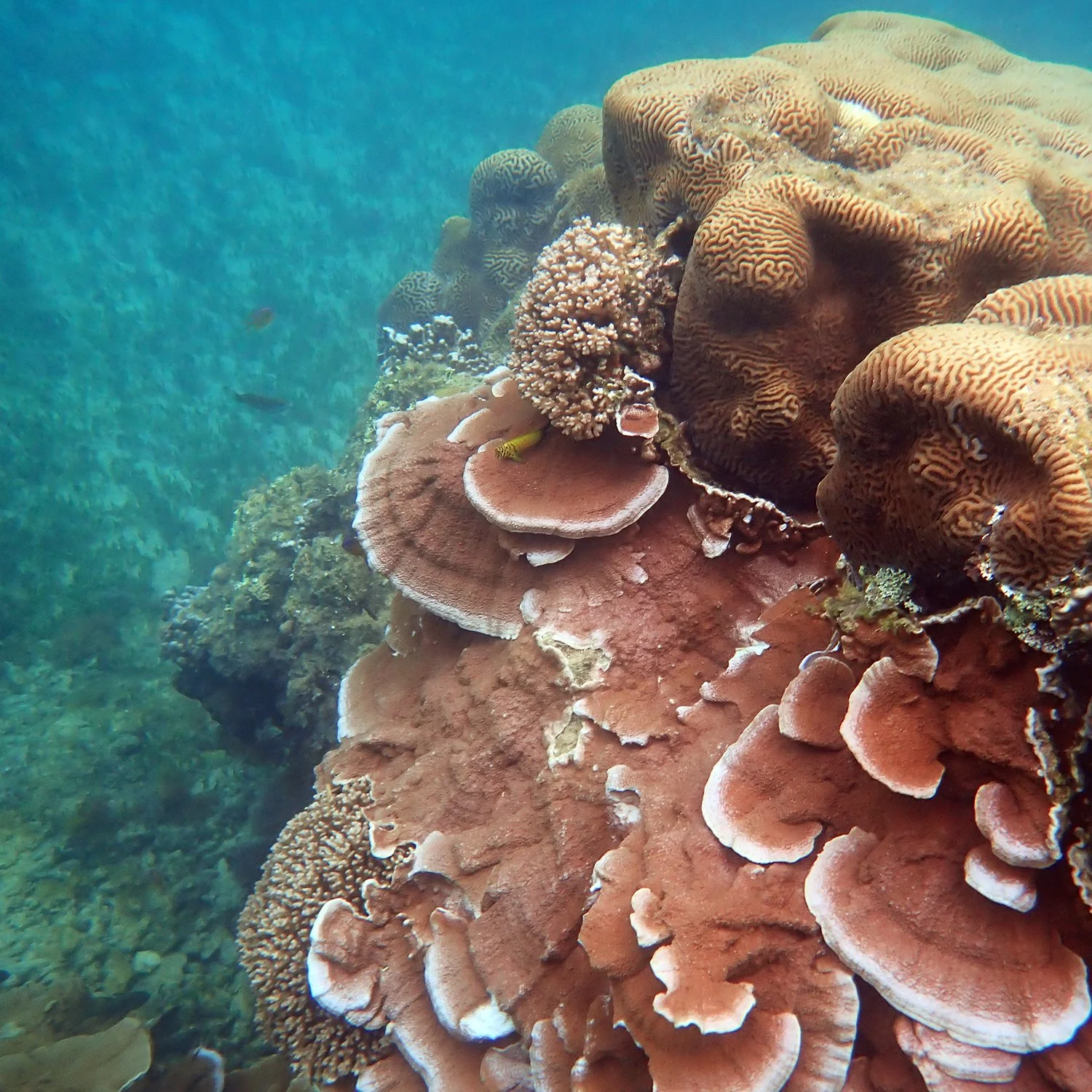
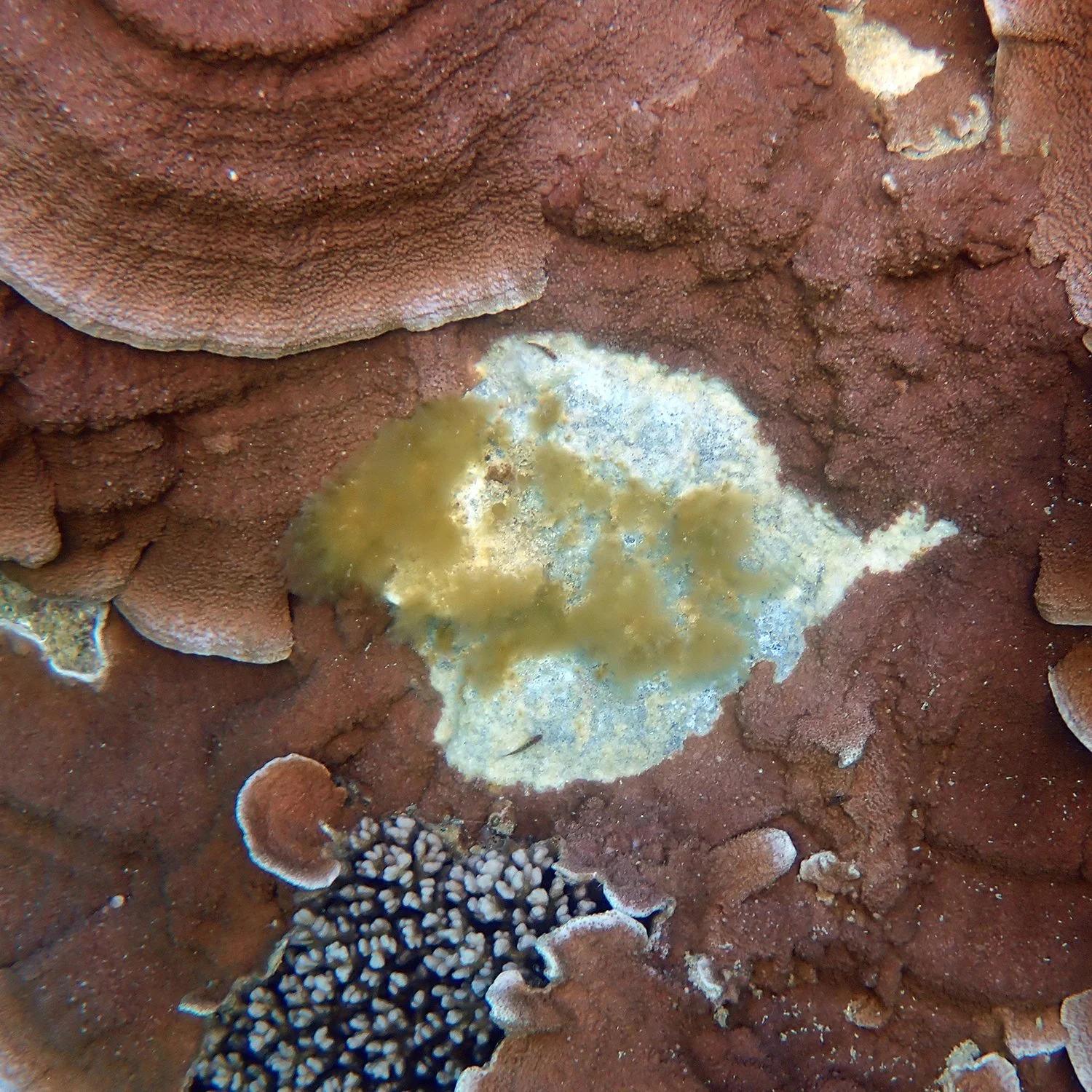
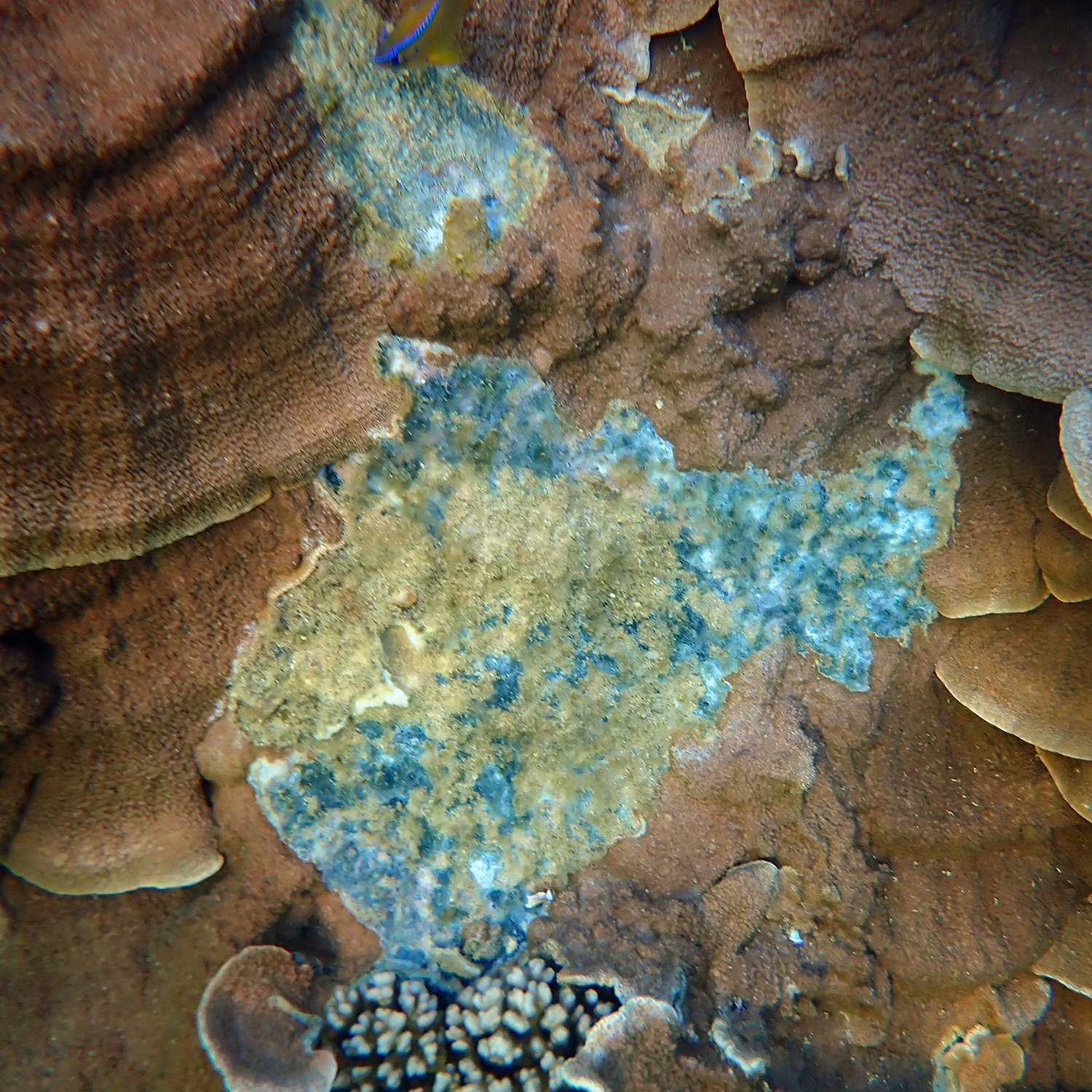
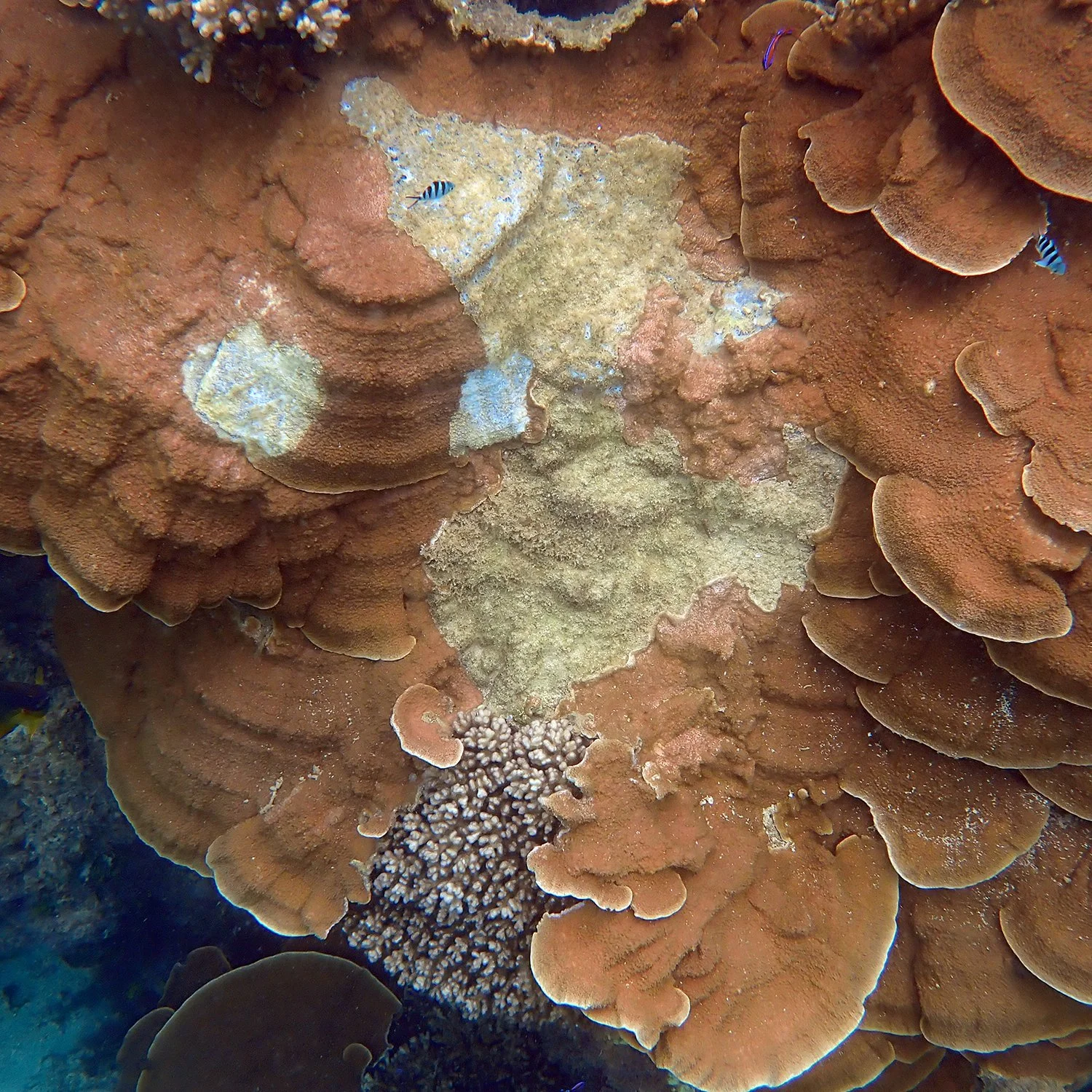
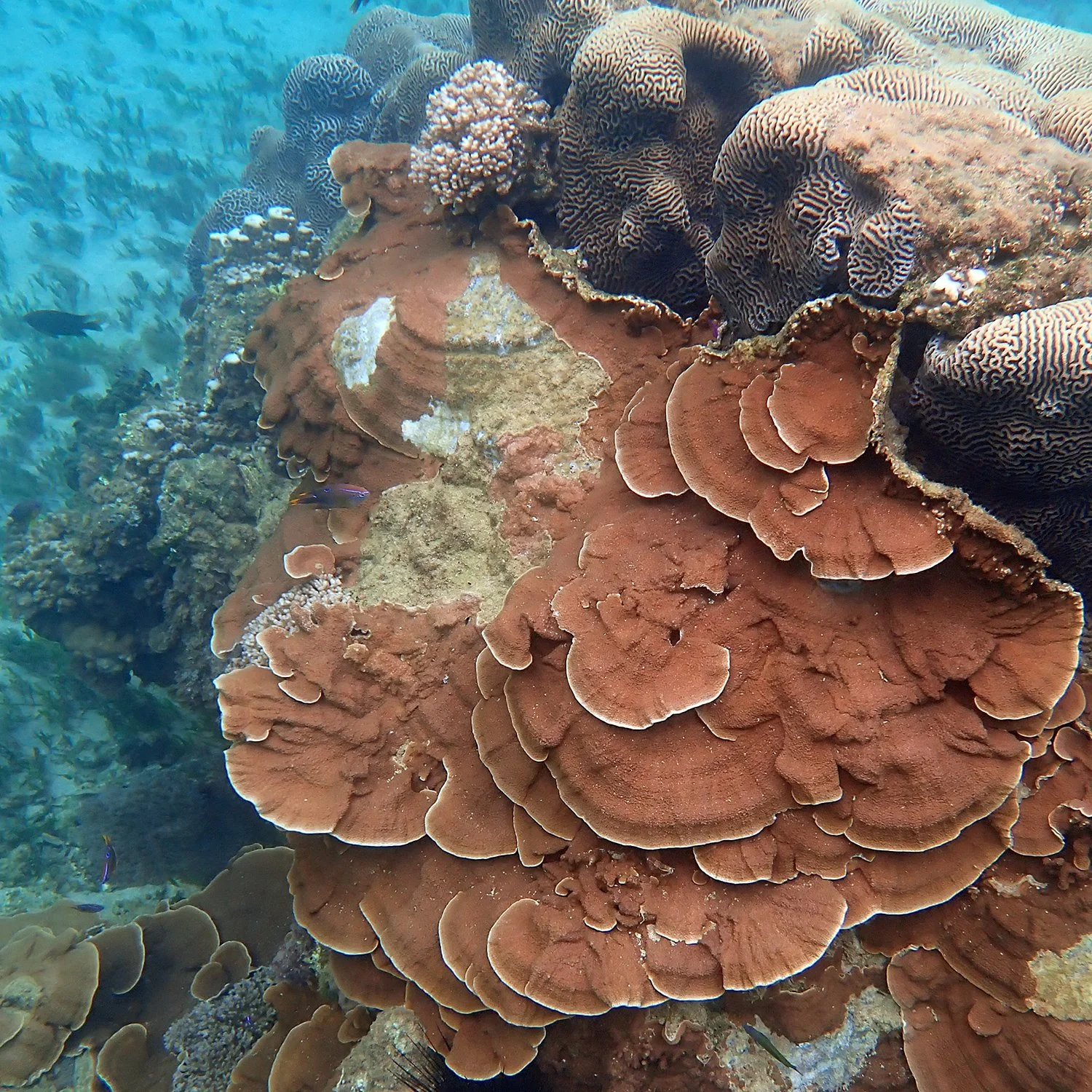
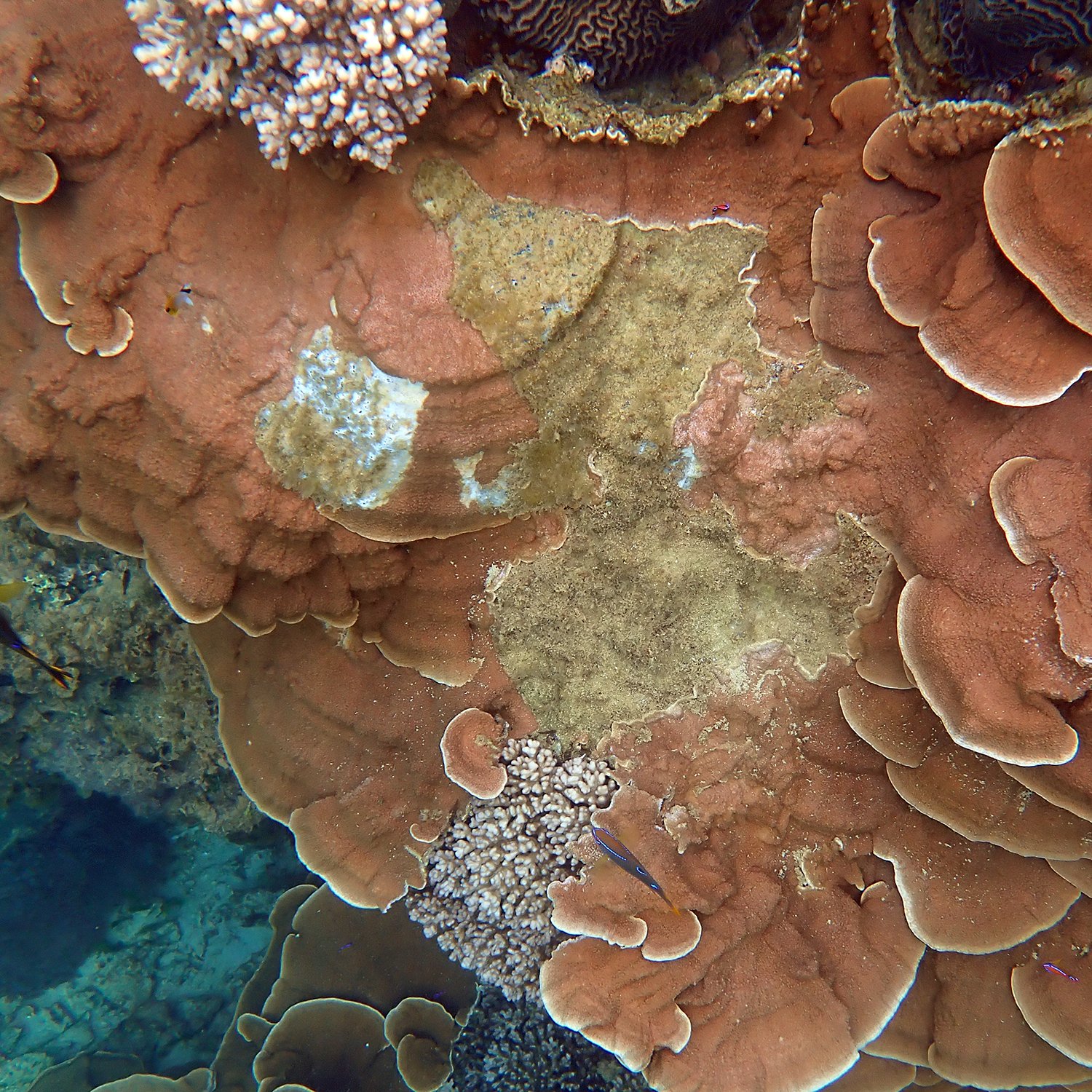
Above: possible atramentous necrosis–type progression
One of the biggest worries now is are enough new corals coming through to replace those we are losing to factors such as bleaching and disease?
If nothing else, this is the part that should make everyone pause. The report says coral recruitment in 2025 was not documented, and it’s unclear whether recruitment failure occurred. It also notes local observations that the usual spawn slicks weren’t noticed that summer. They point out that reproduction and recruitment can be reduced in the year following bleaching, and, of course, we had some bleaching in early 2024.
We know that even if adult corals hang on, the reef’s future can weaken if fewer young corals are arriving to replace what’s lost.
Inshore versus offshore
One of the most telling parts of the report is the contrast between the inshore lagoon reefs (which are more exposed to land-based inputs) and a fringing reef site that’s more removed from catchment run-off.
At Elephant Rock, on the opposite side of the island, the team reports hard coral cover sits at around 45% compared with 25-26% in Emily and Slaughter Bays; and they note offshore algal communities are <30% of benthic cover versus ~60% inshore, inside the bays.
Finally, the report makes some recommendations, including continued monitoring, stronger catchment management to reduce sediment and nutrients reaching the lagoon, and maintaining protections that support herbivores (because these grazers help keep algae in check).
Where we are now – and what’s coming next
On 22 February 2026, Norfolk Island’s alert level rose to Level 2, NOAA
Which brings me to the present.
Right now (27 February 2026), NOAA Coral Reef Watch has us at Alert Level 2 for coral bleaching risk. In plain terms, that’s a serious warning level and unfortunately it isn’t theoretical. I have already taken photographs showing bleaching starting to appear on the reef (see below).
So while this 2025 report is retrospective, the pattern it describes – repeated stress, poor water quality impacts, and ongoing disease pressure – is ongoing. Plus, there’s another pressure point coming. In August 2026, dredging is planned to go ahead for Kingston Pier, at the west end of Slaughter Bay. Dredging in an inshore reef system means more disturbance for an already stressed reef with more suspended sediment.
So that is a short summary of the report. In 2026 I’ll continue documenting what I see and I will keep advocating for this small, yet highly significant, coral reef.
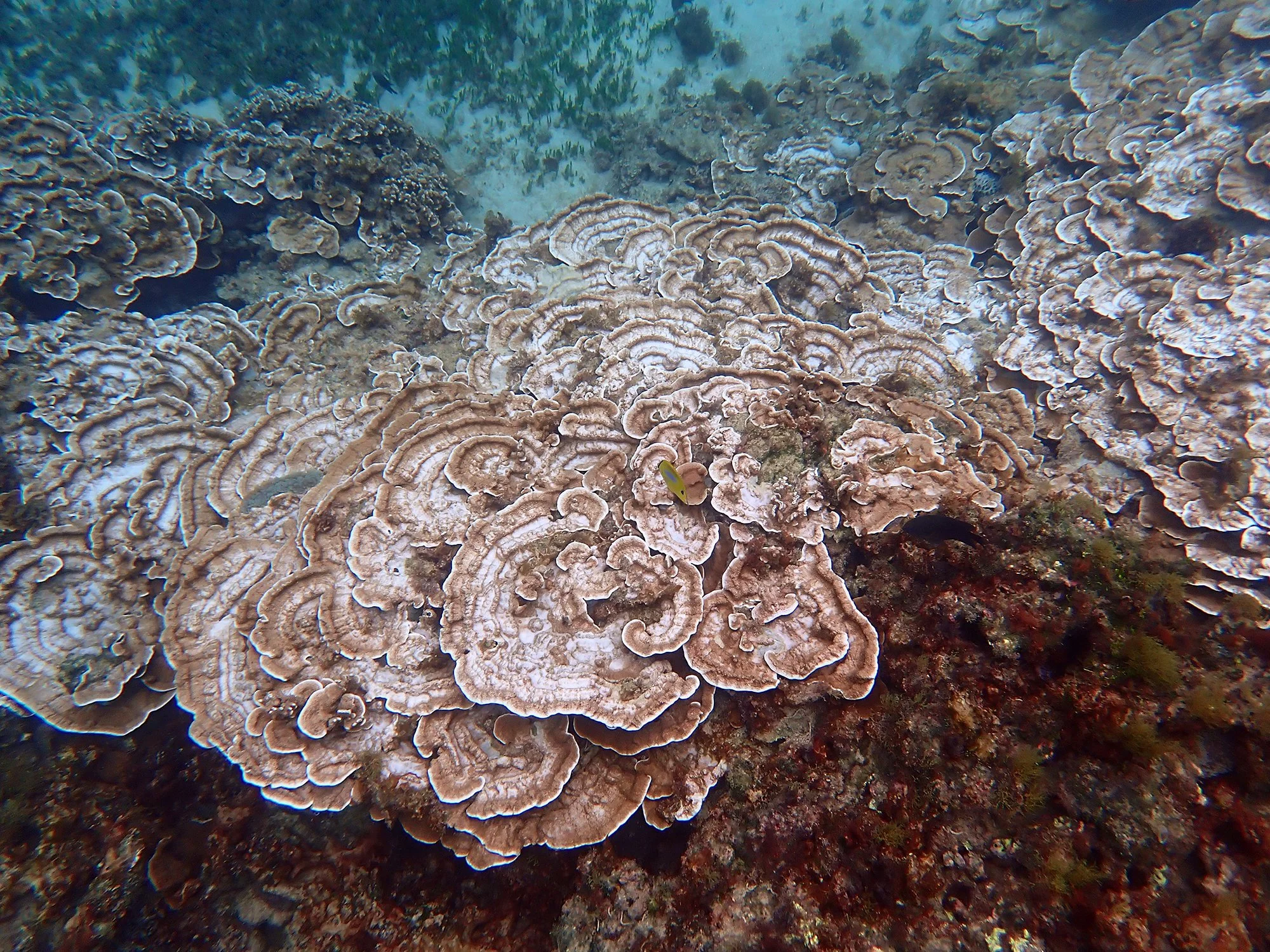
Bleaching Montipora corals, in Emily Bay, Norfolk Island, 26 February 2026
Reference
Ainsworth, T., Gaston, T., Leggat, W., & Roughan, M. (2025). Norfolk Island Lagoonal Reef Ecosystem Health Assessment: August 2025. Prepared for Parks Australia (Norfolk Marine Park).