
El Niño is now firmly established in the Pacific and expected to strengthen. That does not tell us exactly what the coming summer will bring to Norfolk Island, but it gives me plenty to watch – from rainfall and our water tanks to sea temperature, algae, coral recruits and who turns up on the reef.
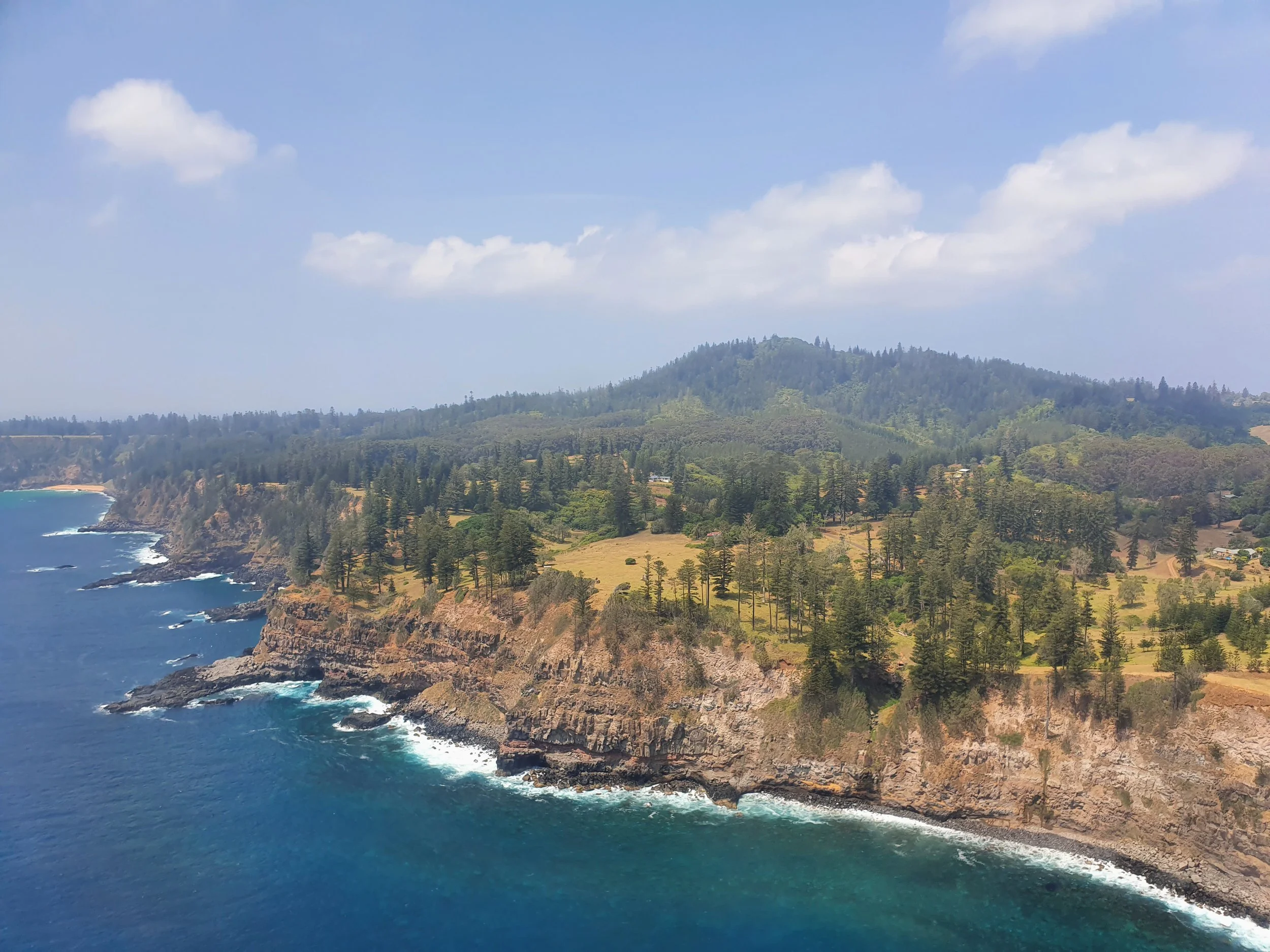
Spring has arrived on Norfolk Island with a series of beautiful calm days, warming temperatures and glorious vistas. The island is green after a few seasons of plentiful rain.
But I saw a news story this morning that made me think about the rain behind these picture-postcard scenes. The Panama Canal has begun reducing the number of ships it allows through each day because rainfall in its watershed has been lower than expected. From 3 September, daily transit capacity was reduced from 36 ships to 34, with another reduction to 32 planned from 15 September. The canal needs enormous quantities of freshwater to operate its locks, supplied by rain-fed lakes, and its authorities are already conserving water as El Niño strengthens across the Pacific.
But the effects are not the same everywhere. While Panama is conserving water, Peru has just declared a state of emergency in numerous districts because of the risk of intense rainfall associated with El Niño. The same enormous ocean-atmosphere system can produce almost opposite effects depending on where you are.
Neither tells us what will happen on Norfolk. But it sharpens the mind when your own water supply ultimately depends on what falls out of the sky and onto your roof.
Here on Norfolk, around 95 per cent of households rely primarily on rainwater tanks. We have no reticulated domestic water supply. Groundwater and carted water provide additional options, and emergency desalination has been used during severe shortages, but for most of us the first link in the chain is still the roof and the tank underneath it.
For much of the past year and a half, we have had a wet run. While 2025 had a dry beginning, by years end Norfolk Island Aero recorded 1,529.2 mm of rain, 19 per cent above its annual average. Summer 2025–26 was also very wet, with 416.6 mm compared with a long-term summer average of 268.4 mm. After a stretch like that, it is remarkably easy to stop looking quite so anxiously into the tank. I freely admit that I have.
August may have provided me with the small nudge I needed. The airport recorded 77.8 mm for the month, just 62 per cent of the August average.
None of that means we are necessarily heading into drought. One dry month certainly doesn’t tell us that. But El Niño is now firmly established in the tropical Pacific and strengthening. The World Meteorological Organization expects it to become a very strong event over the coming months and gives it a near-100 per cent likelihood of persisting through to February 2027.
There is an important qualification attached to all of that, and one worth emphasising; a strong El Niño increases the chances of experiencing conditions typically associated with El Niño, but it does not dictate exactly what will happen in any particular place.
Drought on Norfolk Island, January 2020
View across the golf course from Emily Bay, Norfolk Island, January 2020
The very moment the Royal Australian Engineers landed on 8 February 2020 with the desal plant we finally had some rain
So what could El Niño mean for Norfolk?
El Niño is part of the naturally occurring El Niño–Southern Oscillation, known as ENSO, involving changes in ocean temperatures, atmospheric pressure, winds and rainfall across an enormous part of the Pacific.
Norfolk lies in the southwest Pacific where lower rainfall and drought have been associated with El Niño. A Pacific-wide drought study that included Norfolk found a significant relationship between warmer El Niño conditions in the tropical Pacific and reduced rainfall in our region (McGree et al., 2016). But ENSO isn’t an ‘all on’ or ‘all off’ switch. A strong El Niño may tilt the odds towards drier conditions here, but it cannot tell us how much rain we will get, when it will fall or even where on the island it will fall.
Anyone who lives here knows how extraordinarily patchy our rain can be. It can pour on one side of Norfolk while barely touching the other, and there is research to back that up. A network of rain gauges across the island found very large differences in rainfall over surprisingly short distances (Stow & Dirks, 1998). Other influences – other atmospheric and oceanographic systems – are also operating around us at the same time.
There is also a good reason not to wait until the tanks are getting low before thinking about water. CSIRO’s Norfolk Island Water Resource Assessment, undertaken following the 2019–20 drought, found that relatively small long-term reductions in rainfall can have much larger effects elsewhere in the island’s water system. A 1 per cent reduction in long-term rainfall was associated with about a 2 per cent reduction in groundwater recharge and more than a 4 per cent reduction in streamflow (Hughes et al., 2022).
Norfolk Islanders hardly need a lecture from me about saving water. But at our house, we have already reverted to shorter showers and being a little less enthusiastic about flushing perfectly good tank water down the toilet. It is surprisingly easy, after an extended wet period and comfortably full tanks, to slip out of the habits that become second nature during dry years.
But back to the reef. What will I be watching for?
It would be very easy to assume that El Niño means hotter seas around Norfolk and therefore a greater risk of coral bleaching. But the relationship is not that straightforward. Recent research found that El Niño typically brings cooler southern summer conditions to parts of the southwest Pacific, rather than warmer ones (Dutheil et al., 2024).
So I am not going to assume what the water temperature will do. I am going to watch it. It will certainly be something our coral health research team is keeping a close eye on over the coming months.
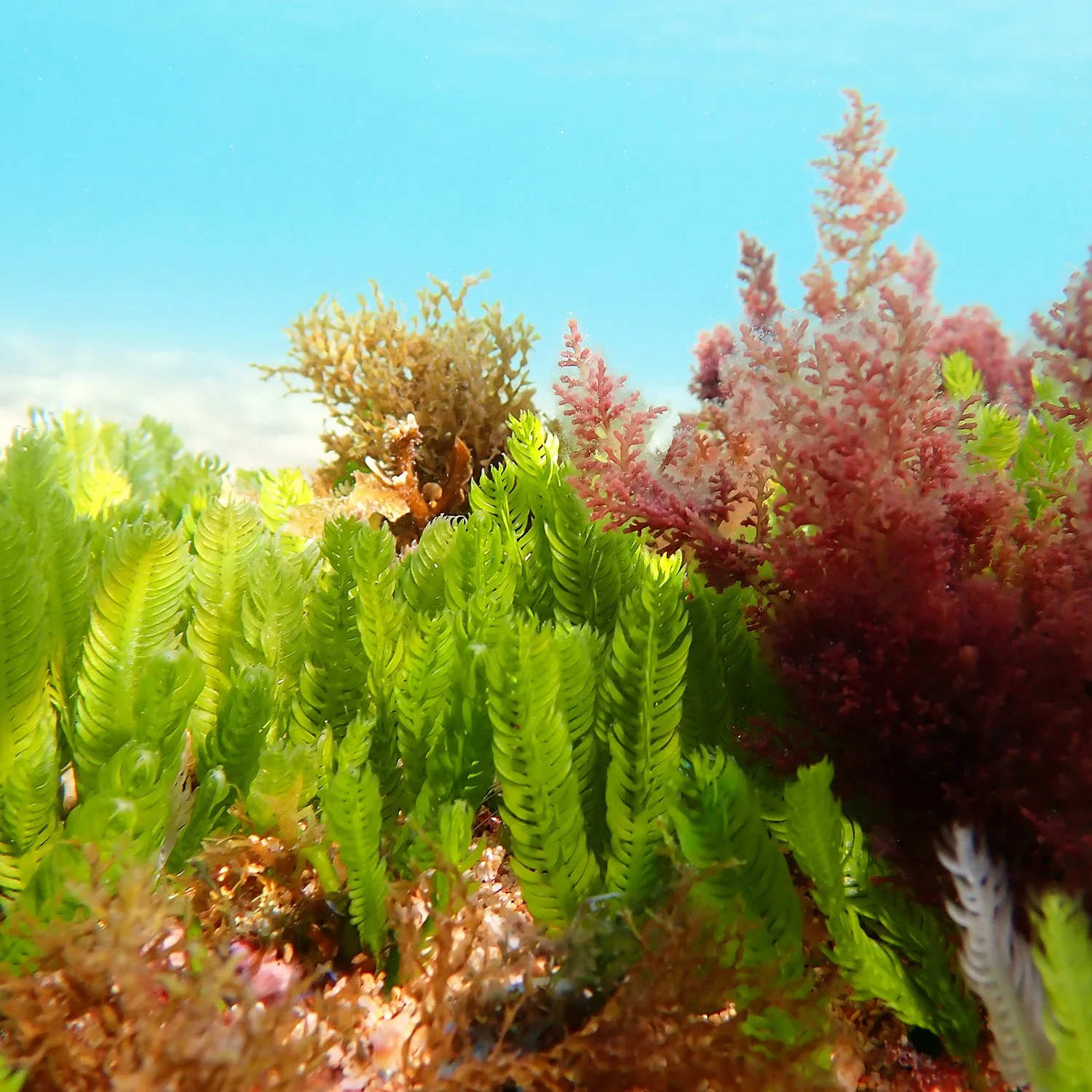
I will also be watching the reef itself. If the coming months are drier, there may be fewer large runoff events into the lagoons. I will be keeping an eye on coral condition and recruitment, and continuing to photograph the algae to see whether its abundance or composition changes.
That last one interests me because I now have almost seven years of photographs to look back through. Rather than relying on whether I think I am seeing more or less of something, I can start comparing what I see this summer with what I have recorded before.
Emily Bay, Norfolk Island, September 2026
Who else might turn up?
Then there are the fish.
Since I began systematically photographing the reef, I have recorded a growing number of fish species living here that had not previously been recorded as resident around Norfolk. Some have tropical distributions, including the sabre squirrelfish, Sargocentron spiniferum.
It is tempting to see every new arrival as evidence of a changing climate, but that would be stretching the evidence. A new record can represent a genuine range extension. It can also be an overlooked resident species, an unusually successful recruitment event or simply the result of someone finally being in the right place with a camera. I covered some of that uncertainty recently in my two-part articles Endemic, native, undescribed – what do these words actually mean? and When the map changes.
There is good evidence that warming waters and changing currents are allowing some tropical fishes to occur and persist further south along eastern Australia. But recent systematic monitoring has also cautioned against assuming that every unusual sighting represents a permanent poleward range shift (Downie et al., 2025; Fuchs et al., 2024).
Perhaps this summer will bring something new and perhaps it won’t, but either way I will be watching to see who turns up in our lagoon.
With so many variables, I don’t want to predict that Norfolk Island will have a drought, that the reef will bleach, that algae will take over or that tropical fish will suddenly start appearing here. Instead, I can decide now what I am going to watch: rainfall and our tank levels on land; sea temperature, coral condition, algae and recruitment underwater; and any unusual fish arrivals in the lagoon.
With almost seven years of reef observations behind me, I now have something substantial to compare the coming summer with. For now, Norfolk is green after a long wet spell and my tanks are comfortably full. What happens from here – to the rain, the reef and the fish that find their way into the lagoon – is what I will be watching. Next autumn, I can come back to this article and see what actually happened. Watch this space!



References
Bureau of Meteorology. (2026a). Remote Islands and Antarctica in 2025. Australian Government. Bureau of Meteorology annual summary
Bureau of Meteorology. (2026b). Remote Islands and Antarctica in summer 2026. Australian Government. Bureau of Meteorology summer summary
Bureau of Meteorology. (2026c). Remote Islands and Antarctica in August 2026. Australian Government. Bureau of Meteorology August summary
Downie, A. T., Champion, C., & Booth, D. J. (2025). Physiological traits for predicting poleward extensions in tropical fishes: From lab to management. Global Change Biology, 31(4), e70213. doi: 10.1111/gcb.70213.
Dutheil, C., Lal, S., Lengaigne, M., Cravatte, S., Menkès, C., Receveur, A., Börgel, F., Gröger, M., Houlbreque, F., Le Gendre, R., Mangolte, I., Peltier, A., & Meier, H. E. M. (2024). The massive 2016 marine heatwave in the Southwest Pacific: An ‘El Niño–Madden-Julian Oscillation’ compound event. Science Advances, 10(41), eadp2948. doi: 10.1126/sciadv.adp2948.
Fuchs, Y. H., Edgar, G. J., Bates, A. E., Waldock, C., & Stuart-Smith, R. D. (2024). Limited net poleward movement of reef species over a decade of climate extremes. Nature Climate Change, 14, 1087–1092. doi: 10.1038/s41558-024-02116-w.
Hughes, J., Petheram, C., Taylor, A., Raiber, M., Davies, P., & Levick, S. (2022). Water balance of a small island experiencing climate change. Water, 14(11), 1771. doi: 10.3390/w14111771.
McGree, S., Schreider, S., & Kuleshov, Y. (2016). Trends and variability in droughts in the Pacific Islands and Northeast Australia. Journal of Climate, 29(23), 8377–8397. doi: 10.1175/JCLI-D-16-0332.1.
Panama Canal Authority. (2026). Panama Canal adopts additional measures to address reduced precipitation in the Canal watershed. 20 August 2026. Panama Canal Authority announcement
Petheram, C., Taylor, A., Hughes, J., et al. (2020). Norfolk Island Water Resource Assessment: A report to the Australian Government from the CSIRO Norfolk Island Water Resource Assessment team. CSIRO. doi: 10.25919/tg90-3x77.
Petheram, C., Yang, A., Hughes, J., Seo, L., Rogers, L., Vanderzalm, J., Taylor, A. R., & Marvanek, S. (2022). Water, water everywhere, nor any drop to drink? Options for improving the resilience of a subtropical island to drought and the sensitivity of their yield under a projected drier future climate. Water, 14(16), 2461. doi: 10.3390/w14162461.
Presidencia del Consejo de Ministros, Peru. (2026). Decreto Supremo N.º 124-2026-PCM: Estado de Emergencia por peligro inminente ante intensas precipitaciones pluviales asociadas al Fenómeno El Niño 2026–2027. 1 September 2026. Official Peruvian decree
Stow, C. D., & Dirks, K. N. (1998). High-resolution studies of rainfall on Norfolk Island: Part 1: The spatial variability of rainfall. Journal of Hydrology, 208(3–4), 163–186. doi: 10.1016/S0022-1694(98)00154-1.
World Meteorological Organization. (2026). El Niño/La Niña Update (August 2026). 3 September 2026. WMO El Niño/La Niña Update