• Home
    • Algae
    • Corals
    • Eels
    • Everything Else
    • Kingston, Norfolk Island
    • Nudibranchs, Sea Slugs and Flatworms
    • Octopuses
    • Out On A Swim Index
    • Reef Fish
    • Sharks
    • Sea Anemones
    • Sea Stars
    • Sea Urchins and Sea Cucumbers
    • Turtles
    • Underwater
    • Videos
  • Out on a swim - blog
  • About
  • Contact + Subscribe
Menu

Norfolk Island's Reef

Discover a fragile paradise – Norfolk Island's beaches, lagoons and coral reef
  • Home
  • Explore
    • Algae
    • Corals
    • Eels
    • Everything Else
    • Kingston, Norfolk Island
    • Nudibranchs, Sea Slugs and Flatworms
    • Octopuses
    • Out On A Swim Index
    • Reef Fish
    • Sharks
    • Sea Anemones
    • Sea Stars
    • Sea Urchins and Sea Cucumbers
    • Turtles
    • Underwater
    • Videos
  • Out on a swim - blog
  • About
  • Contact + Subscribe

Out on A Swim

‘Out on a swim’ is a coral reef blog that tells the stories of the characters who live under the waves and what has caught my eye when ‘out on a swim’ in the lagoons of Norfolk Island. It is also a record of the difficulties Norfolk Island’s reef faces, like many others around the world, as a result of the poor water quality that has been allowed to flow onto it.

This page shows the most recent blog posts. For the complete catalogue, visit the ‘Out on a swim index’ page.

This blog is rated in the Top 20 Coral Reef Blogs in the world.

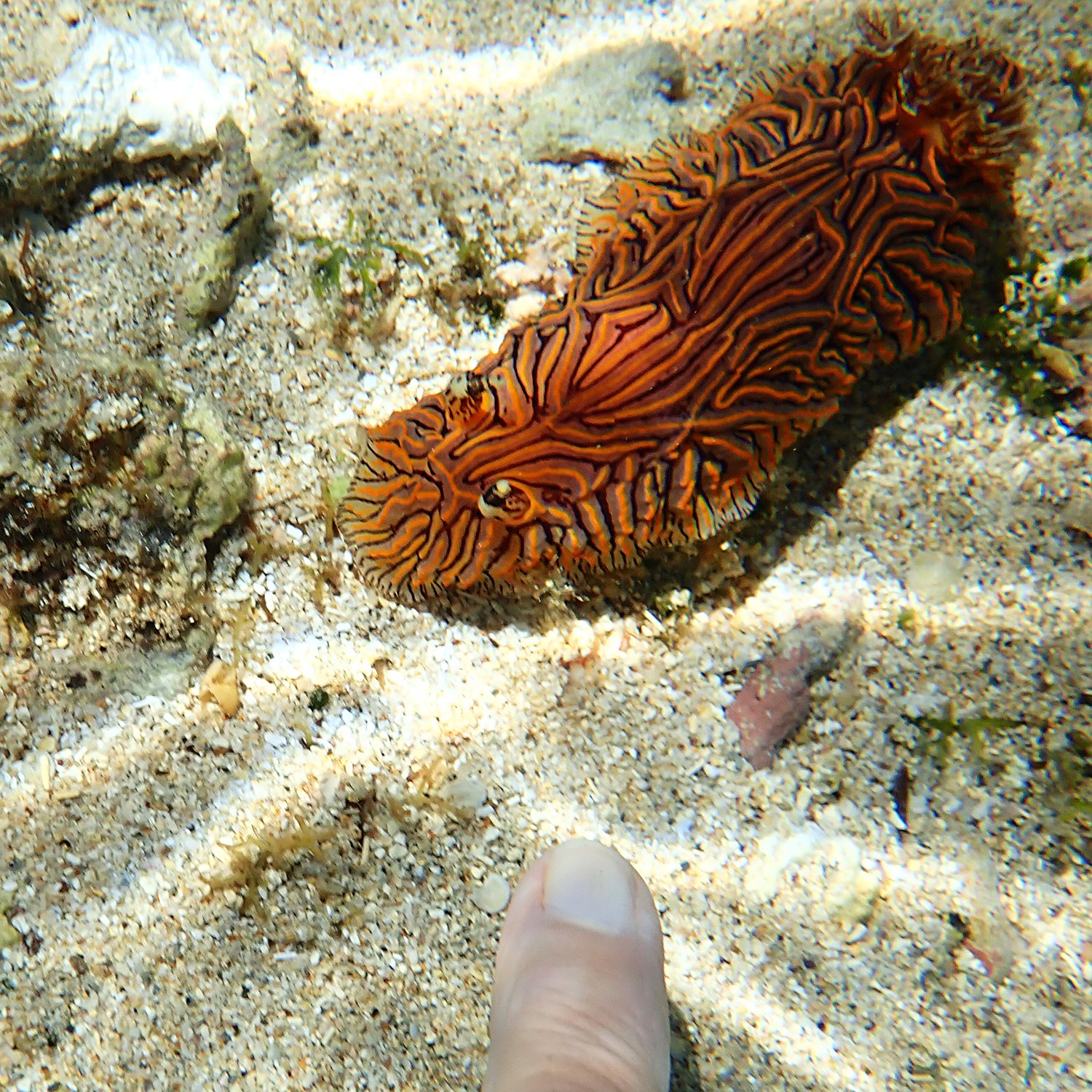
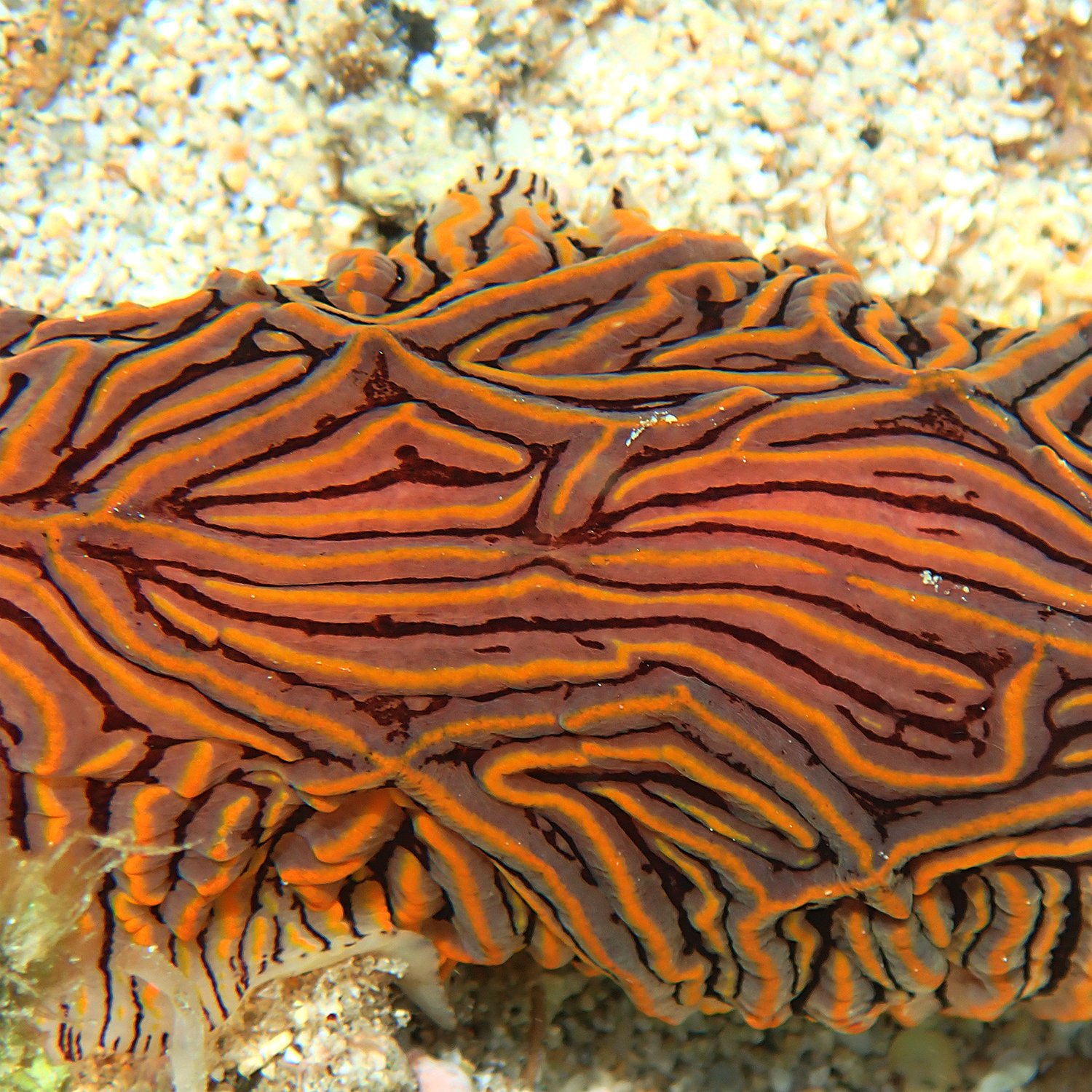
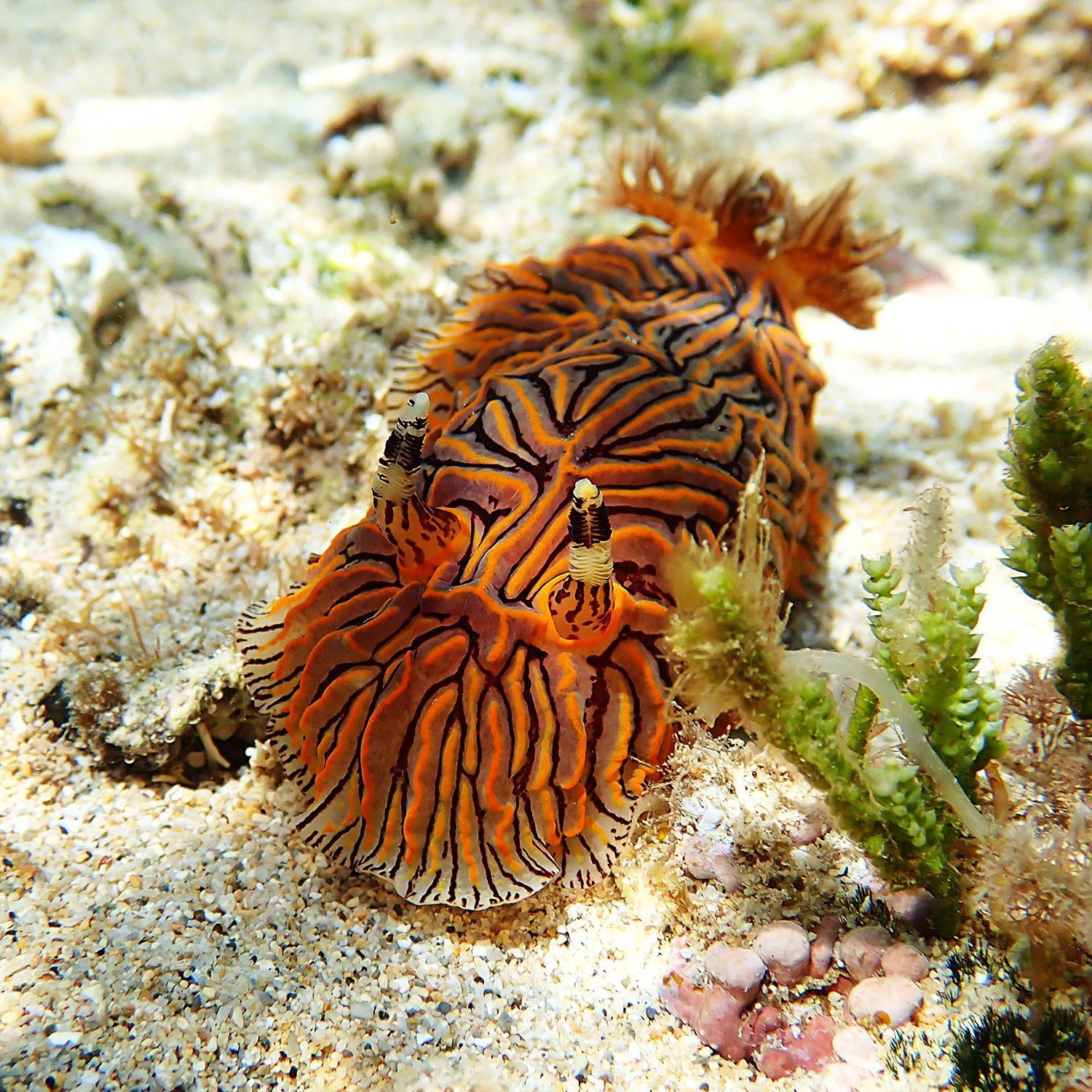
Halgerda willeyi, Norfolk Island

The funky seventies sea slug – Halgerda willeyi

October 15, 2025

Generic image of a 1970s vintage loung suite

If ever a sea slug was channeling the 1970s, it’s Halgerda willeyi. With its glossy orange lines and brownish raised bumps, it looks straight out of a retro lounge suite – the kind with shag pile carpet and floral upholstery. Nature, it seems, is totally groovy and was doing vintage chic long before it was cool.

This particular nudibranch is one of the showier ones found in Norfolk’s lagoon, crawling slowly across the sand or perched on sponges where its patterns blend surprisingly well. Those vivid orange lines aren’t just for decoration, though – they’re a warning. Like many nudibranchs, Halgerda willeyi is toxic, advertising its unpalatability to would-be predators in the most flamboyant way possible.

I spotted this one on a snorkel and couldn’t help thinking it belonged in a 1975 home décor catalogue. Orange and brown – the colour palette of my teens and one that would look right at home in my grandma’s front room! Proof, perhaps, that design inspiration really does come from the sea floor as much as from the studio. Next time you see a bold retro print, remember: the ocean probably wore it first!

View fullsize 18 Feb 2023 (247)_crop.jpg
View fullsize 18 Feb 2023 (237)_crop.jpg
View fullsize 18 Feb 2023 (224)_crop.jpg
View fullsize 18 Feb 2023 (225)_crop.jpg
View fullsize 18 Feb 2023 (230)_crop.jpg
View fullsize 18 Feb 2023 (228)_crop.jpg
View fullsize 18 Feb 2023 (217)_crop.jpg
View fullsize 18 Feb 2023 (241)_crop.jpg
In Sea slugs Tags nudibranch, sea slugs, Halgerda willeyi
← Aglow among the spines Haddon's barometer →
Featured
What Norfolk Island’s reef tells us about environmental blind spots
Apr 5, 2026
What Norfolk Island’s reef tells us about environmental blind spots
Apr 5, 2026

The Kingston dredging proposal on Norfolk Island raises a bigger question than dredging alone: how well do standard environmental assessment tools capture the real significance of a remote and unusual reef system like Norfolk Island’s?

Apr 5, 2026
Hammer coral time!
Mar 30, 2026
Hammer coral time!
Mar 30, 2026

Hammer corals have unique tentacles that are large, fleshy, and tubular; these terminate in a ‘T’-shaped, hammer-head or anchor. Beneath all these softly waving tentacles is an extraordinary skeleton structure, which helps define them as a large polyp stony coral.

Mar 30, 2026
Norfolk Island’s fishes: drifters, residents and the ones still missing
Mar 24, 2026
Norfolk Island’s fishes: drifters, residents and the ones still missing
Mar 24, 2026

Norfolk Island’s fish fauna reflects both connection and isolation. Some species may arrive from elsewhere as drifting larvae, some populations appear to persist locally, and some fishes known from islands on either side of Norfolk have still not been recorded here. This post looks at what old survey work, regional checklists and genetic studies suggest about that more complicated picture.

Mar 24, 2026
18 Jun 2025 (20)_crop.jpg
Mar 7, 2026
Alveopora or flowerpot coral – how to tell the difference
Mar 7, 2026

They look alike at first glance, but Alveopora and flowerpot corals are not the same. The easiest way to tell them apart is to count the tentacles.

Mar 7, 2026
Norfolk’s lagoonal reef – the 2025 report, in plain English
Feb 27, 2026
Norfolk’s lagoonal reef – the 2025 report, in plain English
Feb 27, 2026

We now have the 2025 Norfolk Island reef health report, so I’m taking the opportunity to translate it into plain English here. Sadly, it’s more of the same story in Emily and Slaughter Bays – a reef that can cope with some stress, but is being asked to cope with too much, too often.

Feb 27, 2026
Halimeda’s night shift – why this reef algae changes colour
Feb 20, 2026
Halimeda’s night shift – why this reef algae changes colour
Feb 20, 2026

Halimeda is a calcareous green reef alga that forms new segments overnight, shifts from white to bright green by dawn, then pales again as calcification begins. A quick look at one of the reef’s smartest algae.

Feb 20, 2026
Reef real estate – a bubble-tip’s six-year stand-off
Jan 11, 2026
Reef real estate – a bubble-tip’s six-year stand-off
Jan 11, 2026

Reef space is finite, and nothing ‘shares’ it politely. This short photo essay follows one bubble-tip anemone on Norfolk Island’s lagoonal reef as it holds a crater surrounded by Montipora. The coral builds a rim; the anemone holds the centre. Six years apart, and the argument continues.

Jan 11, 2026
A year in review – 2025 on Norfolk Island's reef
Dec 28, 2025
A year in review – 2025 on Norfolk Island's reef
Dec 28, 2025

Norfolk Island’s reef in 2025 – a year in review. From NOAA bleaching alerts and the UN Ocean Conference ‘Warning Signs’ series to post-drought coral recovery and a wet winter revealed in long-term rainfall records, this post captures the wins, losses, and shifting baselines beneath the lagoon. Includes reef photos, highlights from Reef Relief, and standout stories from 2025 – from coral health and disease to boxfish biomimicry, sea urchins, nudibranchs, and heat-stress signals in anemones.

Dec 28, 2025
Herbicides, heritage, and an inshore reef: what happens when land management meets lagoon health
Dec 15, 2025
Herbicides, heritage, and an inshore reef: what happens when land management meets lagoon health
Dec 15, 2025

Herbicide use near Emily, Slaughter and Cemetery Bays raises questions about inshore reef health, heritage land management, and environmental protection on Norfolk Island.

Dec 15, 2025
Signs of bleaching – 8 December 2025
Dec 8, 2025
Signs of bleaching – 8 December 2025
Dec 8, 2025

I took these photographs this morning, Monday, 8 December 2025. A few warm days of settled weather, little cloud cover and low tides in the hottest part of the day have led to some early bleaching on our reef. Bleaching doesn’t always mean death for our corals, but it is concerning to have this so early in the summer season. Fingers crossed the conditions don’t last and the reef can recover.

Dec 8, 2025

Latest Posts

© 2026 All rights reserved.