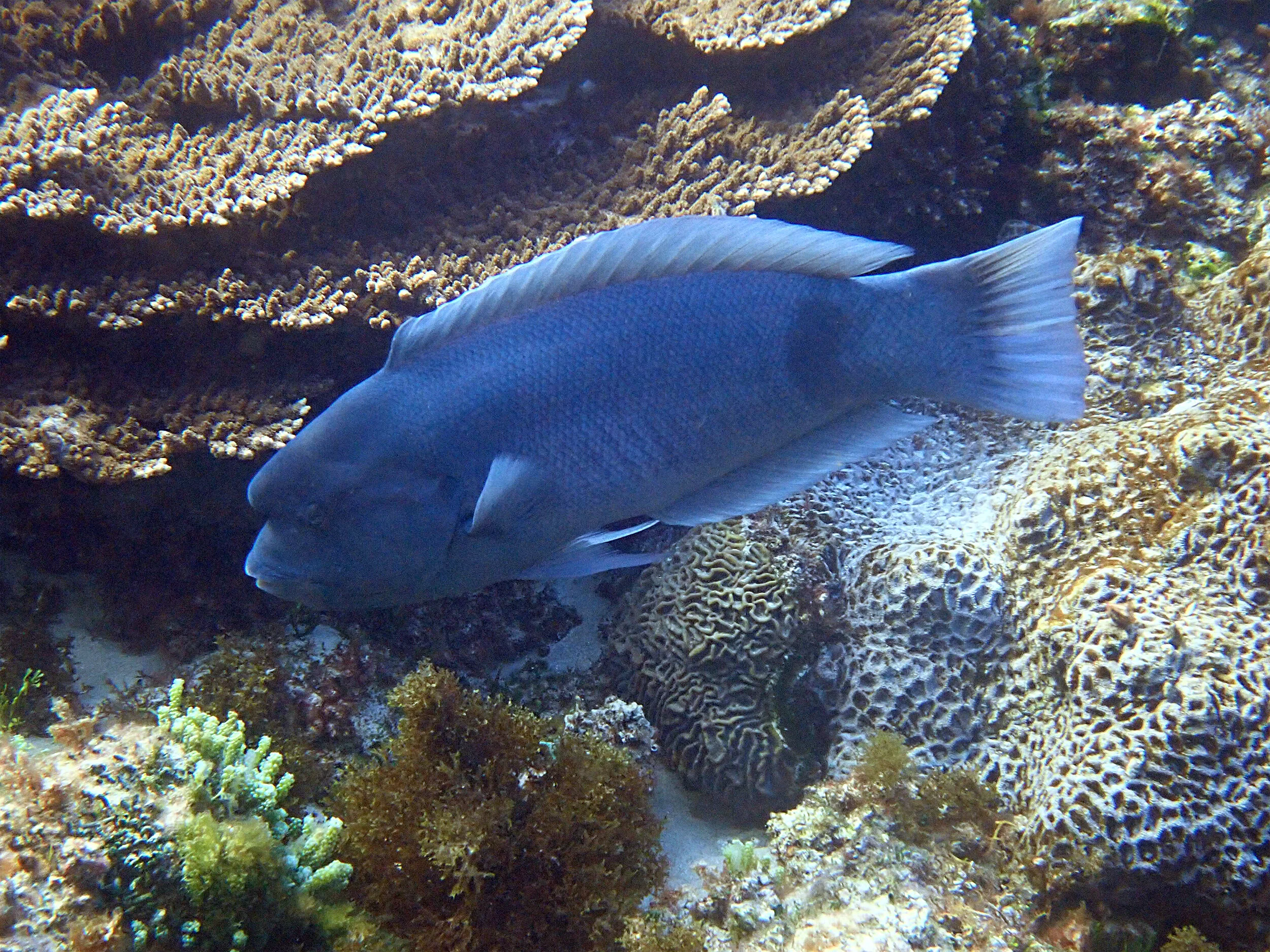
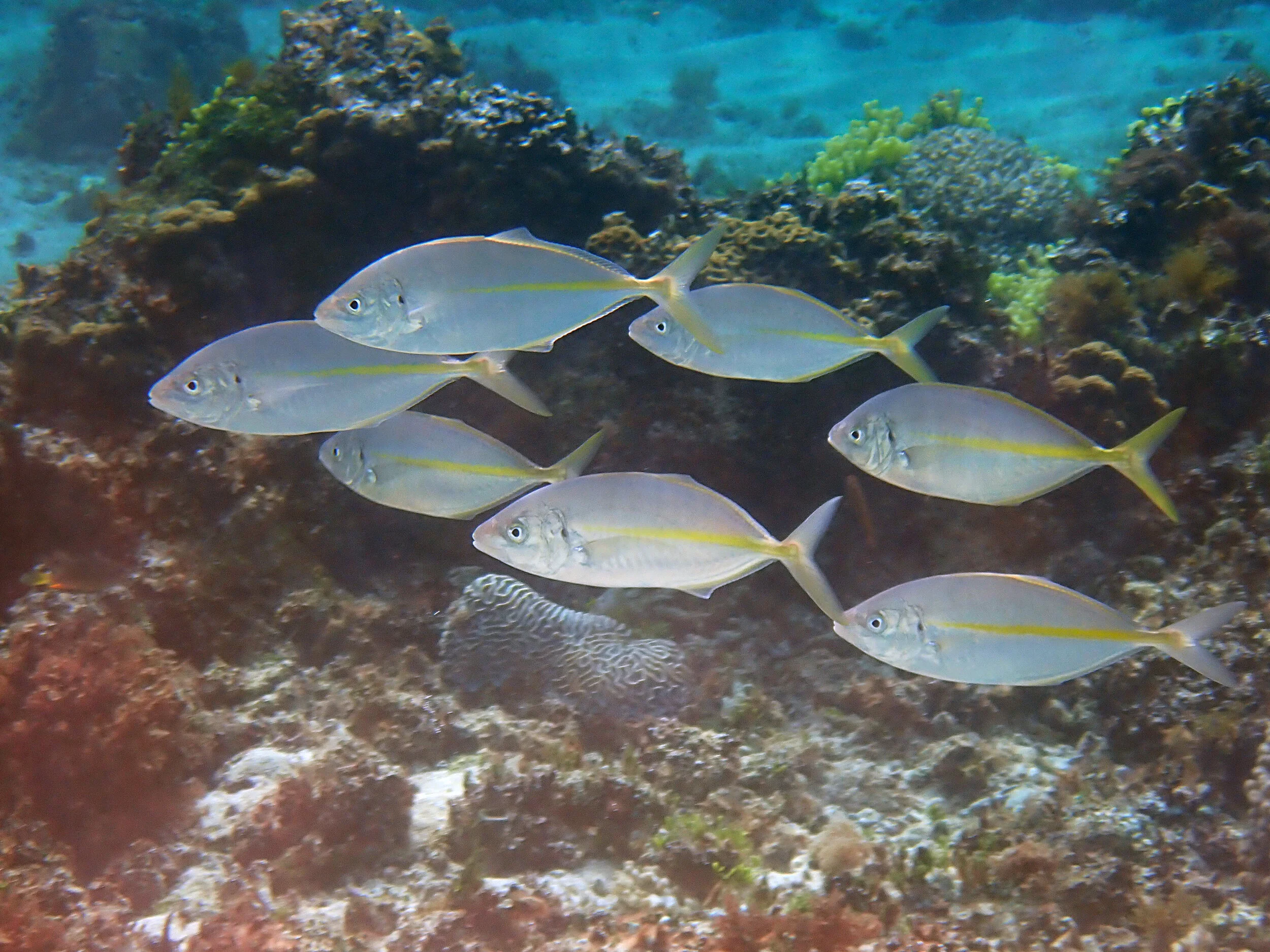
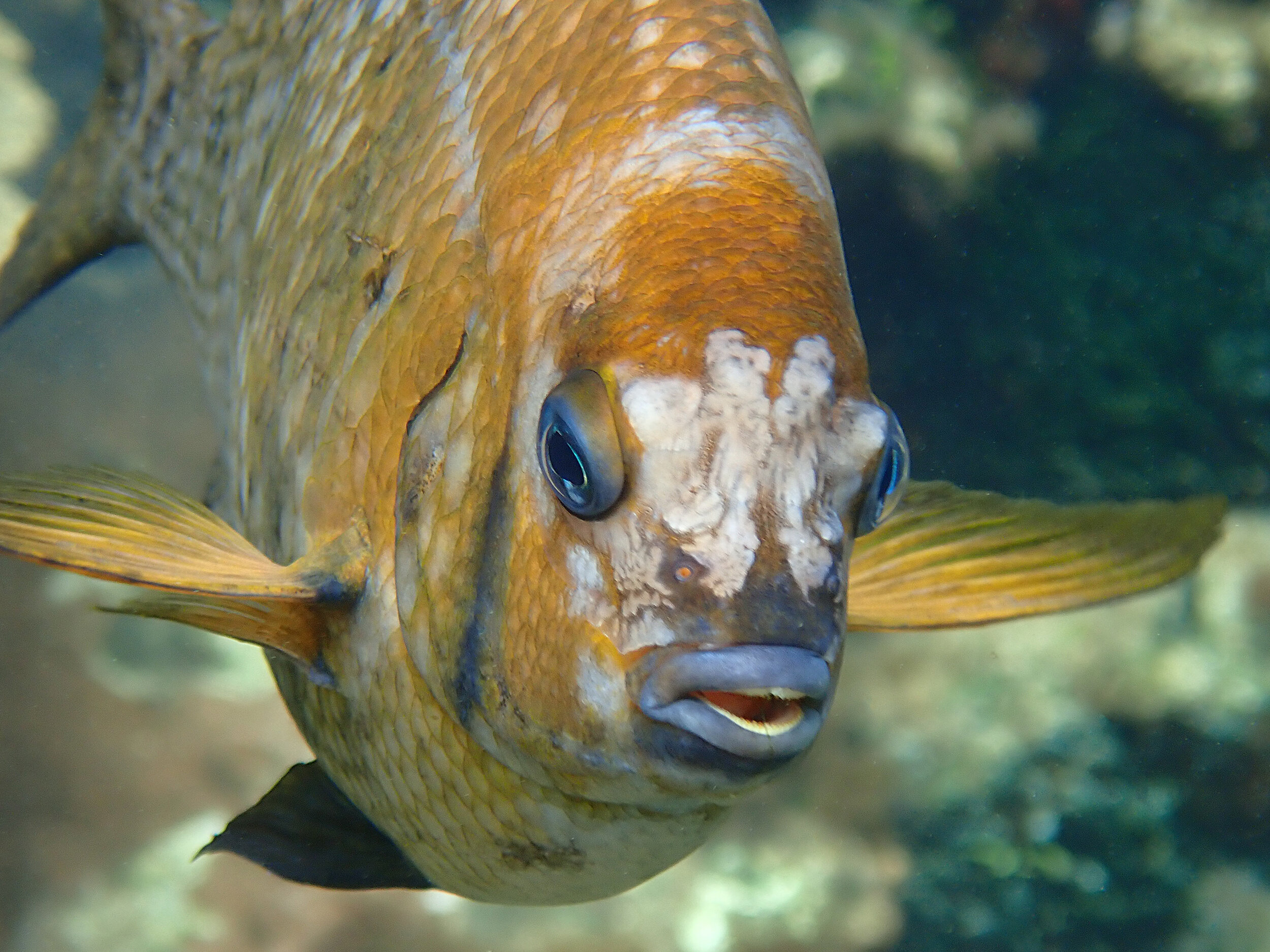
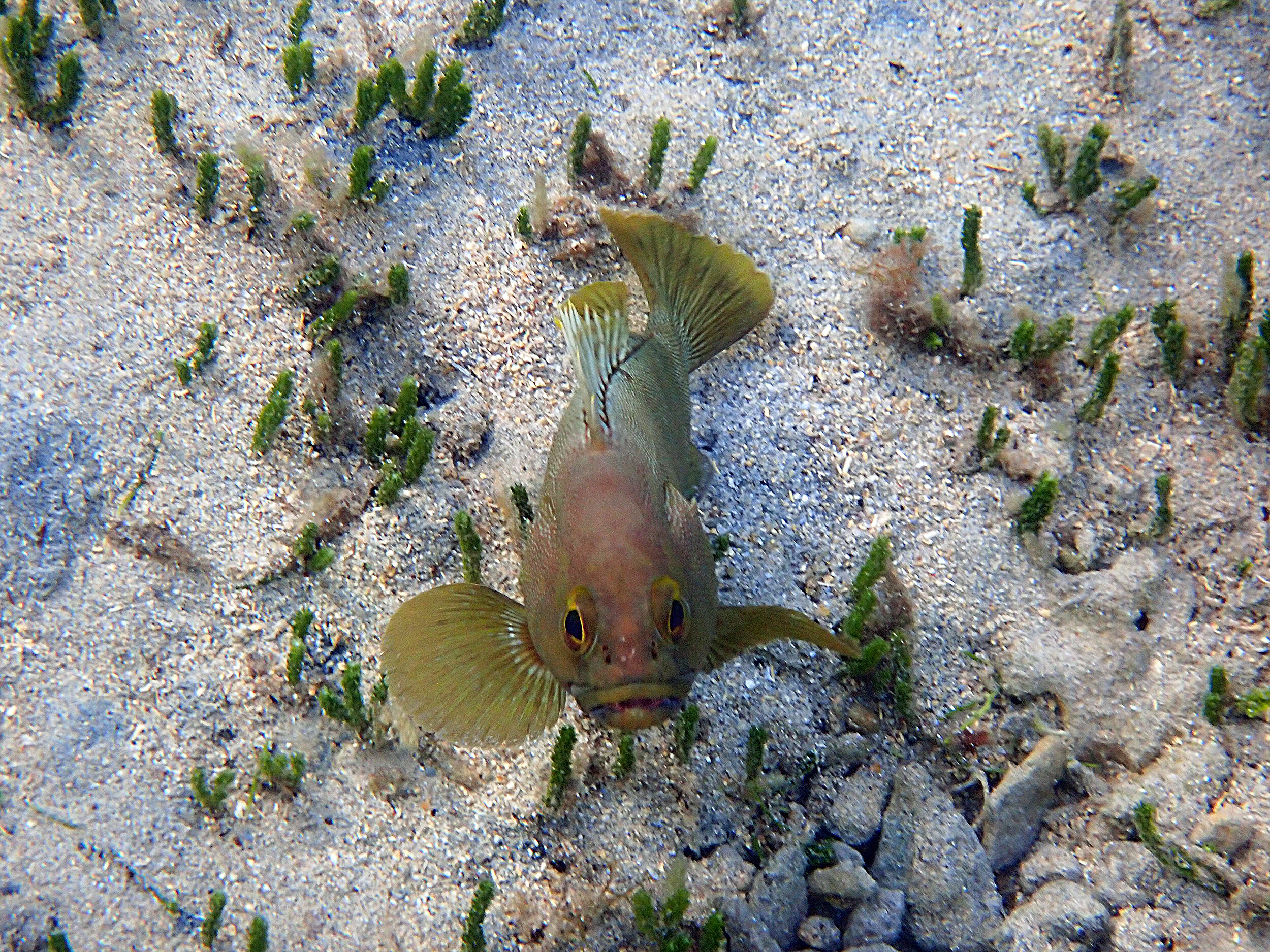
I thought I’d have a bit of fun and post some of my favourite images of fish as they look at me head on. It’s such a beautiful perspective, and one that often makes you wonder what they are thinking. Enjoy!
Read MoreBlue drummer - Girella cyanea
‘Out on a swim’ is a coral reef blog that tells the stories of the characters who live under the waves and what has caught my eye when ‘out on a swim’ in the lagoons of Norfolk Island. It is also a record of the difficulties Norfolk Island’s reef faces, like many others around the world, as a result of the poor water quality that has been allowed to flow onto it.
This page shows the most recent blog posts. For the complete catalogue, visit the ‘Out on a swim index’ page.
This blog is rated in the Top 20 Coral Reef Blogs in the world.
Blue drummer - Girella cyanea
I thought I’d have a bit of fun and post some of my favourite images of fish as they look at me head on. It’s such a beautiful perspective, and one that often makes you wonder what they are thinking. Enjoy!
Read MoreParrotfish swim using their pectoral fins
Parrotfish eat algae and coral polyps, and to get at these they chow down on the hard coral skeletons. More teeth in their throat (plates known as a pharyngeal mill) grind the coral into a paste so they can extract the nutritious coral polyps and algae. What comes out the other end is beautiful white sand. A lot of it!
Read MoreWhat a cool name for a fish, the piano fangblenny! It is more properly known as Plagiotremus tapeinosoma. Many snorkellers will know them first by their little nip as they hit and run! Once you’ve seen them and experienced them that first time, you know to shoo them away to avoid another nibble!
Read MoreOne of the many characterful fish in the Emily and Slaughter Bay environs on Norfolk Island are the bluespine unicornfish, more properly known as Naso unicornis. These guys love to pose for the camera, showing off their best side, and then shifting so you can get a shot of the other.
Read MoreLove these doubleheader wrasse, Coris bulbifrons. Beautiful deep smoky blue with a big bulge on their forehead, they will quite often just casually cruise on past. Like many wrasse, they change sex, colour and appearance quite radically as they age and grow.
Read MoreHow special to see this. Normally shy and a little timid, these little leatherjackets were quite happy concentrating on each other as I watched them courting.
Read MoreThis little eastern footballer or mado has suddenly started hanging with a family of stripeys that I've been watching. But it always keeps slightly apart, aloof, even. In fact, sometimes it almost seems like it is herding them - and giving lectures! This guy definitely has attitude!
Read MoreMarbled parrotfish - Leptoscarus vaigiensis
The marbled parrotfish (Leptoscarus vaigiensis) likes to camouflage itself, disappearing into the seagrass and algae on which it feeds.
Read MoreAttracted by the easy pickings, I then watched as the silver trevally – Pseudocaranx sp 'dentex' – arrived. Like a sleek pack of wolves they swept around, in and out of the drum scooping up whatever they could. The fry shrank back, huddling together, trying to stay out of the maelstrom and away from so many hungry mouths.
Read MoreThe banded scalyfin damselfish are keen underwater gardeners who don't take kindly to their carefully tended and guarded patches being raided by schools of elegant wrasse.
Read MorePhotographed in Cemetery Bay
A reasonably common coral here is this beautiful brown, but sometimes creamy or caramel coloured fronded species called Goniopora norfolkensis..
Read MoreHalfmoon grouper - Epinephelus rivulatus
A close encounter with a halfmoon grouper causes an amazing transformation from mottled red to mustard yellow.
Read MoreNorfolk Island blenny, Parablennius serratolineatus
The Norfolk Island blenny is a teeny little shy guy, who hangs out quite a bit at one end of Slaughter Bay and also in Cemetery. Extremely localised, they are endemic to Norfolk Island.
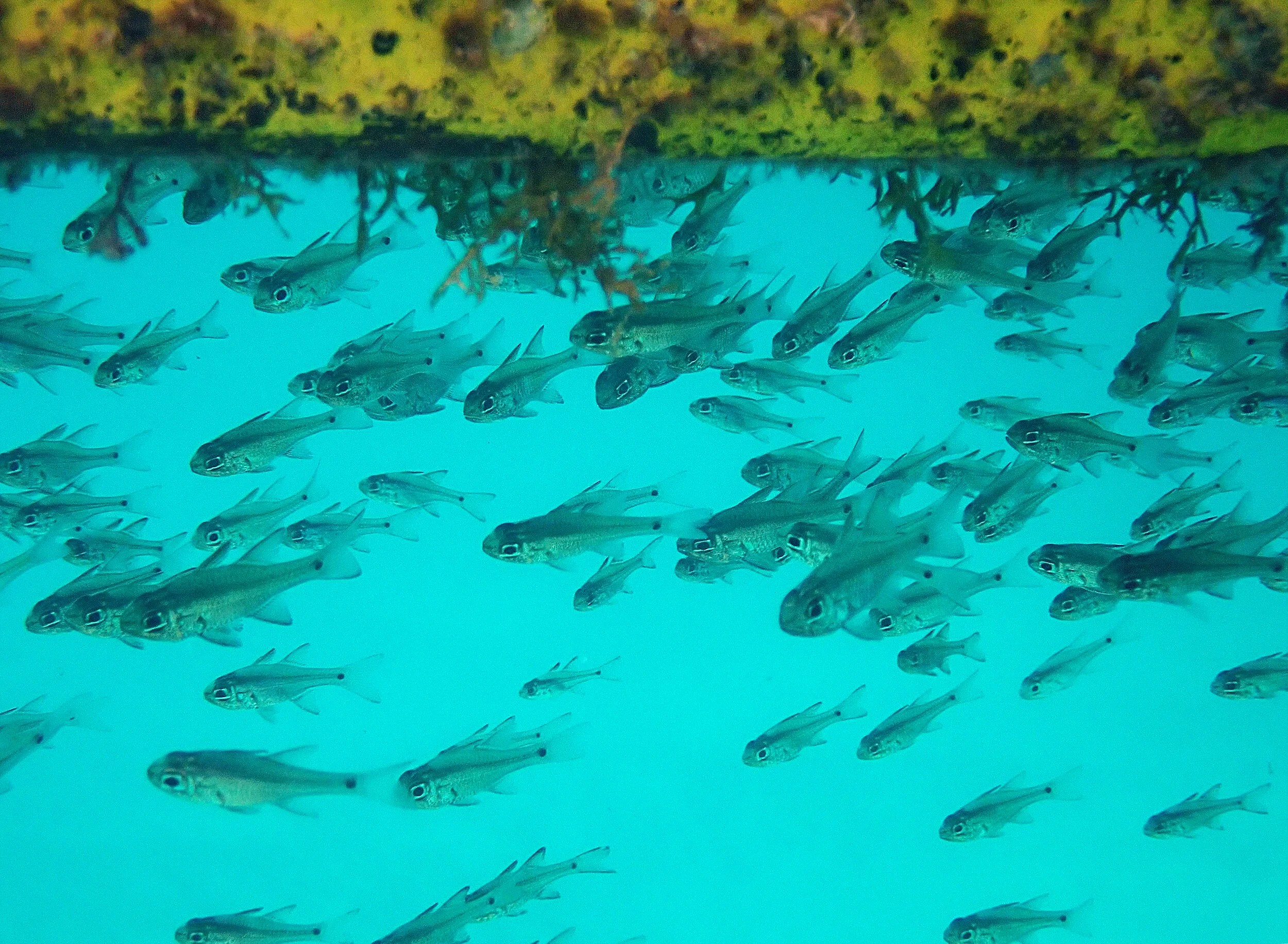
Read MoreJuvenile Norfolk cardinalfish, Ostorhinchus norfolcensis, under the raft, Emily Bay
Norfolk cardinalfish are called big eyes on Norfolk Island, and it is easy to see why! These guys are mouth brooders, as in the male nurtures the eggs in his mouth.
Read MoreLike fragile jewels floating on the ocean currents, the common violet snail feeds on a fellow compatriots in the pleustal zone just beneath the ocean’s surface, the bluebottle. We should be grateful, because they are doing us a service by chomping on those stingers!
Read More