• Home
    • Algae
    • Corals
    • Eels
    • Everything Else
    • Kingston, Norfolk Island
    • Nudibranchs, Sea Slugs and Flatworms
    • Octopuses
    • Out On A Swim Index
    • Reef Fish
    • Sharks
    • Sea Anemones
    • Sea Stars
    • Sea Urchins and Sea Cucumbers
    • Turtles
    • Underwater
    • Videos
  • Out on a swim - blog
  • About
  • Contact + Subscribe
Menu

Norfolk Island's Reef

Discover a fragile paradise – Norfolk Island's beaches, lagoons and coral reef
  • Home
  • Explore
    • Algae
    • Corals
    • Eels
    • Everything Else
    • Kingston, Norfolk Island
    • Nudibranchs, Sea Slugs and Flatworms
    • Octopuses
    • Out On A Swim Index
    • Reef Fish
    • Sharks
    • Sea Anemones
    • Sea Stars
    • Sea Urchins and Sea Cucumbers
    • Turtles
    • Underwater
    • Videos
  • Out on a swim - blog
  • About
  • Contact + Subscribe

Out on A Swim

‘Out on a swim’ is a coral reef blog that tells the stories of the characters who live under the waves and what has caught my eye when ‘out on a swim’ in the lagoons of Norfolk Island. It is also a record of the difficulties Norfolk Island’s reef faces, like many others around the world, as a result of the poor water quality that has been allowed to flow onto it.

This page shows the most recent blog posts. For the complete catalogue, visit the ‘Out on a swim index’ page.

This blog is rated in the Top 20 Coral Reef Blogs in the world.

No results found
28.07 (52)_reduced.jpg

The doubleheader's double life!

February 28, 2021

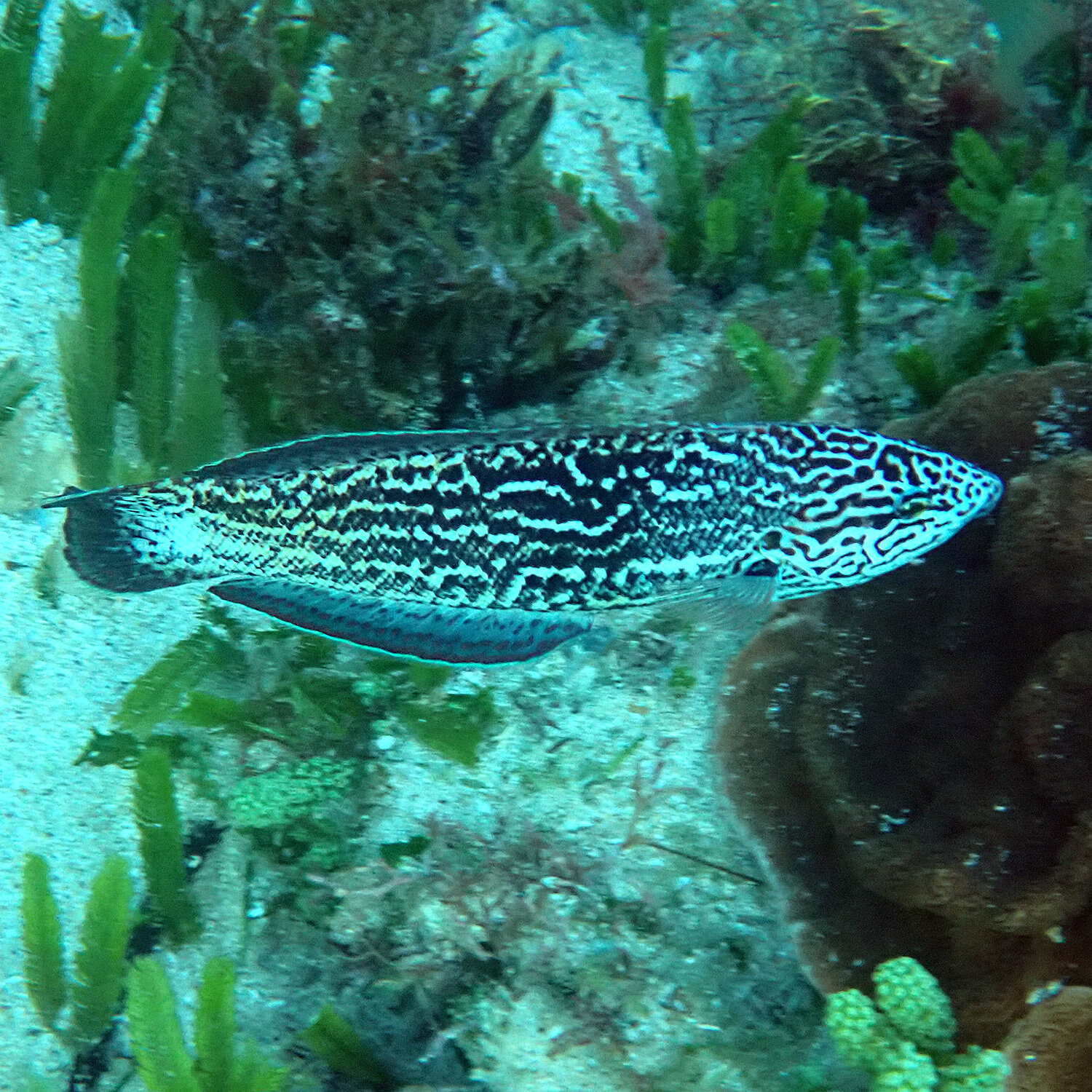
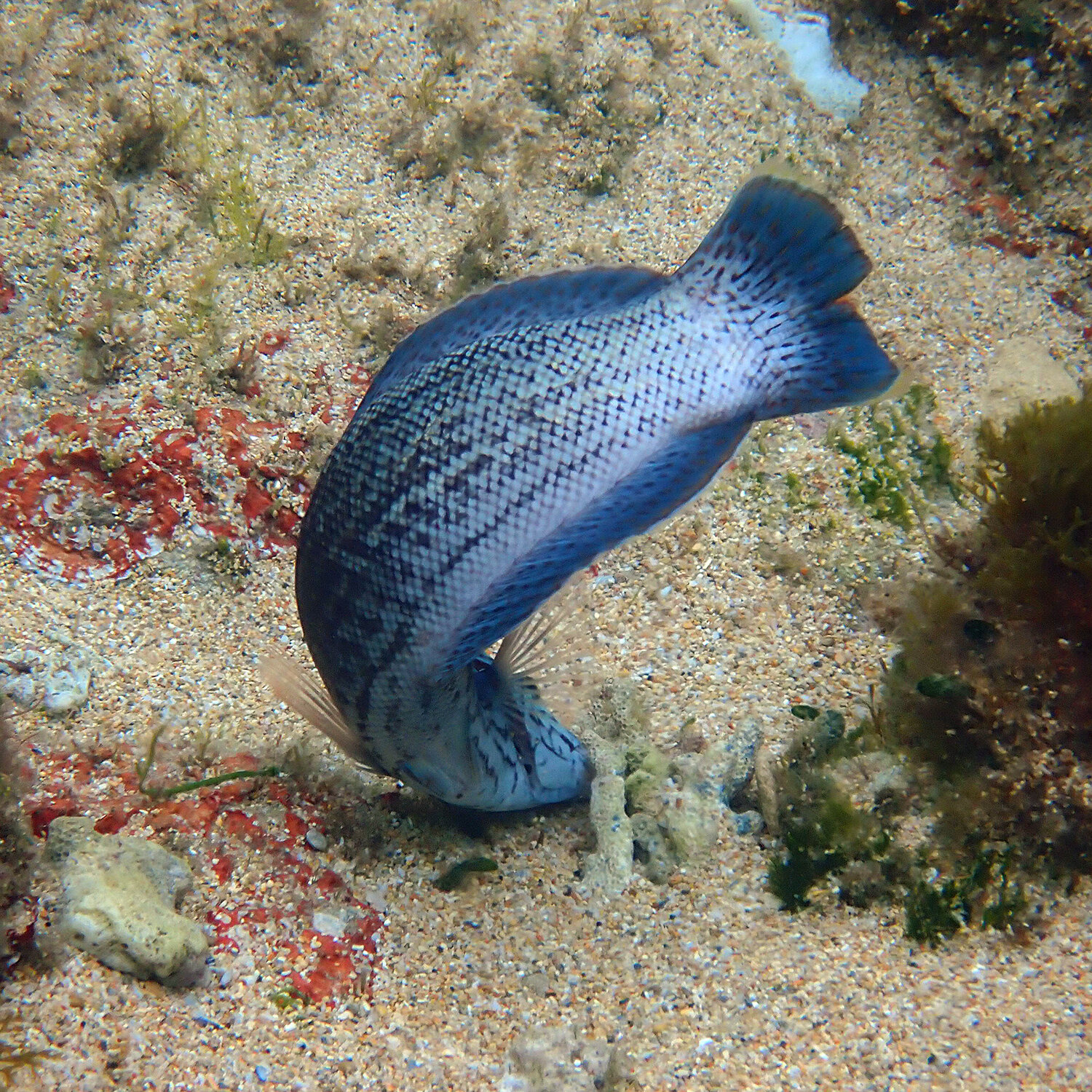
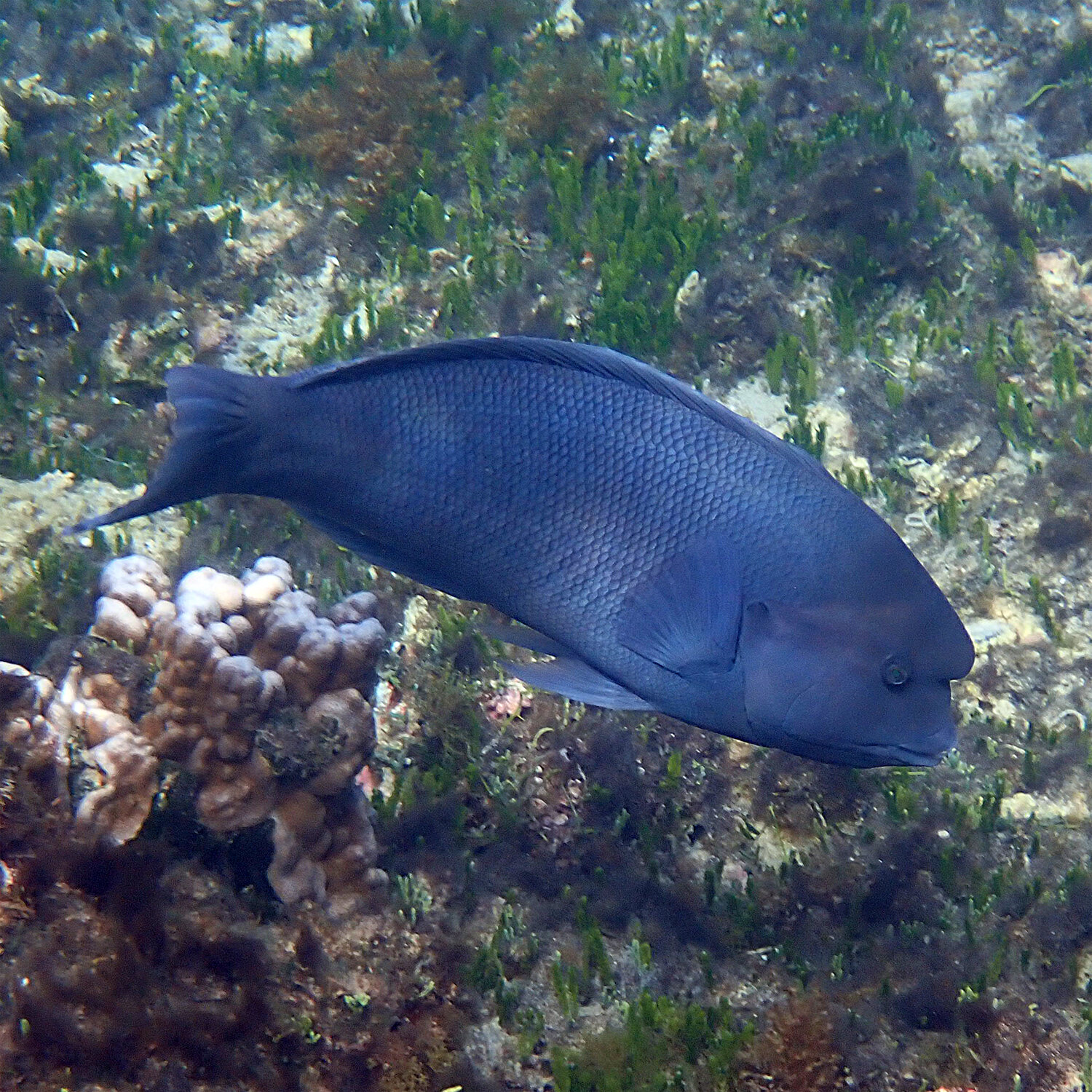
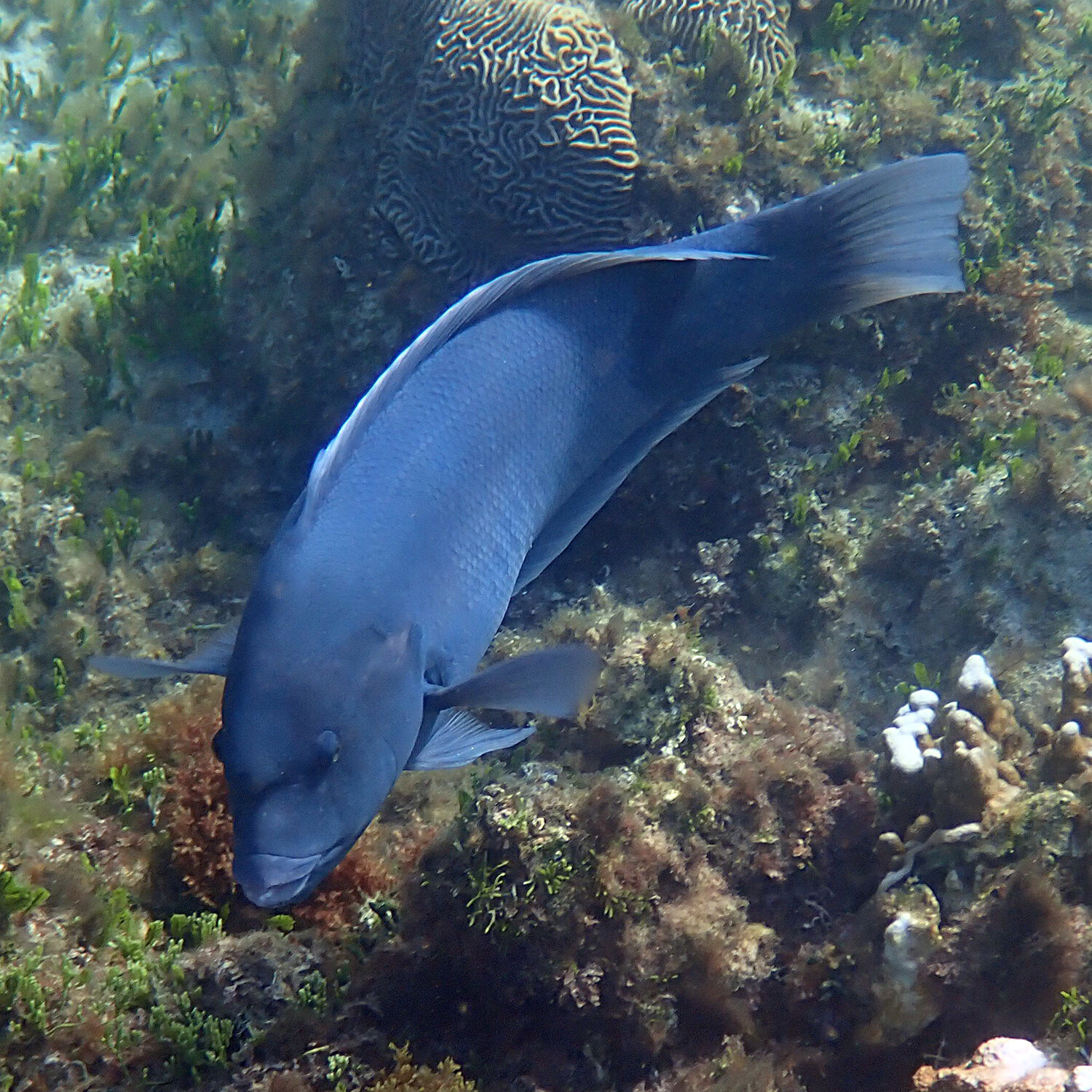
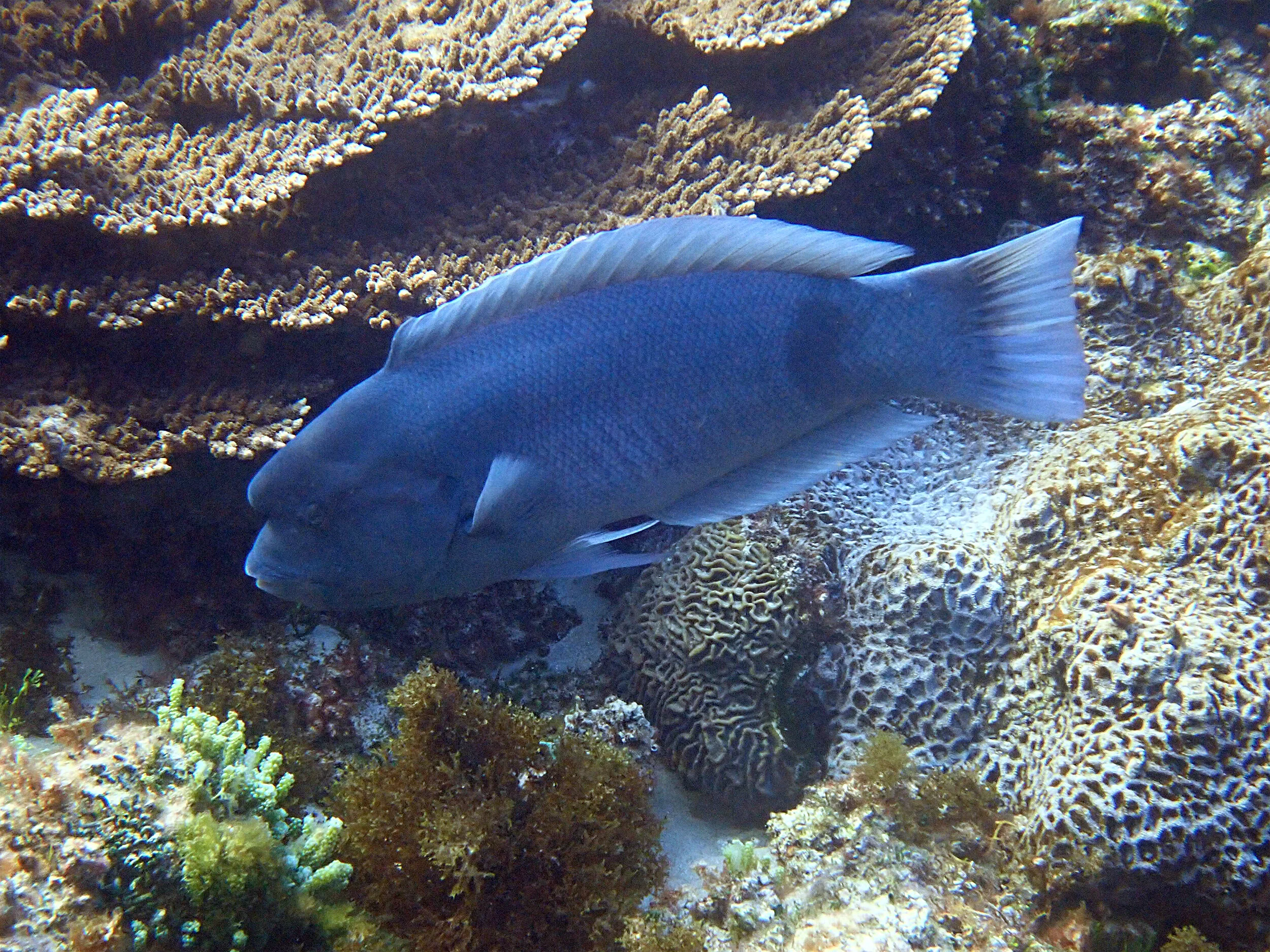
Love these doubleheader wrasse, Coris bulbifrons. Beautiful deep smoky blue with a big bulge on their forehead, they will quite often just casually cruise on past. We have a handful of them in Slaughter and Emily Bays so your chances of seeing one are good. Like many wrasse, they change sex, colour and appearance quite radically as they age and grow. The juveniles sport a gorgeous black and white pattern, nothing at all like the adults. Then they morph to a grey and black pattern and then, finally, the blue of the adult phase.

They are partial to sea urchins (echinoderms), known locally as wunnas, and have a pair of protruding tea that they use to chomp them apart and get at the soft flesh, and their other fave, crustaceans.

Double headers are endemic to Norfolk Island and can grow up to 60 cm in length. The photos, below, follow their changing appearance as they grow.

And if you want to see the different kinds of sea urchins that we have in our lagoons, check out sea urchins page on here.

View fullsize 15.08 (113)_crop.jpg
View fullsize 19.12. (102)_crop.jpg
View fullsize 27 Feb 2021 (173)_crop.jpg
View fullsize 03.07 (58)_crop.jpg
View fullsize 11.06 (74)_crop.jpg
View fullsize 17.05 (145)_crop.jpg
View fullsize 12.12 (41)_crop.jpg
View fullsize 25.10 (9)_crop.jpg
View fullsize 6 Jan 2021 (165)_crop.jpg
View fullsize 6 Jan 2021 (160)_crop.jpg
View fullsize 6 Jan 2021 (154)_crop.jpg
View fullsize 16.05 (91)_crop.jpg
← Charisma plus! The bluespine unicornfishWhen the yelloweye leatherjackets go courting →
Featured
From coral scar to aatuti farm
June 20, 2026
From coral scar to aatuti farm
June 20, 2026

Aatuti are bold little algae farmers, but how does one of their farms begin? Over the past year, I have been following several coral patches as small white scars became algal footholds, then larger defended patches. I still cannot say what caused the first wounds, but the photo sequences show something fascinating: on a reef where algae is already gaining ground, even tiny changes on the coral surface can become part of a much bigger story.

June 20, 2026
Norfolk’s water quality – when action is reported as outcome
June 15, 2026
Norfolk’s water quality – when action is reported as outcome
June 15, 2026

A recent Australian Government media release presents investment, monitoring and catchment works as progress on Norfolk Island’s water quality. Some of that work is useful, and some of it was badly needed. But activity is not the same as proven improvement. This post looks at Kingston sewerage, wetlands, cattle, acid sulfate soils, groundwater and reef health, and asks whether Emily Bay and Slaughter Bay are actually being better protected.

June 15, 2026
How surgeonfishes got their name
June 14, 2026
How surgeonfishes got their name
June 14, 2026

Surgeonfish are named for the sharp little scalpels near their tails, but on Norfolk’s reef their more useful work happens at the other end. Pencil surgeonfish, bluespine unicornfish and their relatives help browse algae across the reef – a small daily job that becomes very valuable on an algae-rich lagoon reef like ours.

June 14, 2026
A shrimp storm
May 28, 2026
A shrimp storm
May 28, 2026

While setting my research cams last week, I swam into what looked like an underwater snowstorm. It appeared to be the aftermath of a mass moulting event, with large numbers of tiny, translucent shrimp-like exoskeletons drifting together near the surface.

May 28, 2026
Kingston dredging: what happens when a reef does not fit the framework
May 28, 2026
Kingston dredging: what happens when a reef does not fit the framework
May 28, 2026

This correspondence with DCCEEW is about more than one dredging proposal. It is about what happens when an ecologically distinctive place is assessed through standard tools that do not always make its most important values easy to see. I am publishing it here because that is something we need to be aware of, both on Norfolk Island and more broadly in Australia.

May 28, 2026
Kingston dredging: the project advances, the questions remain
May 24, 2026
Kingston dredging: the project advances, the questions remain
May 24, 2026

Kingston dredging is edging closer, and the paper trail is growing. This post brings together earlier correspondence with the Department and the latest media release so readers can see what has been asked, what has been answered, and what still remains unclear about the project, its rationale, and the protections proposed for the reef.

May 24, 2026
The lime-green coral in Slaughter Bay – a 40-year paper trail
May 17, 2026
The lime-green coral in Slaughter Bay – a 40-year paper trail
May 17, 2026

Green Mountain – the name I give this coral in my database – is a coral I’ve photographed for years as I swim past. Then I found its backstory in the Norfolk Island National Parks archives: a rough map, reused paper, a note in the margin – ‘still thriving’. That’s how baselines begin.

May 17, 2026
What Norfolk Island’s reef tells us about environmental blind spots
April 5, 2026
What Norfolk Island’s reef tells us about environmental blind spots
April 5, 2026

The Kingston dredging proposal on Norfolk Island raises a bigger question than dredging alone: how well do standard environmental assessment tools capture the real significance of a remote and unusual reef system like Norfolk Island’s?

April 5, 2026
Hammer coral time!
March 30, 2026
Hammer coral time!
March 30, 2026

Hammer corals have unique tentacles that are large, fleshy, and tubular; these terminate in a ‘T’-shaped, hammer-head or anchor. Beneath all these softly waving tentacles is an extraordinary skeleton structure, which helps define them as a large polyp stony coral.

March 30, 2026
Norfolk Island’s fishes: drifters, residents and the ones still missing
March 24, 2026
Norfolk Island’s fishes: drifters, residents and the ones still missing
March 24, 2026

Norfolk Island’s fish fauna reflects both connection and isolation. Some species may arrive from elsewhere as drifting larvae, some populations appear to persist locally, and some fishes known from islands on either side of Norfolk have still not been recorded here. This post looks at what old survey work, regional checklists and genetic studies suggest about that more complicated picture.

March 24, 2026

Latest Posts

© 2026 All rights reserved.