
While setting my research cams the other day, I swam into something I had noticed before but never paid that much attention to. And never quite like this: what appeared to be the aftermath of a mass moulting event – a drifting raft of tiny, translucent shapes in the water. When I watched back over my footage, under the waves it looked almost like a snowstorm.
On closer inspection, they appeared to be shed shrimp exoskeletons – the empty outer skins left behind after moulting. Like other crustaceans, shrimps cannot grow gradually inside a hard shell. They have to split and shed the old exoskeleton, expand their soft new body, and then wait while the new outer layer hardens.
That soft-shell stage is a risky time. Until the new exoskeleton hardens, the animal is much more vulnerable to predators and damage. In some crustaceans, moulting can also be linked to environmental cues such as tides, lunar cycles, temperature and food availability, although the exact trigger here is not something I can confirm.
What I can confirm, though, is that I saw a slick of pale, papery remains gathering near the surface, pushed together by wind, current and the movement of the water.
Reefs are full of events like this – moults, mucus, plankton, waste, fragments and drifting organic matter. Some of it gets eaten. Some of it breaks down. Some of it sinks. All of it moves through the system in one way or another. Just another part of the rich lifecycle of the ocean.
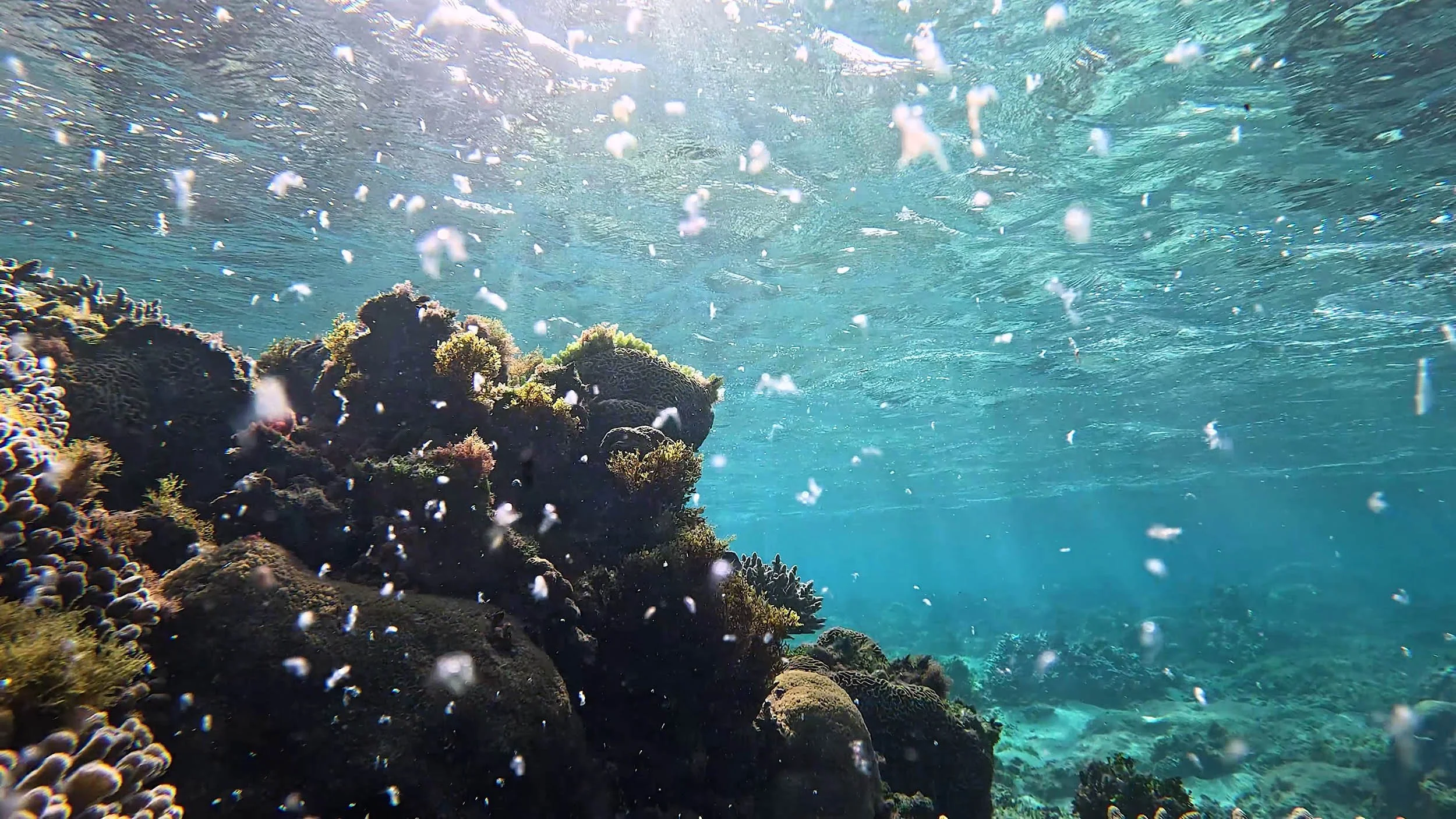
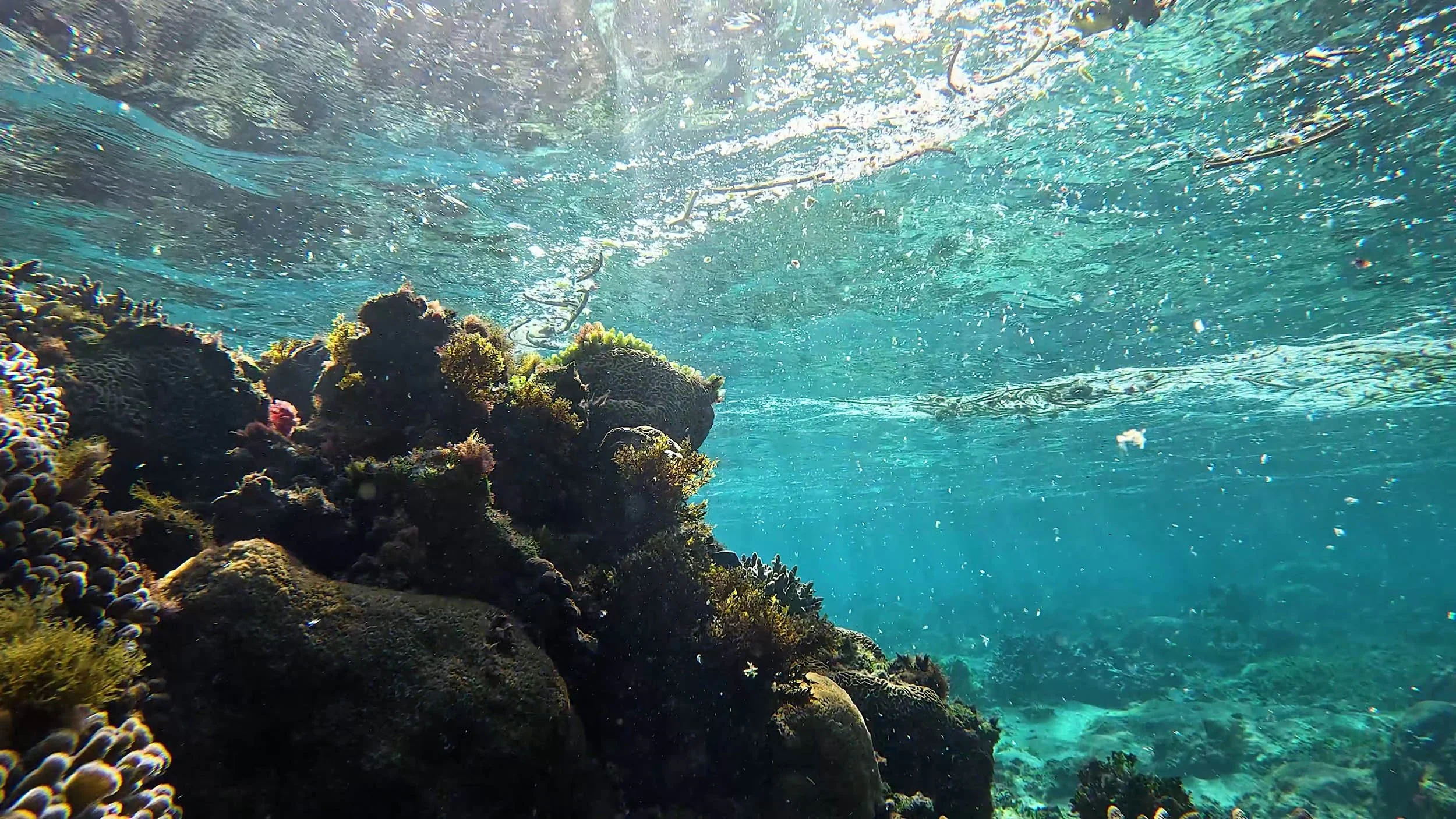
Above is a short clip from my research cam, and two stills taken from that footage, of what was possible the aftermath of a mass moulting event.