
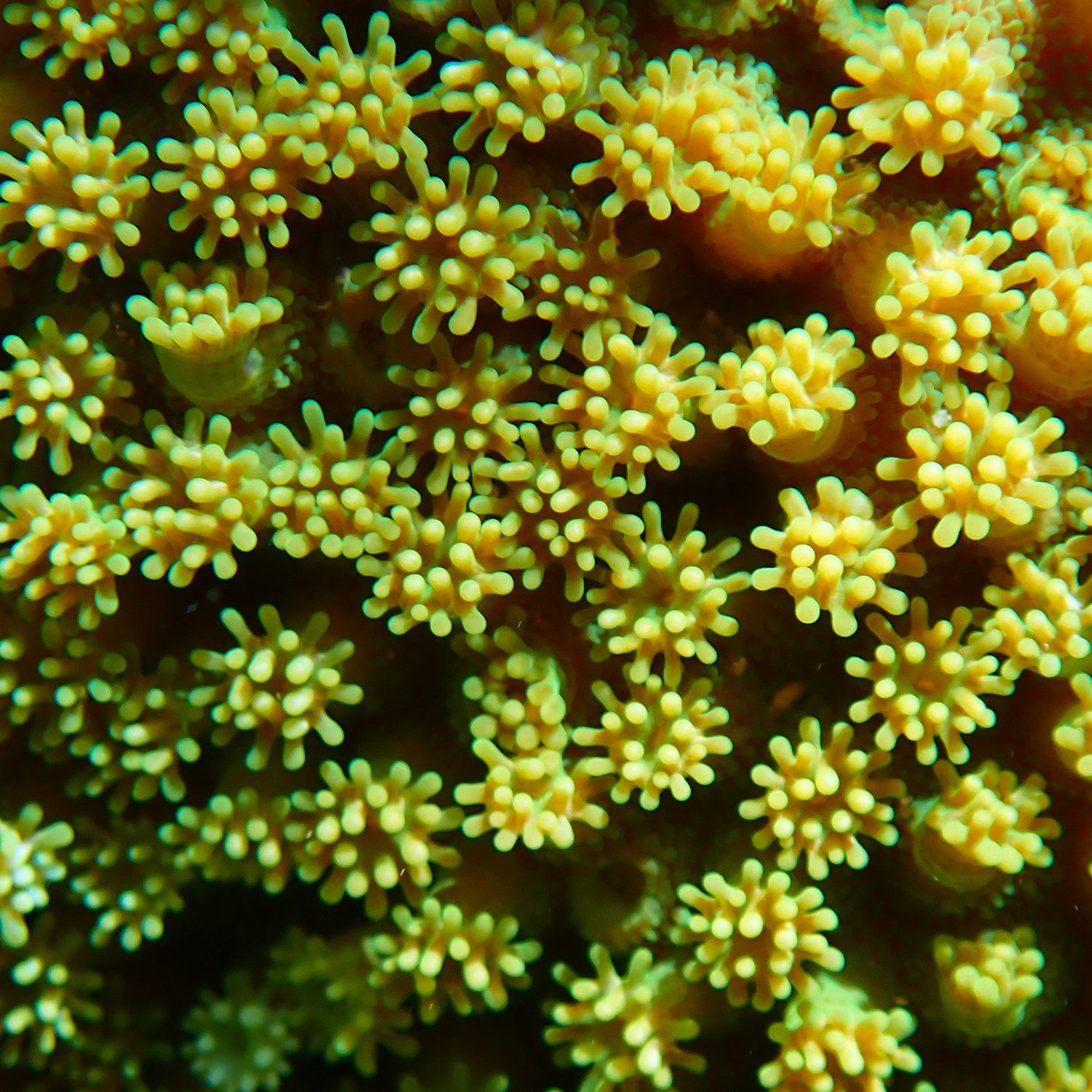
Some reef stories start underwater. This one started in a filing cabinet in a little-used back office.
While searching through the Norfolk Island National Park archives as part of my PhD research, I found a loose, rough hand-drawn mud map marking the location of a coral colony in Slaughter Bay. It was drawn on the back of a scrap of reused paper (as was common at the time) and the printed text on the reverse was dated 20 November 1988. I immediately knew exactly which coral it was pointing to.
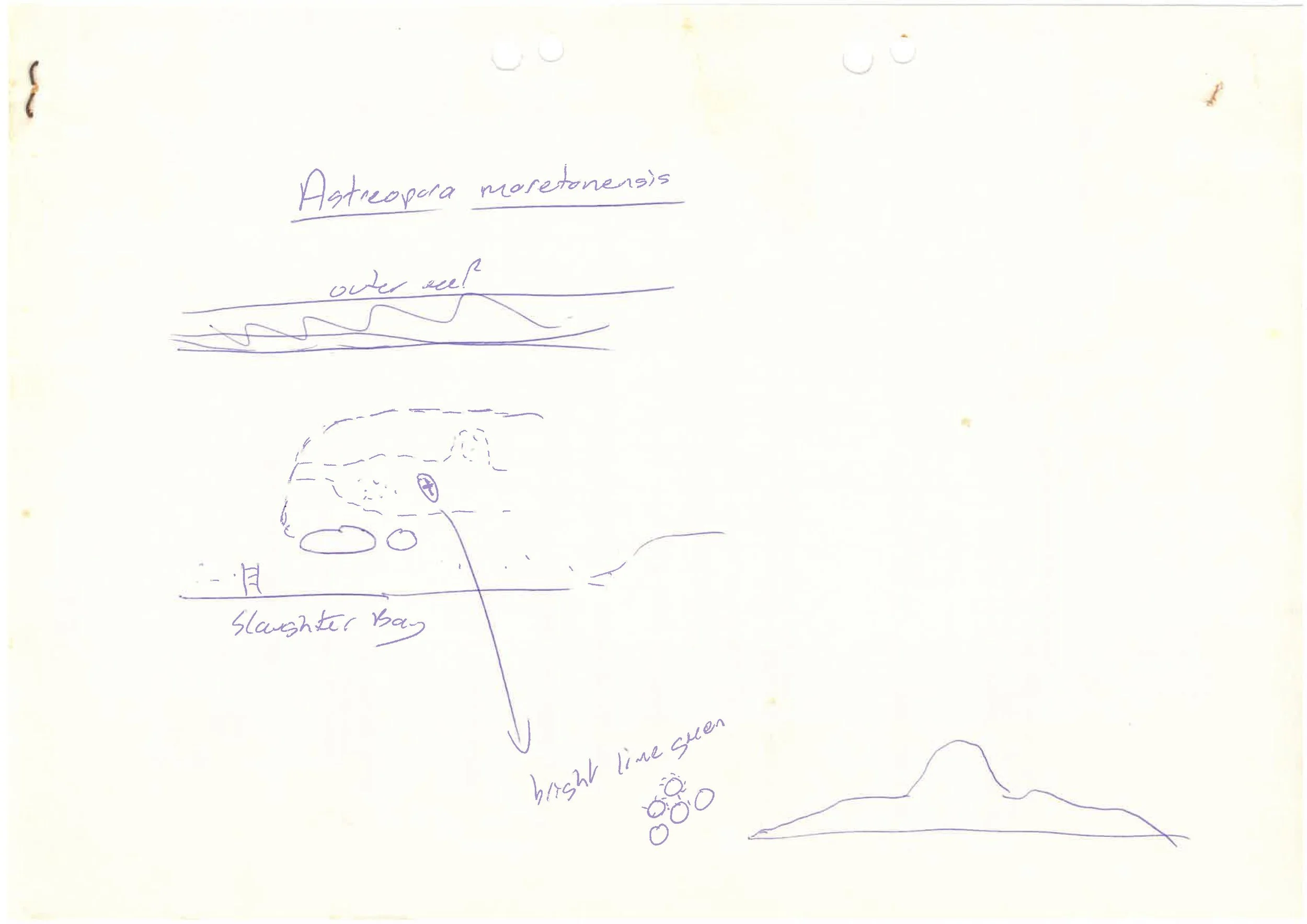
The map drawn on scrap paper by Dr Fred Brook, c1989, intrigued me and got me coral sleuthing
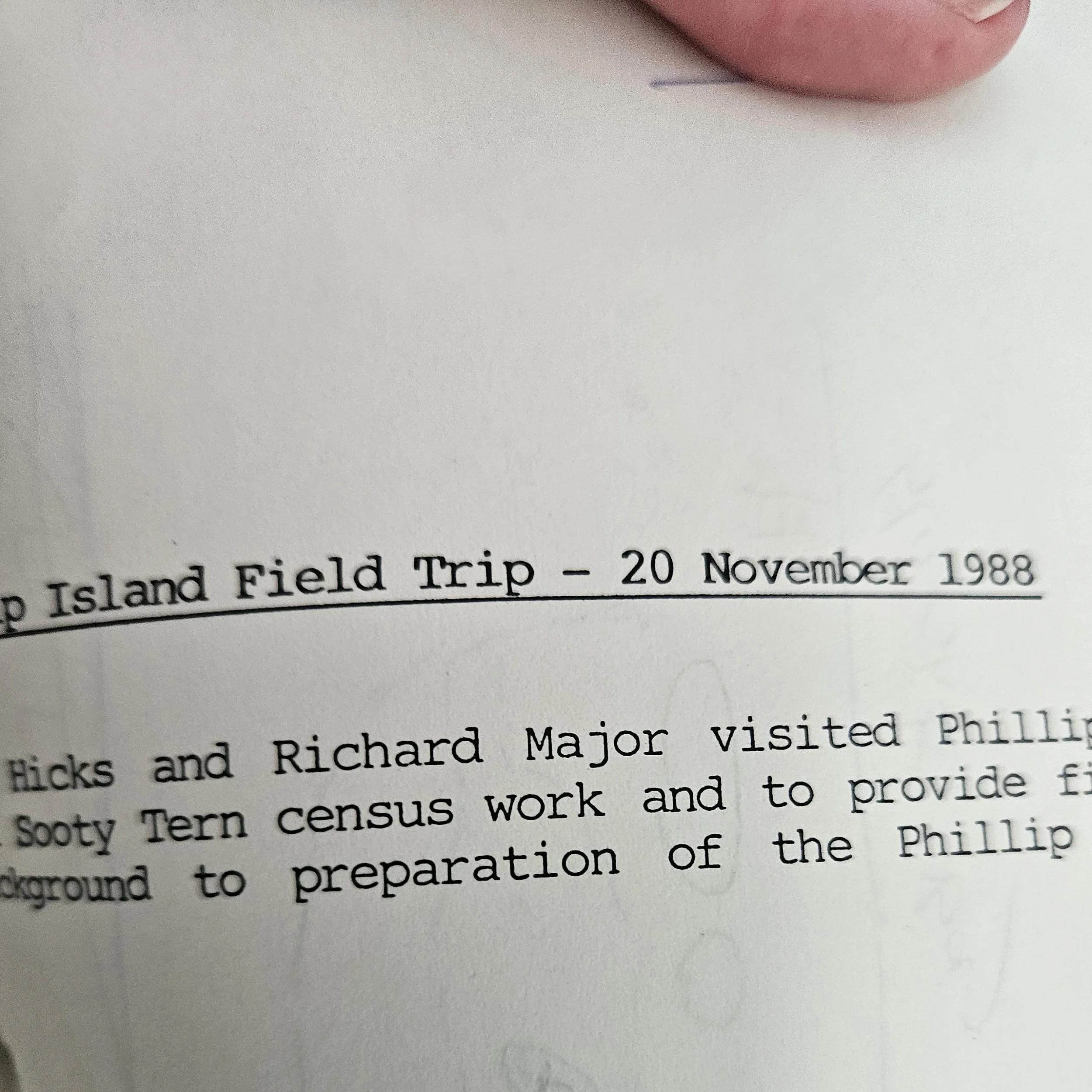
The reverse side of the scrap of paper had this date, 20 November 1988
I’ve been photographing this colony for years, and it is the only one of its species I have found in the Kingston Lagoon. In my own files it’s called ‘Green Mountain’ (I have some odd names for some of my locations, but they make sense to me) – not because it’s huge, but because it’s so unmistakable. There’s nothing else quite like it. Since 20 February 2020, I’ve regularly taken photographs of it at random opportunistic times as I’ve passed by. Norfolk Island resident and snorkeller Betty Matthews kindly went through her archive, too, and found some older photos from 2018 to add to the record. Over that period its fortunes have waxed and waned. I’ve seen it look stressed and diseased, I’ve seen it smothered in algae, I’ve seen it recover, and I’ve watched it appear to shrink and expand over time.
I assumed the mud map was simply ‘from 1988–1989-ish’, but still, it intrigued me that someone nearly forty or so years ago had found this coral colony equally noteworthy as I have done.
It has taken a little while, but I’ve now found the story behind this map. It’s fascinating.
On an unrelated matter, I contacted Dr Fred Brook, a now-retired geologist – who had accompanied ichthyologist (fish expert) Dr Malcolm Francis on his 1989 visit to Norfolk Island to undertake a fish census. While here, Brook had also recorded corals in the Kingston Lagoon, so I was interested to know if he had kept any notes other than the report that had been produced subsequent to their visit. In his offical report he’d listed this colony as Astreopora moretonensis. As an addendum to my email, I included the mud map and asked, by the by, if he were familiar with this colony. It turned out that not only was he familiar, but he’d been the artist who had thoughtfully drawn the map!
The name ascribed to this coral, Astreopora moretonensis, was a clue – not because it neatly solves the ID problem (because it likely doesn’t), but because it ties the coral to a much older observation.
Brook’s coral list from his visit refers back to Veron and Wallace (1984), in which Astreopora moretonensis is noted as rare at Norfolk Island: ‘one large encrusting colony … at the west end of Slaughter Bay’. In other words: this was already being singled out as a one-off colony back in 1984.

Two extracts from a scanned hard copy, and later annotated (by Brook on his second visit to the island in 1992), of Brook’s appendix on the ‘Geological origin and coral fauna of Kingston Lagoon’ … (Francis et al., 1990, Appendix 5).
But it was this line that made me stop. Hand written in pen on the same list, which I also found in the archives, is a simple update: ‘this colony is still thriving – 30/3/92’.
So now, instead of guessing when this coral might have established, we have something better: a paper trail. Listed as a single colony in 1984. Mapped again in 1989. Confirmed as ‘still thriving’ in 1992. And still present today.
Why monitoring reefs is important
One thing I have been surprised at is how much and how quickly reefs can change. They don’t sit still. Sometimes you can only see the pattern when you’ve made enough repeat visits to look back properly.
The Coral Sea Foundation put it this way, ‘tropical coral reefs are among the most rapidly changing ecosystems on Earth’, which is why ‘rigorous monitoring programs, adequately replicated in space and time’ are needed. They also argue that money could be better spent on monitoring (and strong protection) rather than on small restoration experiments that make us feel busy but don’t always shift the dial.
That’s the lens I’m looking through here. Since 2020, Australian Marine Parks, Temperate East Zone, has backed a coral health monitoring program in the lagoon with a team of coral health researchers. That kind of long, repeated, same-sites monitoring is how you build a baseline. And without a baseline, we are just arguing from anecdotal impressions.
It also gives context to what I’ve seen at Green Mountain since 2020. This colony hasn’t been thriving every day of the last forty years. My photos suggest it has gone through some rough patches. But it has persisted – through decades of seasons, stress, and whatever else the lagoon has thrown at it.
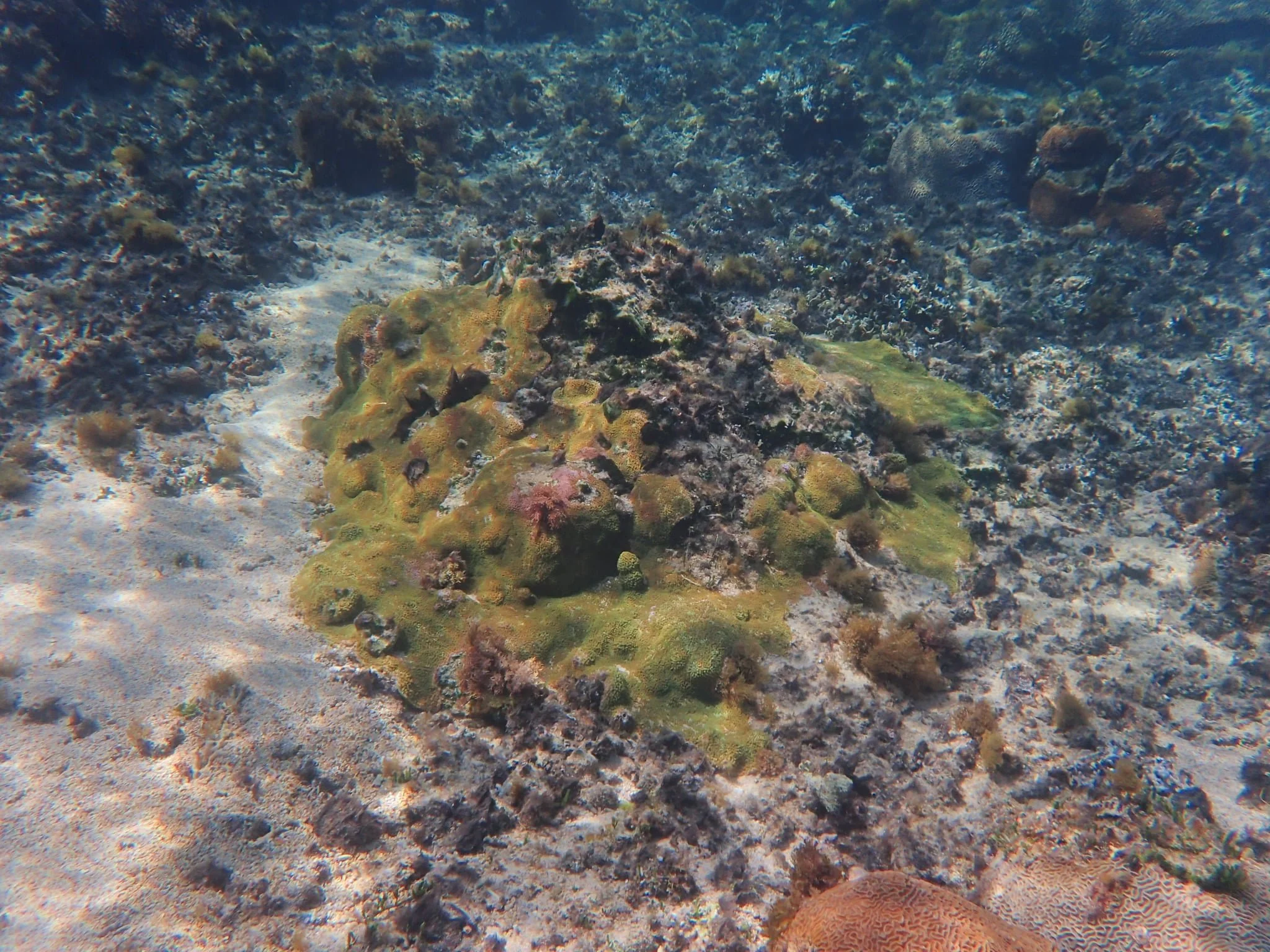
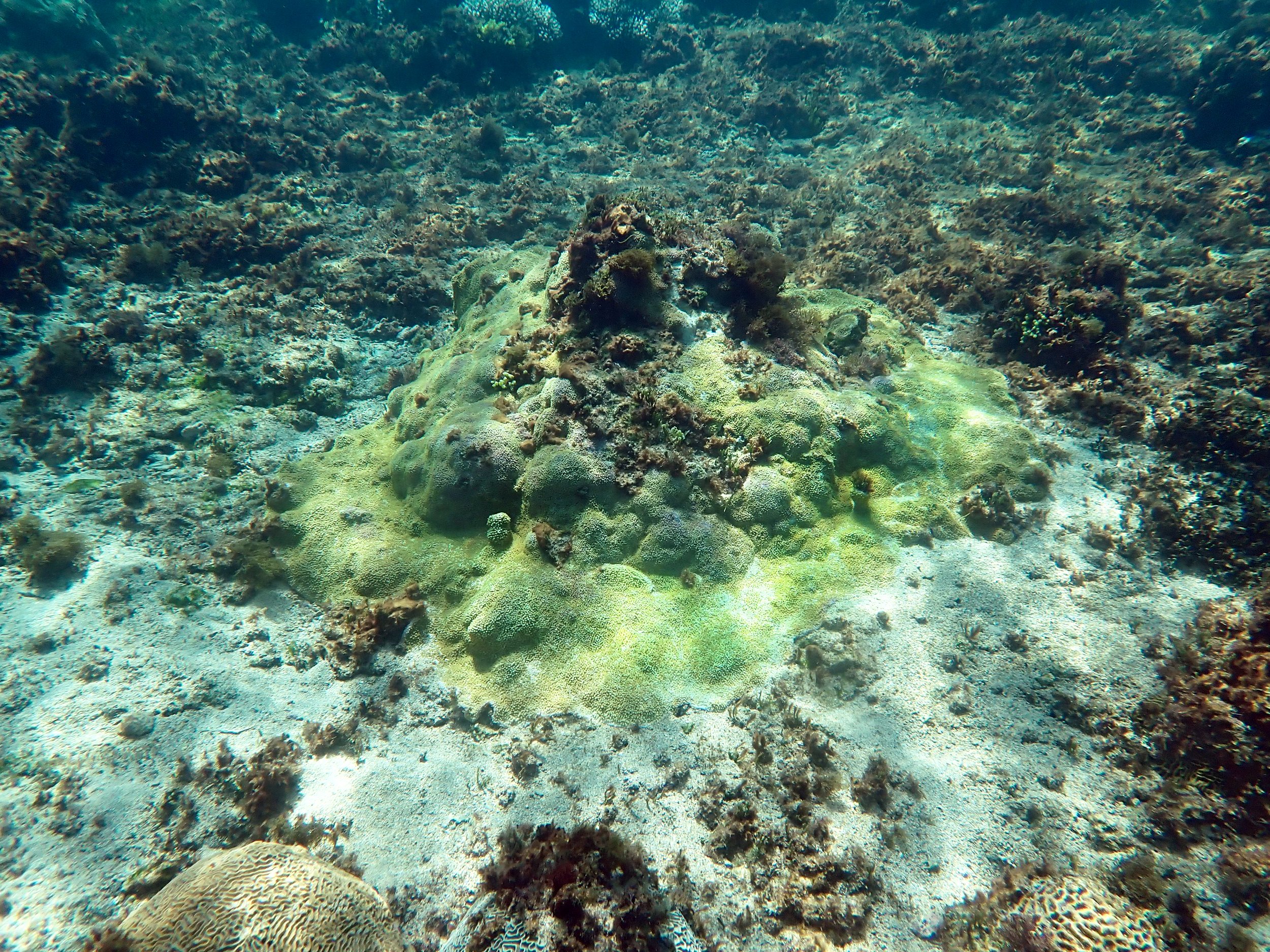
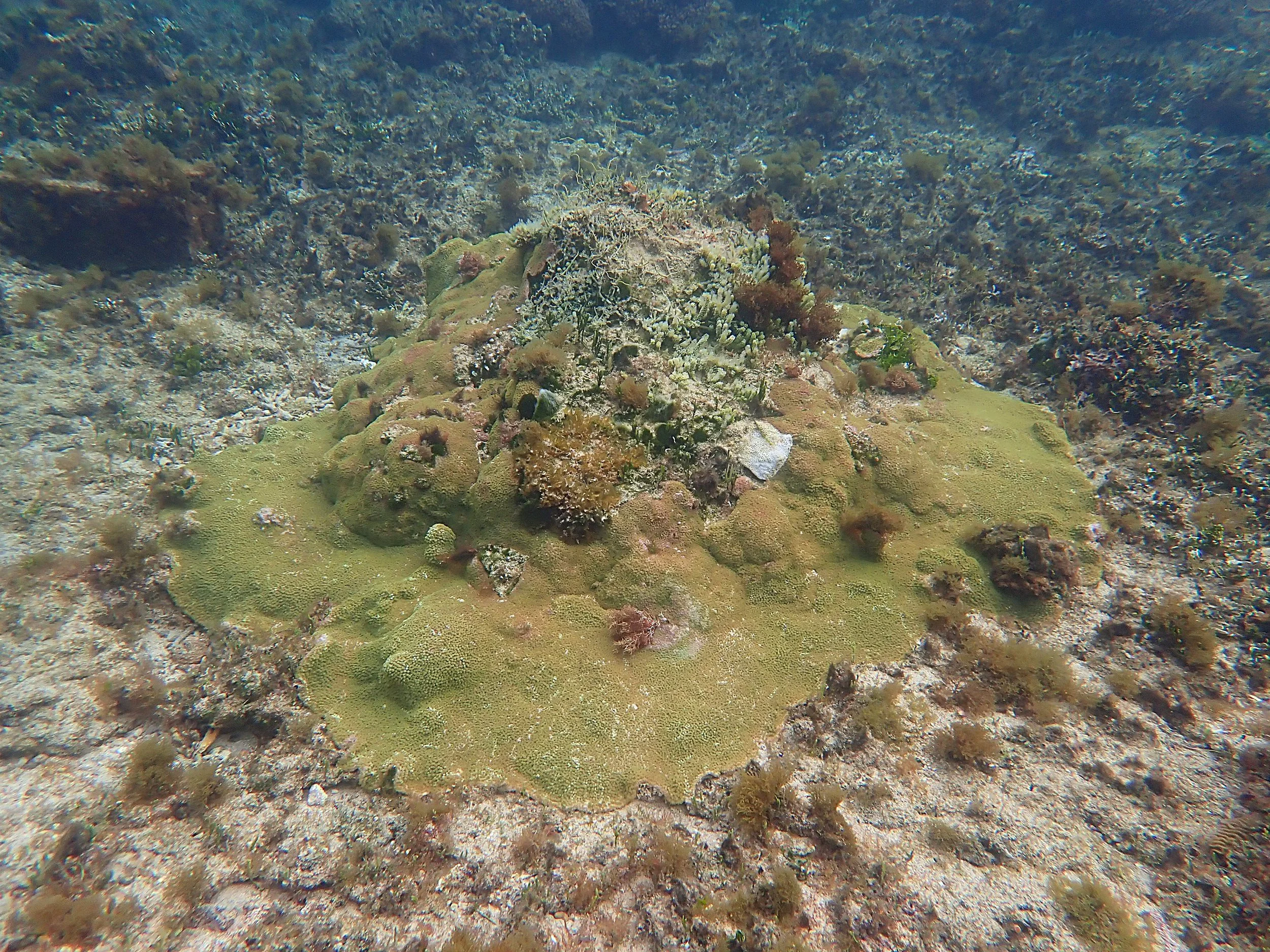
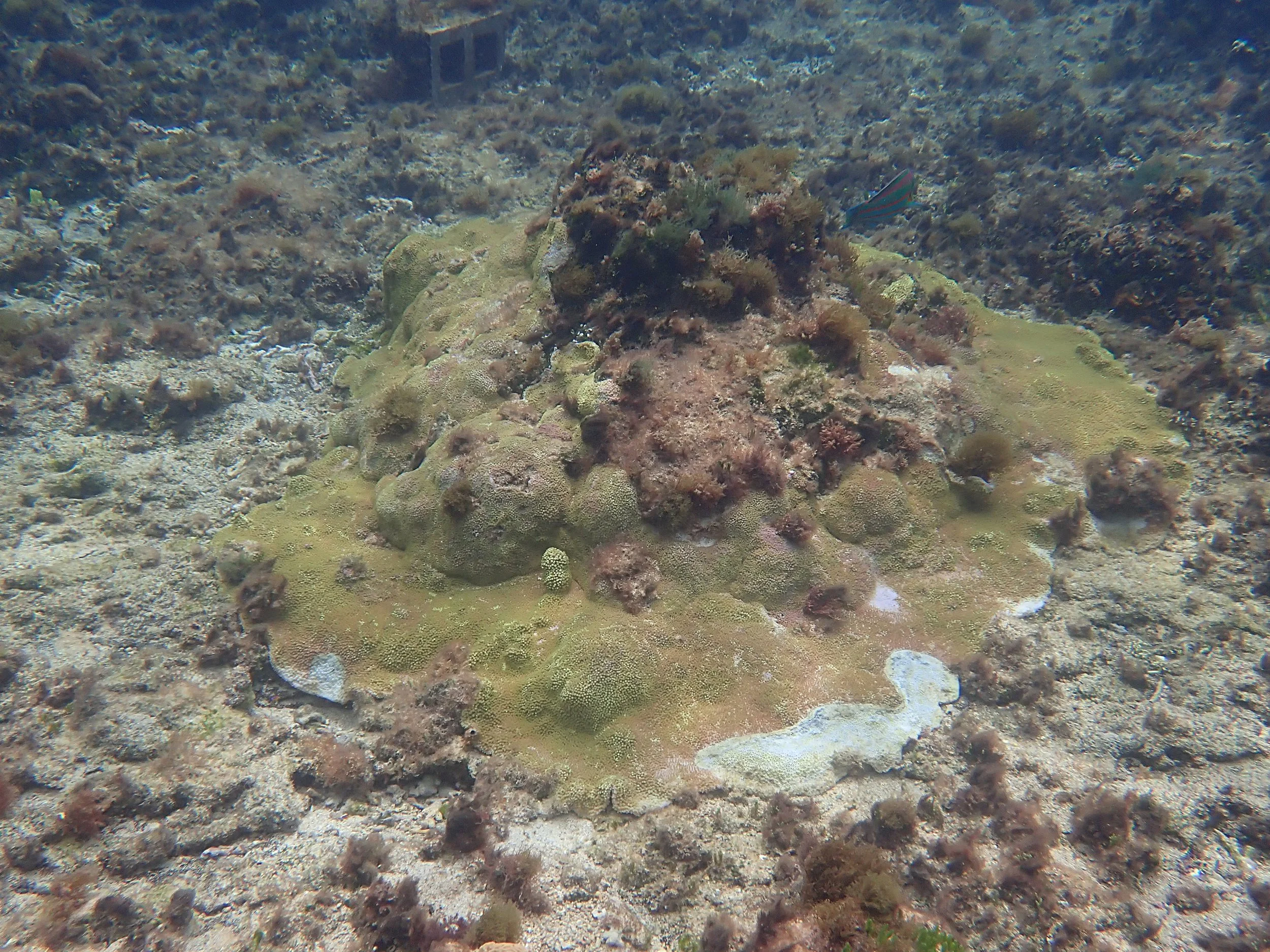
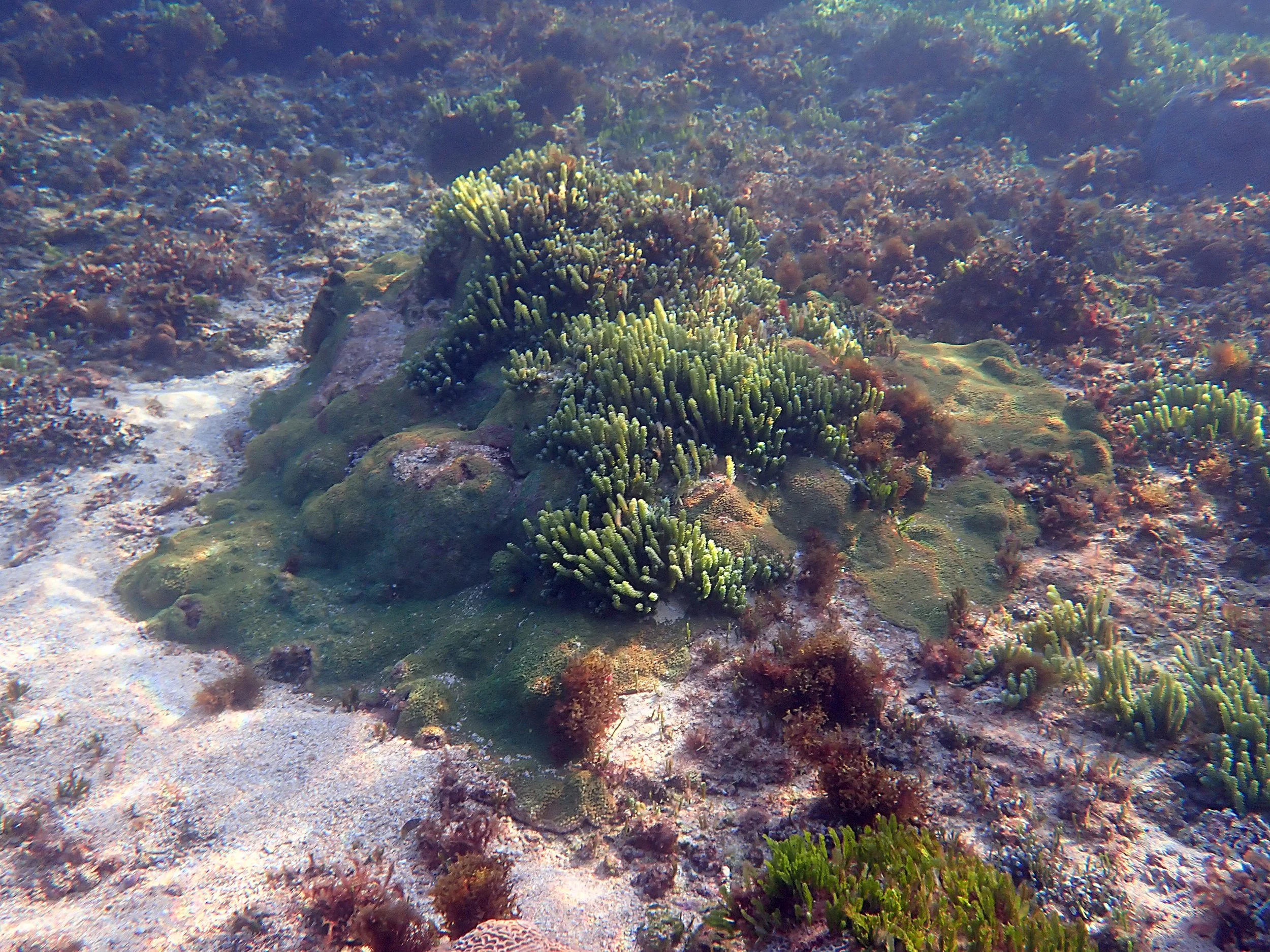
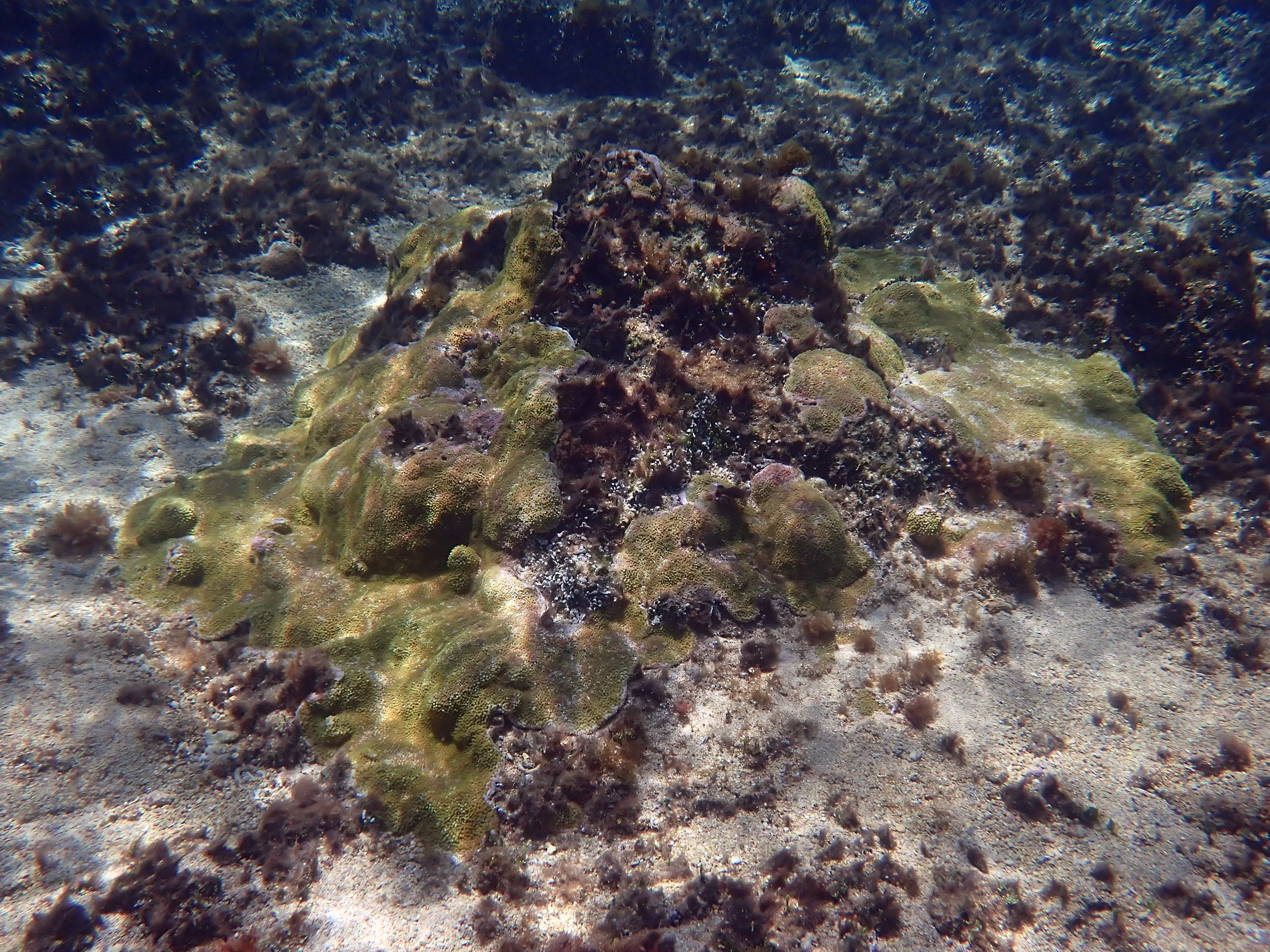
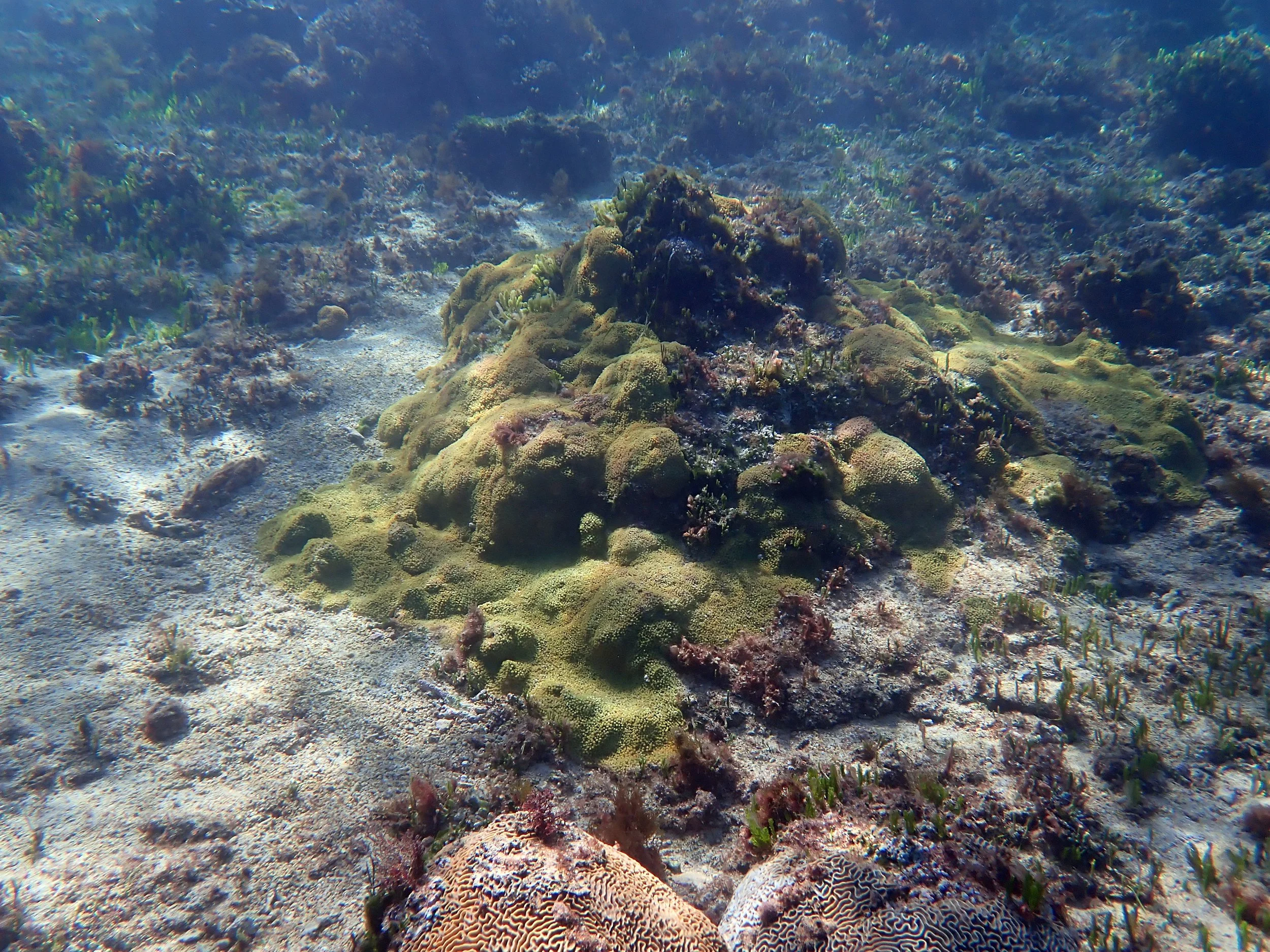
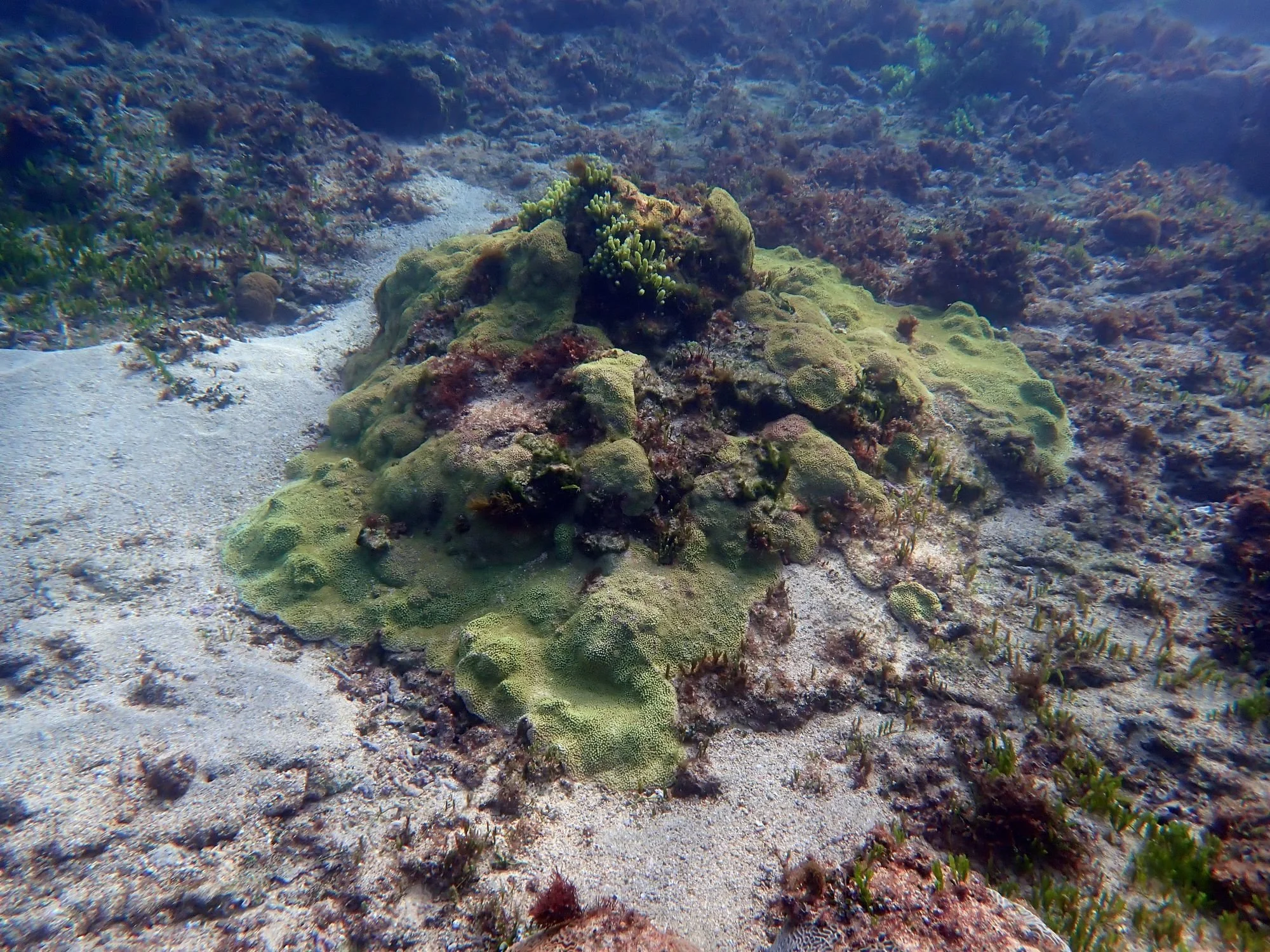
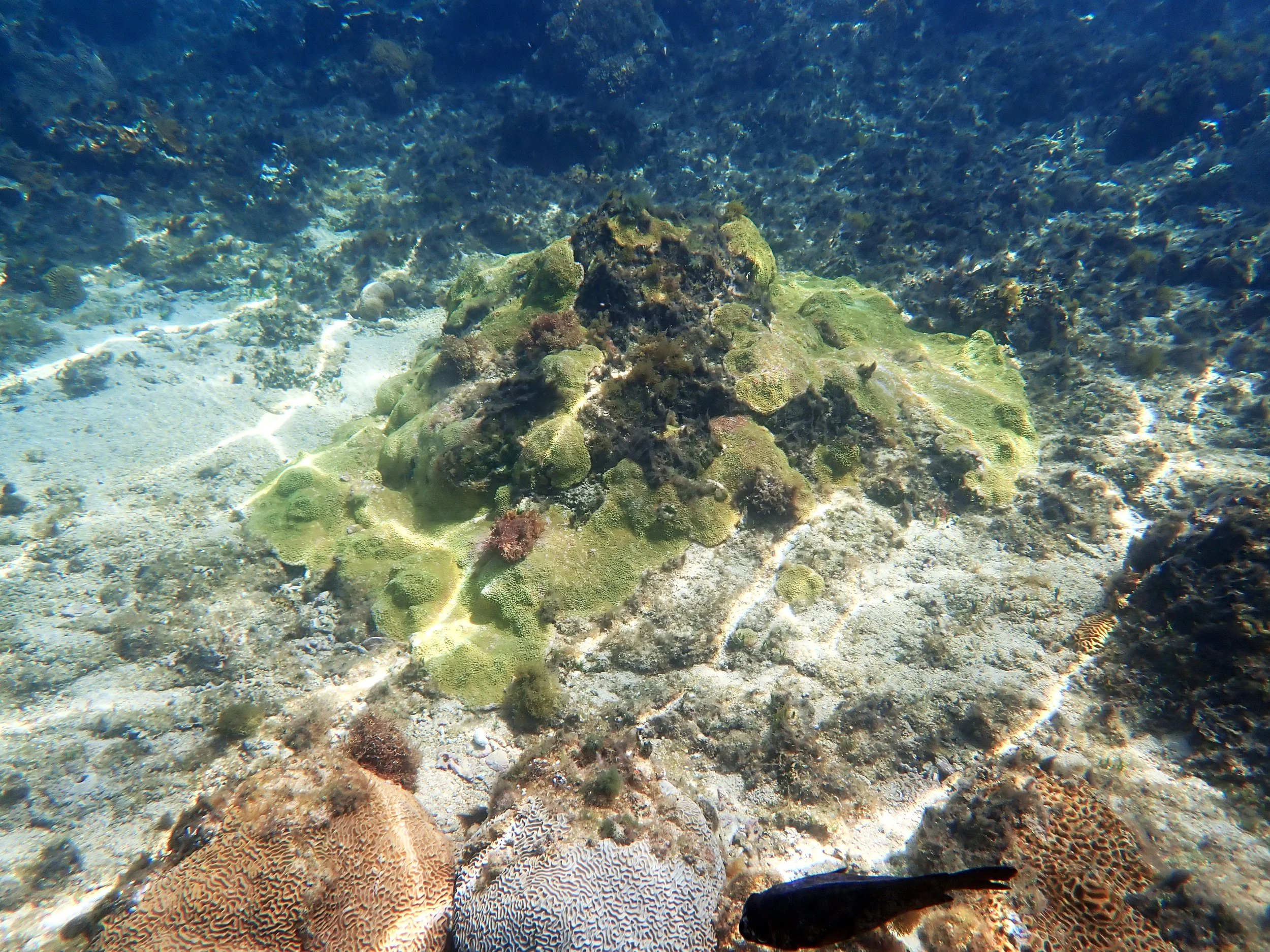
Above are just a few photos from a complete series, beginning with Betty Matthews’s image taken in 2018, then mine from March 2020 on. It is interesting to note that the colony looked a great deal healthier during the drought that occurred in the second half of 2023 and into 2024.
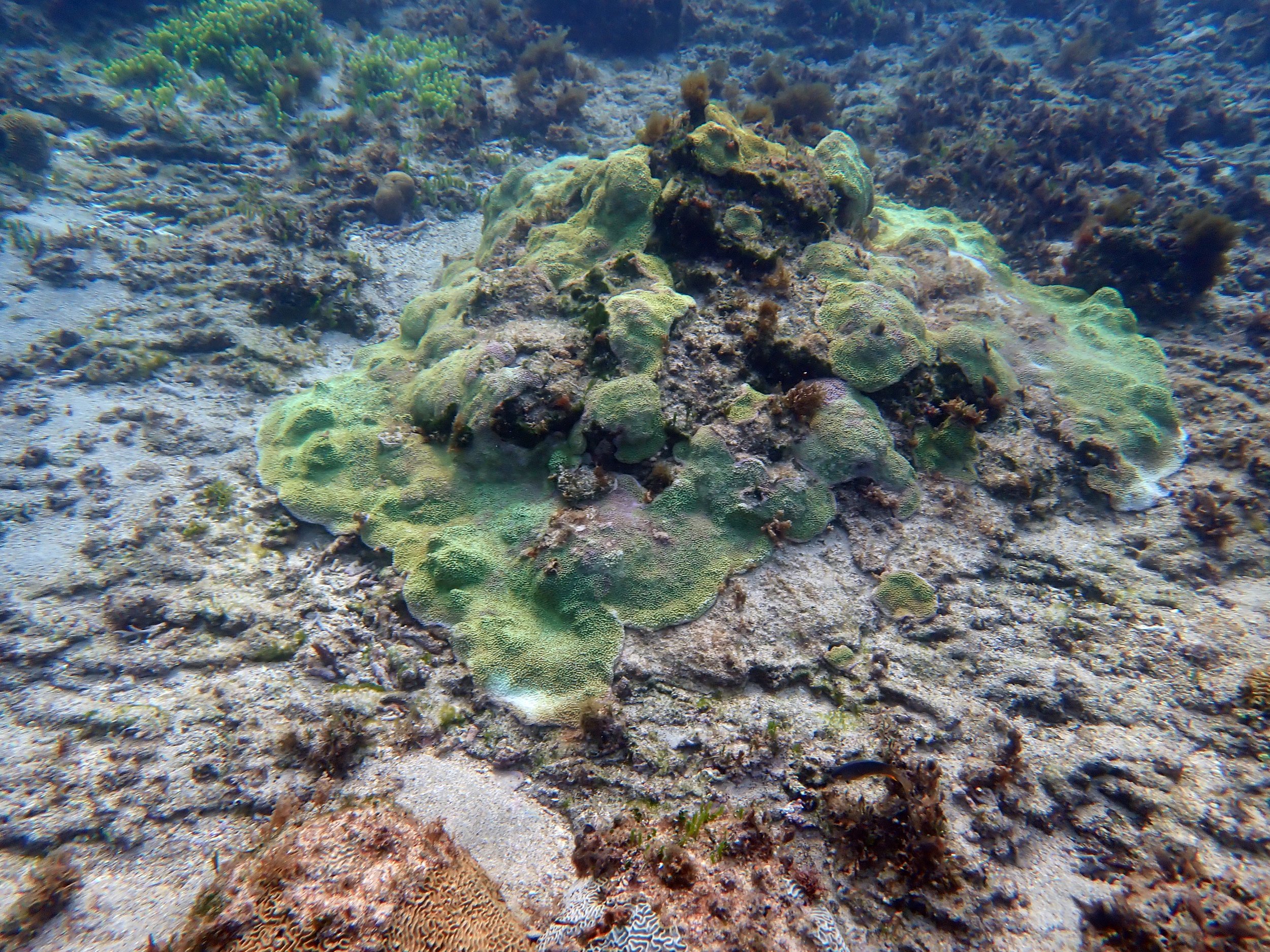
My most recent photo of Green Mountain, 13 May 2026
The identification problem
I’ve tried to obtain a confident ID for ‘Green Mountain’, without success. The archive uses the name Astreopora moretonensis, and Corals of the World lists that species with Veron and Wallace (1984) as the taxonomic reference. Taxonomic databases also recognise A. moretonensis as an accepted species name. But identification from photos alone is notoriously tricky with some corals, and colour is not a reliable diagnostic feature. So for now, I’m treating the archive label as exactly what it is – an historically recorded identification – rather than something I can independently confirm from images.
The coral skeleton exposed by disease
In an update to the above, I contacted coral researcher and a pioneer of coral taxonomy, Professor Charlie Veron. In the light of new coral taxonomy developments, he suggested another possible identification: ‘Astreopora myriophthalma, but I would need a close-up of the skeleton to be sure.’
I sent him the only skeleton image I had, but unfortunately he was unable to identify the species, saying, ‘It is an interesting subject indeed.’
The mystery continues!
A request to locals
If you’re a long-term local and you remember this standout green coral at the west end of Slaughter Bay – I’d genuinely like to hear from you. Even better: if you (or your family) have old lagoon photos tucked away in albums, I’d love to see them. Stories are valuable, but dated photos are gold.
Why I’m writing this
Partly because it’s a good story. Partly because it’s rare to be able to pin anything living in the lagoon to an anchored timeline like this. And partly because reef history doesn’t only get told in scientific papers; sometimes it sits in drawers – in hurriedly drawn mud maps, species lists, and in the marginalia of handwritten notes that somebody bothered to add in the moment. That’s the bit I love the most.
References
Francis, M. P., Brook, F. J., Randall, J. E., Cole, R., Williams, M. W., Ward, C., & Davis, M. (1990). Norfolk Island fish survey 11–26 November 1989 (Unpublished report prepared for the Australian National Parks and Wildlife Service).