• Home
    • Algae
    • Corals
    • Eels
    • Everything Else
    • Kingston, Norfolk Island
    • Nudibranchs, Sea Slugs and Flatworms
    • Octopuses
    • Out On A Swim Index
    • Reef Fish
    • Sharks
    • Sea Anemones
    • Sea Stars
    • Sea Urchins and Sea Cucumbers
    • Turtles
    • Underwater
    • Videos
  • Out on a swim - blog
  • About
  • Contact + Subscribe
Menu

Norfolk Island's Reef

Discover a fragile paradise – Norfolk Island's beaches, lagoons and coral reef
  • Home
  • Explore
    • Algae
    • Corals
    • Eels
    • Everything Else
    • Kingston, Norfolk Island
    • Nudibranchs, Sea Slugs and Flatworms
    • Octopuses
    • Out On A Swim Index
    • Reef Fish
    • Sharks
    • Sea Anemones
    • Sea Stars
    • Sea Urchins and Sea Cucumbers
    • Turtles
    • Underwater
    • Videos
  • Out on a swim - blog
  • About
  • Contact + Subscribe

Out on A Swim

‘Out on a swim’ is a coral reef blog that tells the stories of the characters who live under the waves and what has caught my eye when ‘out on a swim’ in the lagoons of Norfolk Island. It is also a record of the difficulties Norfolk Island’s reef faces, like many others around the world, as a result of the poor water quality that has been allowed to flow onto it.

This page shows the most recent blog posts. For the complete catalogue, visit the ‘Out on a swim index’ page.

This blog is rated in the Top 20 Coral Reef Blogs in the world.

No results found

Norfolk Island's Blenny Fest

October 31, 2022

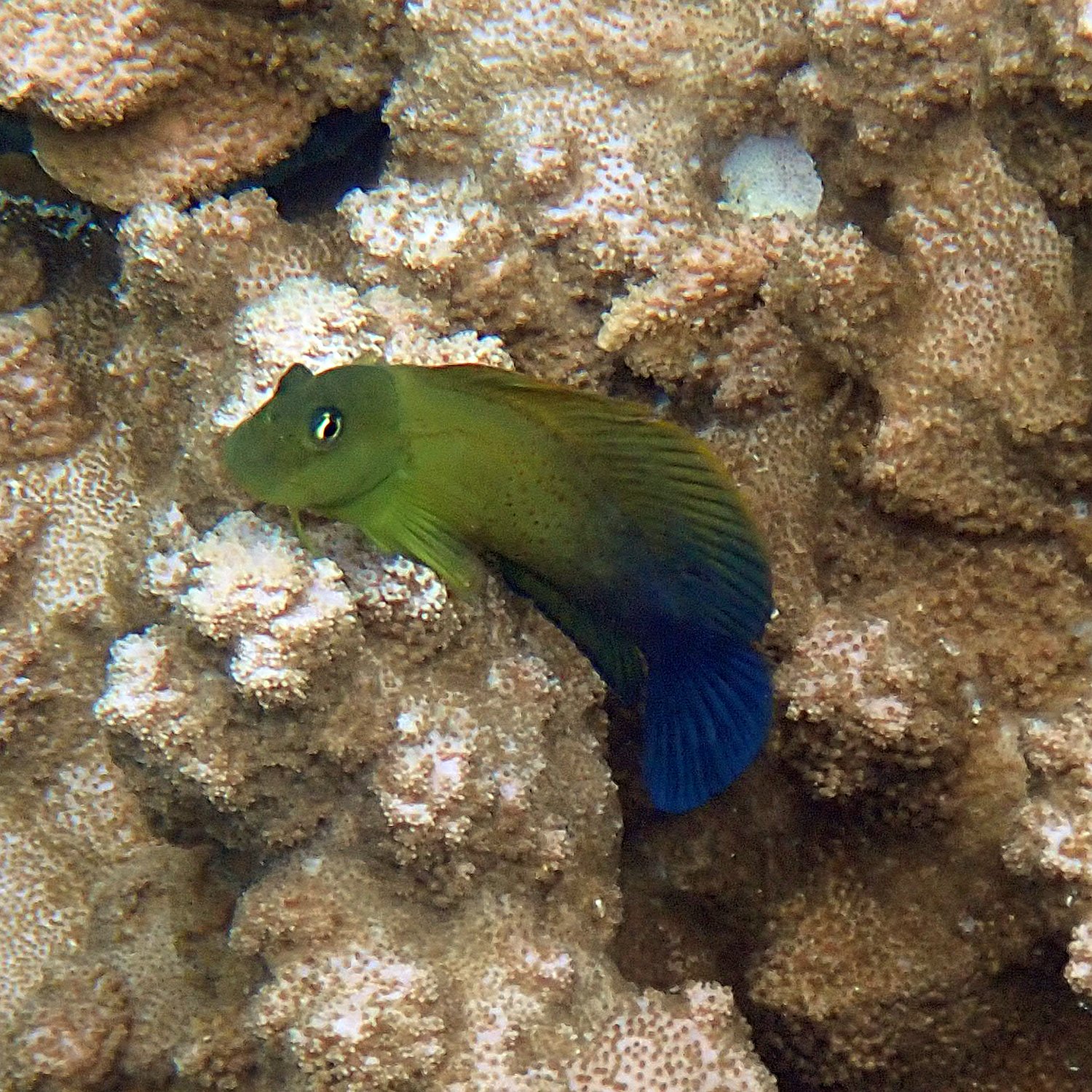
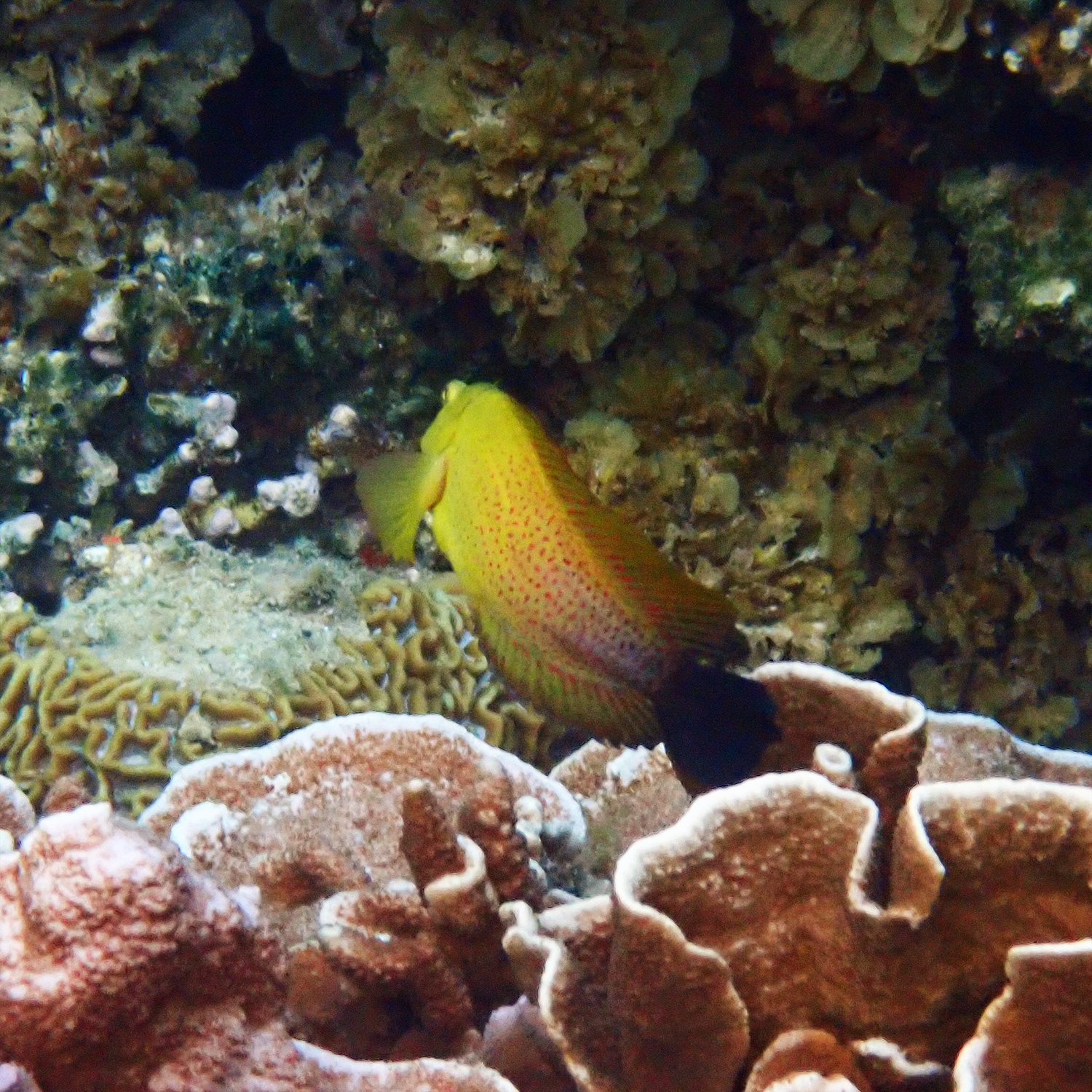
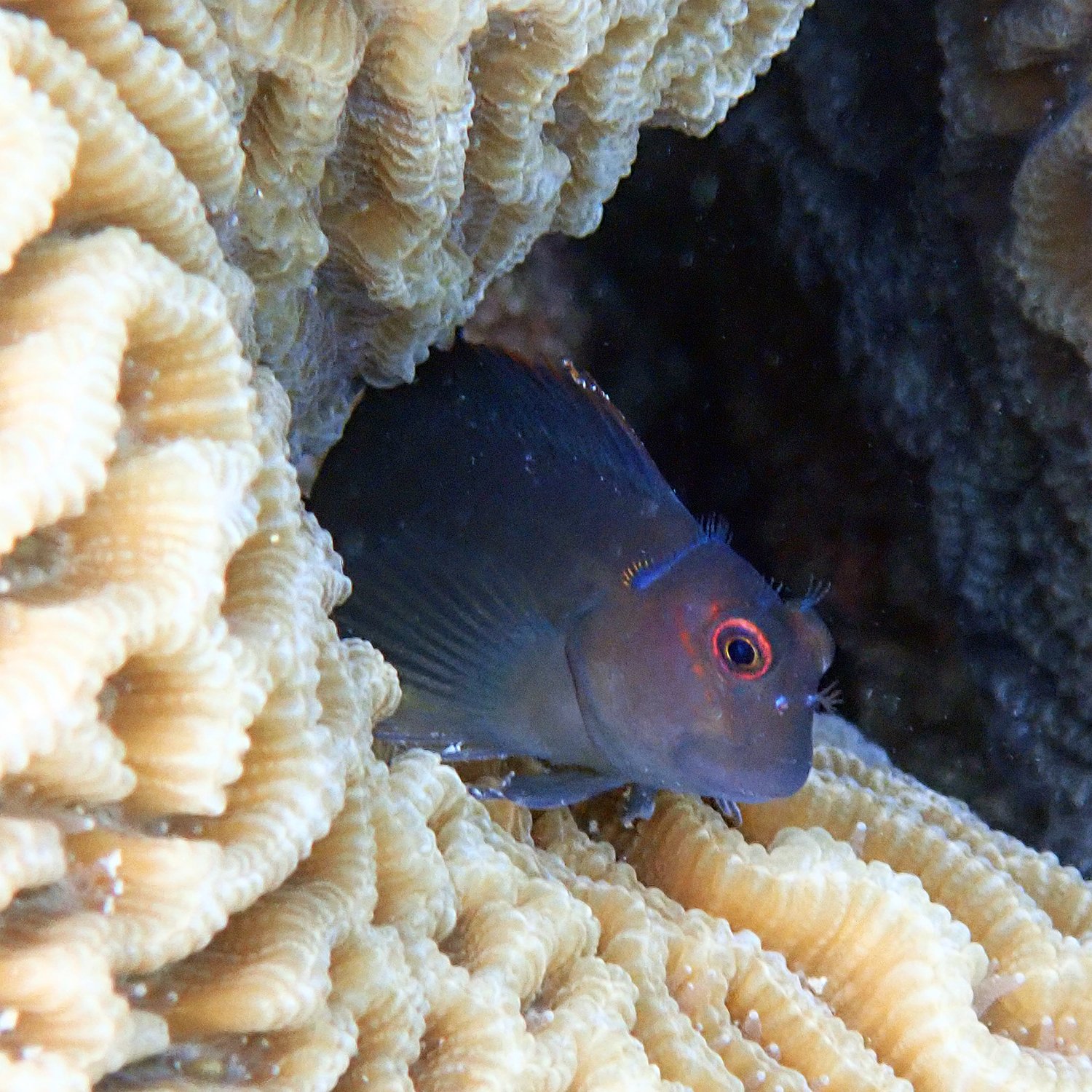
At this time of year, as the mating season begins, Lady Musgrave blennies, Cirripectes chelomatus, change colour from dark inky blue black with barely visible red spots to a vibrant mustardy yellow, more prominent red spots with the same inky blue–black tail. This is known as nuptial colouration, which I have mentioned briefly before in this blog.

I love these little fish, with their flowing tails and hairy eyebrows. Right on cue, in the space of two days, these guys have turned colour. Most of the images below were taken yesterday, on 30 October 2022. They’ve also become much more active. Rather than sitting passively and then scurrying away as you approach, they are now on a mission to find a mate. I love to watch as they sit atop a prominent outcrop of coral where they can get a good view of the surrounding territory. Often they’ll hide when you arrive, but if you stay still and quietly watch the place where they disappeared, inevitably they will pop out again, such is their urge to signal their intentions to other blennies in the neighbourhood. They launch vertically into the water column, maybe 25 cm or so, flutter briefly and then return to their perches.

Often at this point, if you are lucky, you will see another one a few metres away out of the corner of your eye repeating the gesture.

It is a delightful dance to watch, and one I’ve nicknamed ‘the blenny fest’ because it happens at the same time, up and down the reef.

Below are images taken of this characterful blenny as it changes colour. The last couple have me wondering, have these two found the right one?

View fullsize 31.10 (25)_crop.jpg
View fullsize 11 Nov 2021 (16)_crop.jpg
View fullsize 6 Feb 2021 (105)_crop.jpg
View fullsize 29 Oct 2022 (89)_crop.jpg
View fullsize 30 Oct 2022 (70)_crop.jpg
View fullsize 30 Oct 2022 (90)_crop.jpg
View fullsize 30 Oct 2022 (91)_crop.jpg
View fullsize 30 Oct 2022 (90)_crop.jpg
View fullsize 28 Oct 2021 (146)_crop.jpg
View fullsize 30 Oct 2022 (92)_crop.jpg
View fullsize 30 Oct 2022 (77)_crop.jpg
View fullsize 30 Oct 2022 (82)_crop.jpg
Tags Norfolk Island, Emily Bay, Fish behaviour, Blenny, Lady Musgrave blenny, coral reef
← #OperationDoris – update from Australian Marine ParksSea squirts – friend or foe? →
Featured
What Norfolk Island’s reef tells us about environmental blind spots
Apr 5, 2026
What Norfolk Island’s reef tells us about environmental blind spots
Apr 5, 2026

The Kingston dredging proposal on Norfolk Island raises a bigger question than dredging alone: how well do standard environmental assessment tools capture the real significance of a remote and unusual reef system like Norfolk Island’s?

Apr 5, 2026
Hammer coral time!
Mar 30, 2026
Hammer coral time!
Mar 30, 2026

Hammer corals have unique tentacles that are large, fleshy, and tubular; these terminate in a ‘T’-shaped, hammer-head or anchor. Beneath all these softly waving tentacles is an extraordinary skeleton structure, which helps define them as a large polyp stony coral.

Mar 30, 2026
Norfolk Island’s fishes: drifters, residents and the ones still missing
Mar 24, 2026
Norfolk Island’s fishes: drifters, residents and the ones still missing
Mar 24, 2026

Norfolk Island’s fish fauna reflects both connection and isolation. Some species may arrive from elsewhere as drifting larvae, some populations appear to persist locally, and some fishes known from islands on either side of Norfolk have still not been recorded here. This post looks at what old survey work, regional checklists and genetic studies suggest about that more complicated picture.

Mar 24, 2026
18 Jun 2025 (20)_crop.jpg
Mar 7, 2026
Alveopora or flowerpot coral – how to tell the difference
Mar 7, 2026

They look alike at first glance, but Alveopora and flowerpot corals are not the same. The easiest way to tell them apart is to count the tentacles.

Mar 7, 2026
Norfolk’s lagoonal reef – the 2025 report, in plain English
Feb 27, 2026
Norfolk’s lagoonal reef – the 2025 report, in plain English
Feb 27, 2026

We now have the 2025 Norfolk Island reef health report, so I’m taking the opportunity to translate it into plain English here. Sadly, it’s more of the same story in Emily and Slaughter Bays – a reef that can cope with some stress, but is being asked to cope with too much, too often.

Feb 27, 2026
Halimeda’s night shift – why this reef algae changes colour
Feb 20, 2026
Halimeda’s night shift – why this reef algae changes colour
Feb 20, 2026

Halimeda is a calcareous green reef alga that forms new segments overnight, shifts from white to bright green by dawn, then pales again as calcification begins. A quick look at one of the reef’s smartest algae.

Feb 20, 2026
Reef real estate – a bubble-tip’s six-year stand-off
Jan 11, 2026
Reef real estate – a bubble-tip’s six-year stand-off
Jan 11, 2026

Reef space is finite, and nothing ‘shares’ it politely. This short photo essay follows one bubble-tip anemone on Norfolk Island’s lagoonal reef as it holds a crater surrounded by Montipora. The coral builds a rim; the anemone holds the centre. Six years apart, and the argument continues.

Jan 11, 2026
A year in review – 2025 on Norfolk Island's reef
Dec 28, 2025
A year in review – 2025 on Norfolk Island's reef
Dec 28, 2025

Norfolk Island’s reef in 2025 – a year in review. From NOAA bleaching alerts and the UN Ocean Conference ‘Warning Signs’ series to post-drought coral recovery and a wet winter revealed in long-term rainfall records, this post captures the wins, losses, and shifting baselines beneath the lagoon. Includes reef photos, highlights from Reef Relief, and standout stories from 2025 – from coral health and disease to boxfish biomimicry, sea urchins, nudibranchs, and heat-stress signals in anemones.

Dec 28, 2025
Herbicides, heritage, and an inshore reef: what happens when land management meets lagoon health
Dec 15, 2025
Herbicides, heritage, and an inshore reef: what happens when land management meets lagoon health
Dec 15, 2025

Herbicide use near Emily, Slaughter and Cemetery Bays raises questions about inshore reef health, heritage land management, and environmental protection on Norfolk Island.

Dec 15, 2025
Signs of bleaching – 8 December 2025
Dec 8, 2025
Signs of bleaching – 8 December 2025
Dec 8, 2025

I took these photographs this morning, Monday, 8 December 2025. A few warm days of settled weather, little cloud cover and low tides in the hottest part of the day have led to some early bleaching on our reef. Bleaching doesn’t always mean death for our corals, but it is concerning to have this so early in the summer season. Fingers crossed the conditions don’t last and the reef can recover.

Dec 8, 2025

Latest Posts

© 2026 All rights reserved.