Norfolk Island now has a new species of fish. What was once classified as Chromis fumea has been recognised as a separate species, Chromis norfolkensis.
Read MoreThe Norfolk chromis, or Chromis norfolkensis
‘Out on a swim’ is a coral reef blog that tells the stories of the characters who live under the waves and what has caught my eye when ‘out on a swim’ in the lagoons of Norfolk Island. It is also a record of the difficulties Norfolk Island’s reef faces, like many others around the world, as a result of the poor water quality that has been allowed to flow onto it.
This page shows the most recent blog posts. For the complete catalogue, visit the ‘Out on a swim index’ page.
This blog is rated in the Top 20 Coral Reef Blogs in the world.
The Norfolk chromis, or Chromis norfolkensis
Norfolk Island now has a new species of fish. What was once classified as Chromis fumea has been recognised as a separate species, Chromis norfolkensis.
Read MoreTonna melanostoma
My photos of the Tonna melanostoma, a giant underwater mollusc, are the only ones of the live animal in the public domain. We are so fortunate to have these special and rare creatures living in our coral-reef lagoons; their existence here serves to highlight what a special habitat Norfolk Island’s reef really is. It is an ecosystem that must be preserved at all costs.
Read MoreIsland Sea Star - Astrostole multispina
Marine scientists have been giving these underwater stars an image makeover. The starfish of our childhoods, for those of you who have a few beachside summers under your beach towel, is now more properly known as a sea star. They have seawater for blood, two stomachs, no brain, and tiny ‘eyes’ at the end of each arm!
Read MoreRemnant reef overgrown with algae, 31 January 2022, Emily Bay, Norfolk Island
As Costa Georgiadis says, nature tells the truth, and we must only look at our reef on Norfolk Island to know its truth. We, as custodians, have not been caring enough for it and now that carelessness is coming home to roost.
Read MoreThe mass spawning coral myth, debunked: coral mass spawning has captured the imagination of the public, while some of the coverage in the media has cemented a number of myths surrounding the event. The most pervasive being that mass spawning only occurs on one night each year. Not true! Read more here.
Read MoreOld Gnarly the swal doodle, Emily Bay, Norfolk Island
When I’m out on my swim, one guy I always stop by and say hello to is Old Gnarly, a spotted porcupinefish known here as a swal doodle. He knows when I arrive. The first thing you see are his big luminescent white lips as he floats to the door of his cave. We pause, study each other for a moment, then I give him the thumbs up before continuing my swim. It is a precious moment when you connect with a wild animal like this, and it makes my day.
Read MorePink coral spawn floating on the surface of Emily Bay, Norfolk Island, 28 December 2021
Out on a swim on the morning of 27 December 2021, the mood was palpably different. Call me fanciful, but I immediately noticed a frisson of excitement among the fish. Lots of activity and agitation. And all kinds of slightly unusual observations. The annual coral spawning here on Norfolk Island had begun.
Read MoreStylocheilus striatus – commonly called the lined sea hare, blue ring sea hare or furry sea hare
Stylocheilus striatus – commonly called the lined sea hare, blue ring sea hare or furry sea hare – have appeared in numbers at one end of the shallows of Emily Bay. These little sea hares are great to have around as they consume the toxic blue-green alga that fish and other herbivores don’t or can’t eat or tolerate.
Read More#LittleFig, my puppa, following me in for a swim at Cemetery Bay, the island’s dog beach.
Here’s a quick round up of what has been happening on Norfolk Island’s reef in the last couple of weeks. There is always so much going on. Read on to find out about the mating habits of flatworms, and see a busy bluestreak cleaner wrasse hard at work cleaning his wide variety of customers.
Read MoreSurge wrasse - Thalassoma purpureum
Warmer water and some behavioural changes: some fish are getting their nuptial colours on, while others have started incubating eggs in their mouth. It is all happening ‘out on a swim’. Catch up on the last week in Norfolk Island’s lagoons here.
Read MoreBubble-tip anemone
Emily Bay never fails to lift my spirits. Today in my ‘Out on a Swim’ blog, I talk about our beautiful, elegant snake eels. We have at least three different species. I also saw my elusive spotfin squirrelfish, and our two resident green sea turtles snoozing next to each other. Naawww!
Read MoreFull moon rising over our home on Norfolk Island, #DownArthurs
The full moon last night brought us some beautiful, settled weather, right on cue, which meant I was able to get out into Slaughter Bay for the first time in ages. Click here to read what was happening in the coral reef lagoons of Norfolk Island.
Read MoreEmily Bay in the spring sunshine. The seas outside the lagoons were wild this week.
I won’t lie, it has been a wipe-out in the bays this week with huge swells and poor visibility. I more than made up for it this morning. Everyone was out and about enjoying the spring sunshine. Apart from the turtle. She was asleep! Read here to find out who else was enjoying the sunshine.
Read MoreA school of sand mullet, Myxus elongatus
This week’s observations while out on a swim, included some very active and inquisitive green moon wrasse. One, in particular, followed me for a good half an hour as I made my way around the reef off the Salt House. Find out more about what was happening beneath the waves on Norfolk Island this week.
Read MoreConvict snake eel - Leiuranus versicolor
A beautiful banded snake eel, Leiuranus semicinctus, popped into view on Saturday. These gorgeous guys are docile and will dive head first into the sand if you get too close. Read on to discover how many types of snake eel we have in Norfolk Island’s lagoons.
Read MoreAugust is the coldest month of the year in the water here on Norfolk Island, with the temperature hovering around 18–19C. Not only do some swimmers turn a little bit blue if they stay in too long, so too do some of the corals. Read on to find out why.
Read MoreSnubnose dart
I can guarantee that each time I head out into Norfolk Island’s lagoons I will see something new or interesting. This week was no different. Here is a quick wrap up of some of my more noteworthy observations this week while out on a swim.
Read MoreCollector urchin - Tripneustes gratilla
August on Norfolk Island is the coolest month of the year. The southerly winds have been bringing in pounding surf and reduced visibility in the bays. For those who are interested, the water temperature has been hovering between 17C and 18C. This week I showcase some of the different species of sea urchins in our bays and provide a few fast facts about them.
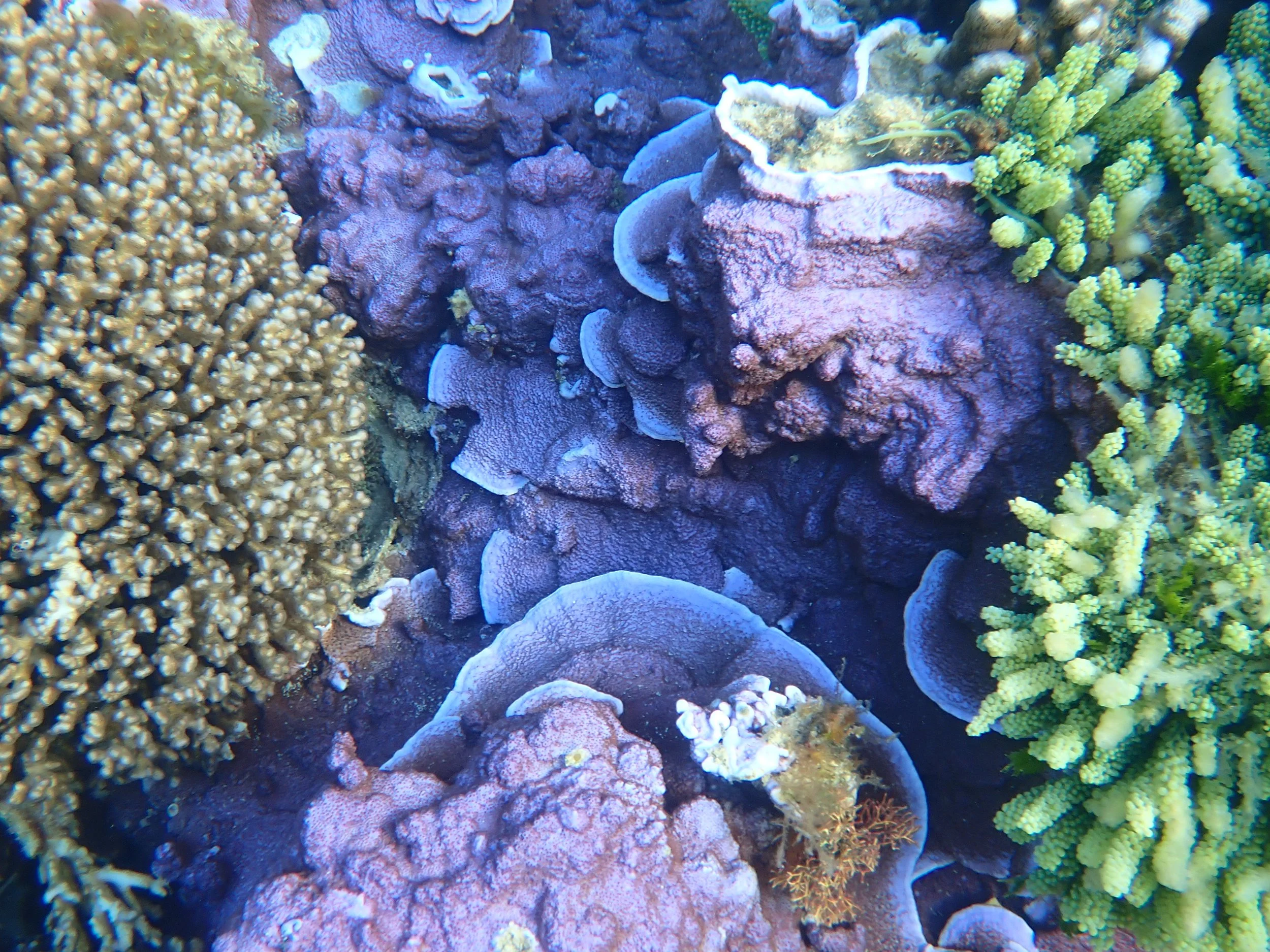
Read MoreHealthy Acropora, plate coral, in Cemetery Bay
We’ve had more than 55 years of warnings, reports and alarm bells about the water quality entering ‘pristine’ Emily and Slaughter Bays, so we know exactly what is harming our marine ecosystem. Now we just have to fix it.
Read MoreThe clear water of Emily Bay lagoon on Norfolk Island
What has taken me down the path from a day job as a writer, editor and communicator to creating a website about Norfolk Island’s coral reef habitat? The story of how and why norfolkislandreef.com.au came into being.
Read More